Stolen wallet: what to do?
A stolen wallet can lead to identity theft and financial loss. Act quickly to cancel cards, freeze your credit, and protect your personal information.
Quick answer
5 steps — read this before anything else
-
1
Report the theft to the police immediately and get a copy of the report.
-
2
Call your bank and credit card companies to cancel all cards and request replacements.
-
3
Place a fraud alert or credit freeze with the major credit bureaus.
-
4
Change passwords for any accounts that may be compromised.
-
5
Monitor your accounts and credit reports for unauthorized activity.
Warning
If you are in immediate danger or the theft involved violence, call local emergency services right away.
Having your wallet stolen is stressful, but taking the right steps quickly can minimize the damage. This guide covers what to do if your wallet is stolen, from immediate actions to longer-term protection.
What to do first
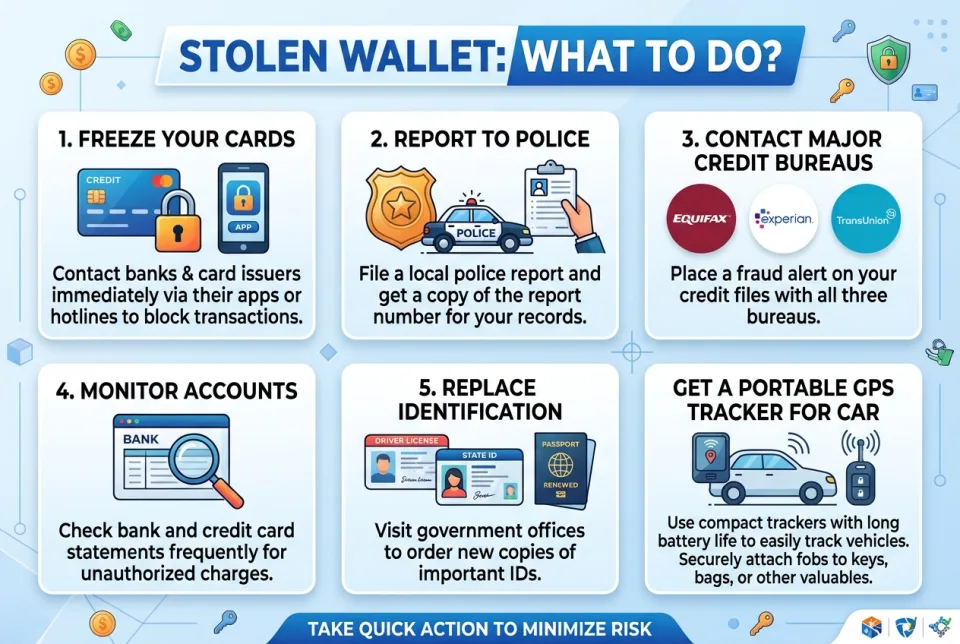
- Report the theft to the police. File a report with your local police department. This creates an official record that can help if your identity is used fraudulently. Keep a copy of the report.
- Cancel your cards. Call your bank and credit card companies right away. Most have 24/7 lost/stolen card lines. Ask them to cancel the cards and send replacements. Also report any unauthorized transactions.
- Contact your bank about your accounts. If your debit card or checks were in the wallet, ask the bank to flag your accounts for unusual activity. Consider closing and reopening accounts if you suspect compromise.
- Place a fraud alert or credit freeze. Contact one of the major credit bureaus (Equifax, Experian, TransUnion) to place a fraud alert (which notifies the other two) or a credit freeze. A freeze restricts access to your credit report, making it harder for thieves to open new accounts.
- Change passwords. If your wallet contained any passwords or if your ID was stolen, change passwords for your email, banking, and other sensitive accounts. Enable two-factor authentication where possible.
What NOT to do
- Do not wait to cancel cards. Every minute counts; thieves can use cards quickly.
- Do not ignore small unauthorized charges. They may be test transactions before larger fraud.
- Do not share your Social Security number or other sensitive info unless you initiated the contact and verified the recipient.
- Do not assume you are safe because you have a fraud alert. Continue to monitor accounts.
What to monitor
After the initial steps, keep a close eye on your financial accounts and credit reports. Check your bank and credit card statements frequently for unauthorized activity. Obtain free credit reports from AnnualCreditReport.com and review them for accounts you did not open. Consider signing up for credit monitoring or identity theft protection services.
How to prevent future theft
- Carry only essential cards and ID; leave others at home in a safe place.
- Use a money belt or front pocket in crowded areas.
- Don't carry your Social Security card unless absolutely necessary.
- Keep photocopies or digital scans of important documents in a secure place.
If you suspect identity theft, report it to the Federal Trade Commission (FTC) at IdentityTheft.gov and follow their recovery plan. For financial fraud, contact your bank and local police. Acting swiftly reduces the risk of long-term damage.
This information is general and not a substitute for professional advice. In case of emergency, call local emergency services.
Sources & references
Spotted an error? Report it — we correct factual mistakes promptly.
Read next
Rental deposit dispute: what to do?
If your landlord won't return your deposit, you have options. Learn how to document the issue, request an itemized statement, and escalate your dispute effectively.
Burglary: what to do?
If you discover a burglary, your safety comes first. Learn the steps to take, what not to touch, and how to secure your home and report the crime.
Harassment by phone or online: what to do?
Harassment by phone or online can be distressing and sometimes dangerous. Learn practical steps to protect yourself, document incidents, and seek help.
Wallet stolen while traveling: what to do?
If your wallet is stolen while traveling, act quickly to cancel cards, report the theft, and secure your identity. Follow these steps to minimize disruption and protect your finances.
Related handy tools
Checklists, decision guides, scenarios and quizzes for the same situation.