Wallet stolen while traveling: what to do?
If your wallet is stolen while traveling, act quickly to cancel cards, report the theft, and secure your identity. Follow these steps to minimize disruption and protect your finances.
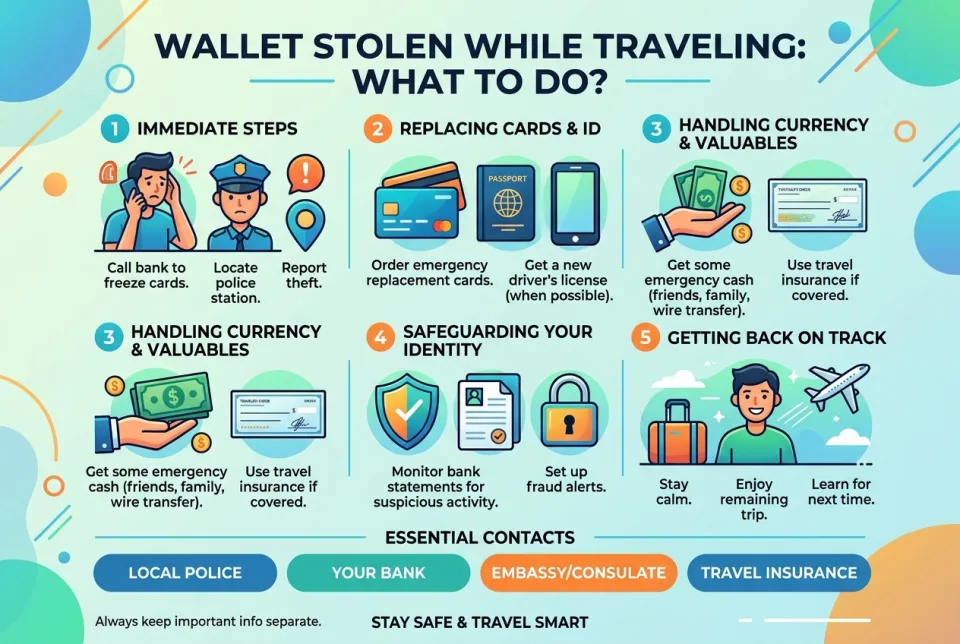
Quick answer
5 steps — read this before anything else
-
1
Cancel all cards in your wallet immediately using your bank's app or hotline.
-
2
File a police report and get a copy for your records.
-
3
Contact your embassy or consulate if your passport was stolen.
-
4
Monitor your accounts for unauthorized transactions.
-
5
Replace essential documents and cards as soon as possible.
Warning
If you are in immediate danger or the theft involved violence, call local emergency services right away. Do not confront the thief.
Discovering your wallet is missing while traveling can be stressful, but a clear plan helps you limit the damage. The most important steps are to cancel your cards, report the theft, and secure your identity documents. Work through the steps below in order, and keep a record of what you do.
What to do first
- Cancel your cards immediately. Use your bank's mobile app or call the emergency number on the back of your card (or the number from your bank's website). Report the cards as lost or stolen so they can be blocked. If you have multiple cards, cancel them all.
- File a police report. Go to the nearest police station and report the theft. Ask for a copy of the report; you may need it for your bank, embassy, or travel insurance (if you have it).
- Report your passport stolen. If your passport was in the wallet, contact your embassy or consulate immediately. They will advise you on replacement or emergency travel documents. Do not wait until you are due to fly home.
- Check for unauthorized transactions. Review your bank and credit card statements online as soon as possible. Report any charges you did not make.
What to do next
- Replace your ID and cards. Order replacement cards and, if needed, a new driver's license or ID card. Your embassy can help with a passport replacement.
- Notify your bank and credit card companies in writing. Follow up your phone call with a written notice if required by your bank's process.
- Consider a fraud alert or credit freeze. If your wallet contained your Social Security number or other sensitive information, contact the relevant credit bureaus in your country to place a fraud alert or freeze your credit.
- Change passwords and PINs. If your wallet contained passwords or PINs, change them immediately. Enable two-factor authentication where possible.
- Keep a record. Note down the time, date, and details of the theft, and the names of any officials you speak with.
What NOT to do
- Do not delay canceling your cards. Every minute increases the risk of unauthorized charges.
- Do not confront the thief. Your safety is more important than your wallet. If you see the theft in progress, do not intervene; move to a safe place and call the police.
- Do not carry all your valuables in one place. In the future, split cash and cards between a money belt, hotel safe, and bag.
- Do not share your PIN or passwords with anyone except when directly entering them into a secure bank system.
When to seek help
Contact local emergency services if you are in immediate danger or if the theft involved violence or threats. For non-emergency theft, go to the nearest police station. If you are unsure how to reach your embassy, ask hotel staff or local authorities for assistance.
How to prevent it
- Keep your wallet in a front pocket or a secure cross-body bag.
- Carry only the cards and cash you need for the day.
- Leave backup cards and documents in a hotel safe.
- Be aware of your surroundings, especially in crowded tourist areas.
- Use RFID-blocking wallets if you are concerned about electronic pickpocketing.
Acting quickly and methodically will help you recover from a stolen wallet with minimal disruption. Start by canceling your cards and filing a police report, then work through the remaining steps. Stay calm and keep a record of your actions.
Spotted an error? Report it — we correct factual mistakes promptly.
Read next
What to Do If You Get Lost While Hiking
If you become lost while hiking, remember the STOP rule: Stop, Think, Observe, and Plan. Staying put and signaling for help dramatically increases your chances of a safe rescue.
What to Do If You Lose Your Credit Card While Traveling
Losing a credit card abroad requires quick action. Follow these essential steps to lock your account, secure emergency funds, and prevent fraud.
What to Do If You Miss Your Flight
Missing a flight is stressful, but taking quick action increases your chances of getting rebooked promptly while protecting the rest of your travel itinerary.
Vacation rental turned out to be a scam: what to do?
If you arrive at a vacation rental that does not exist or was misrepresented, act quickly to protect your money and find safe lodging. Here is a step-by-step guide to reporting the scam and recovering what you can.
Related handy tools
Checklists, decision guides, scenarios and quizzes for the same situation.