Burglary: what to do?
If you discover a burglary, your safety comes first. Learn the steps to take, what not to touch, and how to secure your home and report the crime.
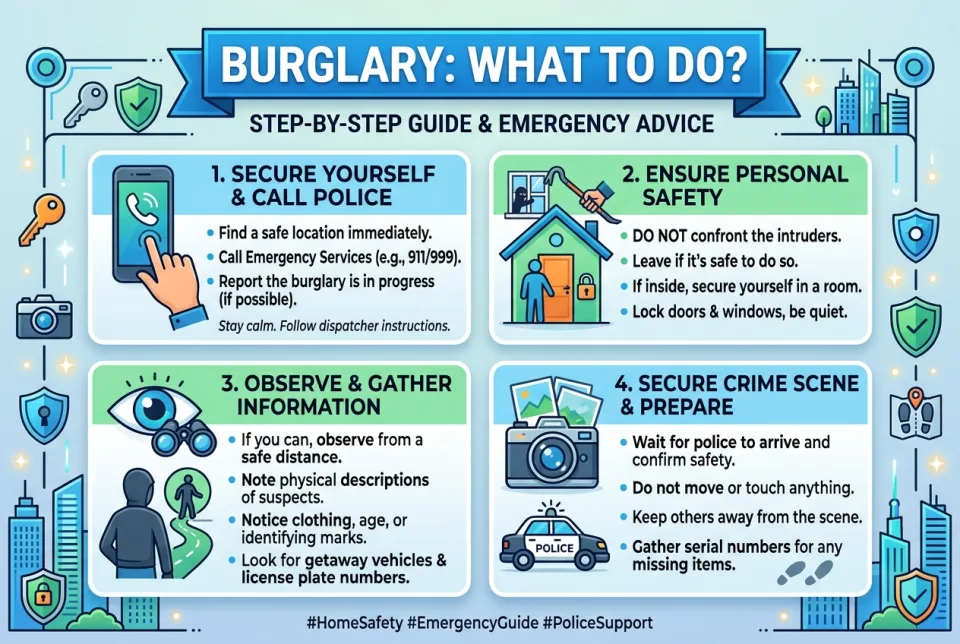
Quick answer
5 steps — read this before anything else
-
1
If you suspect someone is still inside, do not enter. Get to a safe place and call the police immediately.
-
2
If the burglar has left, do not enter or touch anything. Call the police from a safe location.
-
3
Once the police arrive, follow their instructions and provide a list of missing items.
-
4
After the police leave, secure your home (repair locks, windows) and consider a security review.
-
5
Contact your insurer to report the loss and start a claim.
Warning
If you suspect the burglar is still inside, do not enter. Call the police immediately from a safe location.
Discovering that your home has been burglarized is stressful and frightening. Your immediate priority is your safety and the safety of anyone with you. This guide outlines what to do in the first few hours and how to begin recovering.
What to do first
- Do not enter if you suspect the burglar is still inside. If you see a broken window, an open door, or hear noises, back away quietly. Go to a neighbor's house or a safe distance and call the police immediately. Do not confront anyone.
- If the burglar has left, do not enter or touch anything. The scene may contain evidence such as fingerprints, footprints, or DNA. Call the police from a safe location (e.g., outside or at a neighbor's) and wait for them to arrive.
- Once the police arrive, cooperate fully. Provide a list of missing items, including descriptions, serial numbers, and photos if available. This helps with recovery and insurance claims.
- After the police have finished, secure your home. Repair broken locks, windows, or doors immediately. If you cannot secure the property, consider staying elsewhere until repairs are made.
- Contact your insurer. Report the burglary and provide the police report number. Start the claims process for stolen or damaged property.
What NOT to do
- Do not confront the burglar. Your life is worth more than any possession.
- Do not touch anything or clean up. You may destroy evidence that could help identify the burglar.
- Do not post details on social media. This could compromise the investigation or alert the burglar.
- Do not delay reporting. Prompt reporting improves the chances of recovery and is often required for insurance claims.
When to call for help
Call the police immediately if you believe the burglar is still inside or nearby. If you are injured or feel unsafe, call emergency services. For non-emergency reporting (e.g., you arrive home and find a break-in but no one is around), use the police non-emergency number if available, or 911 if you are unsure.
What to monitor
After the initial shock, monitor your home for further suspicious activity. Consider changing locks and adding security measures. Keep an eye on your financial accounts if documents were stolen, as identity theft is a risk.
How to prevent future burglaries
- Install deadbolt locks on all exterior doors and secure windows.
- Use motion-sensor lights and a home security system.
- Keep valuables in a safe and record serial numbers.
- Get to know your neighbors and ask them to watch your home when you are away.
- Do not advertise your absence on social media.
Remember, your safety is paramount. Do not put yourself at risk to protect property. Once the immediate danger is over, focus on securing your home and beginning the recovery process with the police and your insurer.
Spotted an error? Report it — we correct factual mistakes promptly.
Read next
Harassment by phone or online: what to do?
Harassment by phone or online can be distressing and sometimes dangerous. Learn practical steps to protect yourself, document incidents, and seek help.
Insurance claim rejected: what to do?
A rejected insurance claim is not always final. Learn how to understand the reason, gather evidence, and appeal the decision effectively.
Lost marriage or birth certificate: what to do?
Losing a vital record like a birth or marriage certificate can be stressful, but replacing it is usually straightforward. Learn the steps to get a certified copy from the right authority.
Power of attorney needed: what to do?
A power of attorney lets someone you trust act on your behalf. Here is how to decide which type you need, who to choose, and how to put it in place correctly.
Related handy tools
Checklists, decision guides, scenarios and quizzes for the same situation.