Rental deposit dispute: what to do?
If your landlord won't return your deposit, you have options. Learn how to document the issue, request an itemized statement, and escalate your dispute effectively.
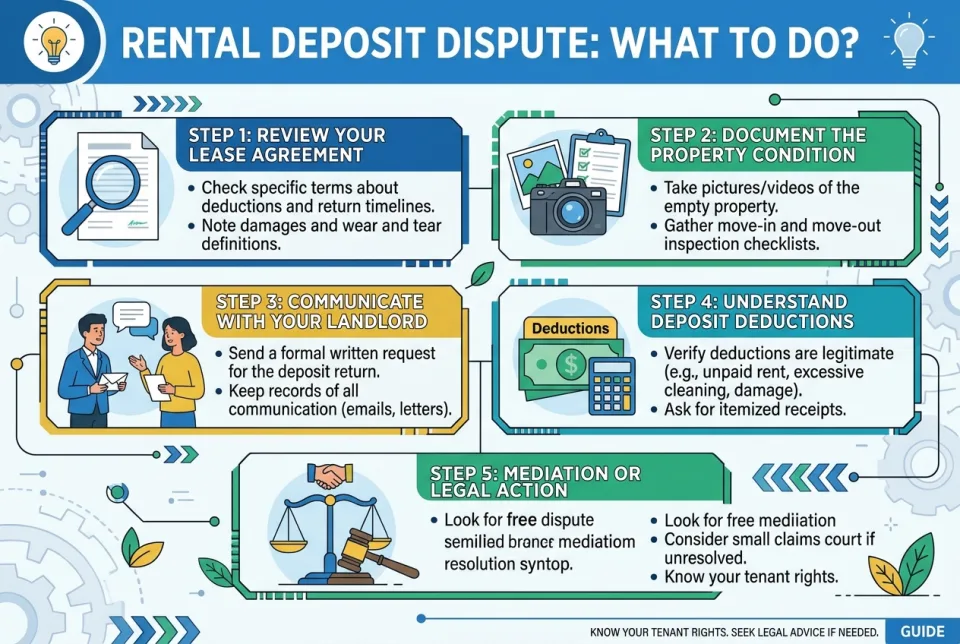
Quick answer
4 steps — read this before anything else
-
1
Gather your move-in and move-out photos, your lease, and any correspondence with your landlord.
-
2
Send a written demand letter requesting an itemized list of deductions and the return of your deposit.
-
3
Check your local tenant laws for deadlines and deposit limits.
-
4
If the landlord does not respond, consider mediation or small claims court.
Important — please read
This content is general educational and informational only, and is not a substitute for professional medical advice, diagnosis or treatment. Always seek the advice of a qualified health provider with any questions you may have about a medical condition. Never disregard or delay seeking professional medical care because of something you read here. In an emergency or life-threatening situation, call your local emergency services (police, fire or ambulance) immediately.
Moving out is stressful enough without worrying about whether you will get your security deposit back. If your landlord is withholding your deposit or making deductions you believe are unfair, you have rights. This guide explains practical steps to resolve a rental deposit dispute, from documenting the condition of the property to taking legal action if necessary.
What is happening
Your landlord may be keeping part or all of your deposit for reasons such as unpaid rent, cleaning fees, or repairs. Some deductions are legitimate, but others may be excessive or not allowed by law. The key is to act quickly and keep a clear record of everything.
What to do first
- Review your lease and local laws. Check what your lease says about deposit deductions and return timelines. Also look up your state or local tenant laws, which often set limits on deposits and require landlords to provide an itemized list of deductions within a certain number of days.
- Collect your evidence. Gather your move-in and move-out photos or videos, the lease agreement, any inspection reports, and all communication with your landlord (emails, texts, letters). This documentation is crucial if you need to prove the condition of the property.
- Send a written demand letter. Write a polite but firm letter or email to your landlord. Request an itemized statement of all deductions and the return of the remaining deposit. Set a reasonable deadline (for example, 10-14 days) and send it via certified mail with return receipt requested, or another method that provides proof of delivery.
- Keep a paper trail. Save copies of all letters, emails, and receipts. If you speak on the phone, follow up with a written summary of the conversation.
What NOT to do
- Do not stop paying rent or deduct from rent without legal advice. Withholding rent can lead to eviction or other legal consequences, even if you believe the deposit is being unfairly withheld.
- Do not make verbal agreements. Always get promises in writing.
- Do not miss deadlines. Many places have strict time limits for disputing deposits or filing in small claims court. Missing a deadline could weaken your case.
- Do not use threats or harassment. Stay professional and factual; it will help if the dispute goes to court.
When to seek professional help
If your landlord ignores your demand letter or refuses to provide an itemized statement, consider these options:
- Mediation: A neutral third party can help you and your landlord reach an agreement without going to court. Many cities offer free or low-cost mediation services.
- Tenant rights organizations: Local tenant unions or legal aid societies can provide advice and sometimes representation.
- Small claims court: If the amount is within your local small claims limit, you can file a case. The process is designed to be accessible without a lawyer, but be prepared with your evidence.
How to prevent future deposit disputes
- Before moving in, do a thorough walk-through with the landlord and take dated photos or videos of any existing damage.
- Keep a copy of the move-in inspection report signed by both parties.
- When moving out, clean the unit thoroughly and take final photos and videos after cleaning.
- Do a final walk-through with the landlord if possible, and get a signed statement of the condition.
Remember, this is general information, not legal advice. For advice specific to your situation, consult a qualified attorney or a local tenant rights organization.
Spotted an error? Report it — we correct factual mistakes promptly.
Read next
What Should You Do If a Contractor Takes Your Deposit and Never Starts the Work?
A contractor took your deposit but never started the job. Learn the practical steps to document the problem, demand your money back, and pursue legal options if needed.
What to Do in Case of a Layoff
Experiencing a job layoff can be overwhelming, but taking immediate, organized steps will help protect your finances, health coverage, and future career.
Filing in small claims court: what to do?
Small claims court can resolve disputes over modest amounts without a lawyer. Learn the key steps to file, prepare, and present your case effectively.
Neighbor's tree hangs over my property: what to do?
Learn safe, legal steps to handle a neighbor's tree branches over your property, from documenting the issue to getting professional help and understanding your rights.
Related handy tools
Checklists, decision guides, scenarios and quizzes for the same situation.