Lights flickering in the house: what to do?
Flickering lights can signal anything from a loose bulb to a dangerous wiring fault. Learn how to assess the risk safely and when to call a professional.
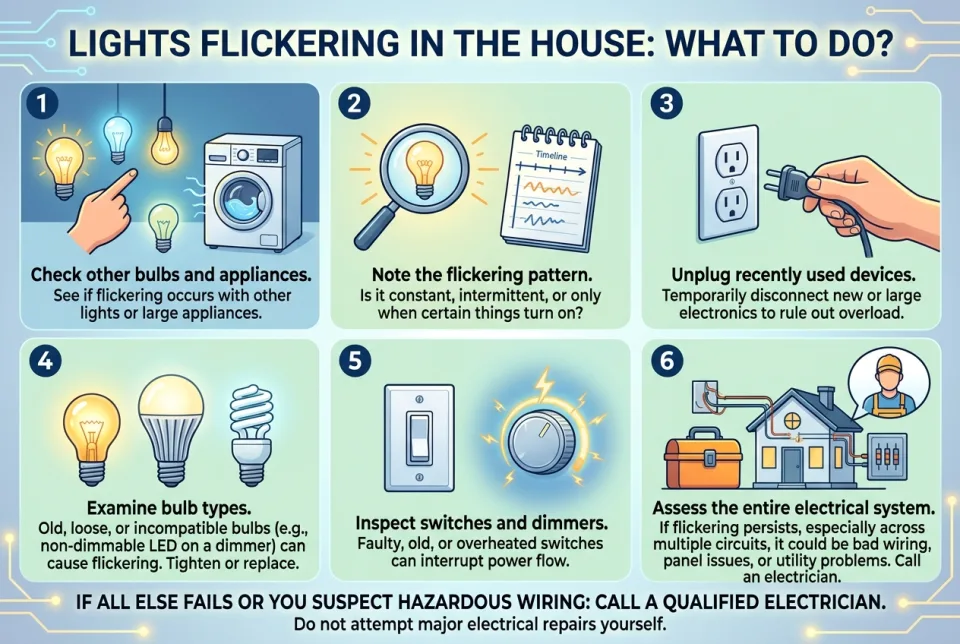
Quick answer
4 steps — read this before anything else
-
1
Check if the flickering is limited to one fixture or affects multiple rooms.
-
2
Tighten the bulb or replace it with the correct wattage and type.
-
3
If multiple lights flicker or you smell burning, turn off power at the breaker and call an electrician.
-
4
Never ignore flickering that accompanies buzzing, heat, or a burning smell.
Warning
If you smell burning, see sparks, or notice scorch marks, turn off the main breaker if safe, evacuate, and call emergency services immediately.
Important — please read
This content is general educational and informational only, and is not a substitute for professional medical advice, diagnosis or treatment. Always seek the advice of a qualified health provider with any questions you may have about a medical condition. Never disregard or delay seeking professional medical care because of something you read here. In an emergency or life-threatening situation, call your local emergency services (police, fire or ambulance) immediately.
Flickering lights are a common household annoyance, but they can also be a warning sign of a serious electrical problem. The right response depends on whether the flickering is isolated to one fixture or widespread, and whether it comes with other symptoms like buzzing, heat, or a burning smell.
What is happening
Flickering occurs when the electrical supply to a light is interrupted or unstable. Causes range from a loose light bulb or a failing dimmer switch to loose wiring connections, overloaded circuits, or a problem with your utility supply. Some flickering is harmless, but some indicates a fire hazard.
Emergency warning
If you see sparks, smell burning, notice scorch marks, or feel heat around an outlet or switch, treat it as an emergency. Turn off the power at the main breaker if it is safe to do so, evacuate everyone, and call your local emergency services (fire department). Do not touch the electrical panel if it is hot or smoking.
What to do first
- Identify the scope. Is it one lamp, all lights on one circuit, or lights throughout the house? This helps determine the cause.
- Check the bulb. Turn off the switch, let the bulb cool, and ensure it is screwed in firmly. Replace it with the correct type and wattage for the fixture.
- Test other fixtures on the same circuit. If only one fixture flickers, the problem is likely local (bulb, socket, or switch). If several flicker, the issue may be in the wiring or panel.
- Consider recent changes. Did you recently install a dimmer, add a large appliance, or have work done on the electrical system? New LED bulbs on old dimmers are a common cause.
- If the flickering is widespread or intermittent across the whole house, turn off sensitive electronics and call a licensed electrician. This can indicate a loose neutral wire or a utility problem.
What NOT to do
- Do not ignore flickering that comes with buzzing, crackling, or a burning smell. These are signs of arcing or overheating.
- Do not open the electrical panel or attempt to repair wiring yourself unless you are qualified and the power is off.
- Do not overload circuits by plugging high-wattage devices into the same outlet as flickering lights.
- Do not use a bulb with a higher wattage than the fixture is rated for.
When to call a professional
Call a licensed electrician if:
- Multiple lights flicker at the same time.
- Flickering occurs when large appliances turn on (this may indicate an overloaded panel or loose connection).
- You hear buzzing or crackling from outlets, switches, or the panel.
- Outlets or switch plates are warm or discolored.
- The problem persists after replacing bulbs and tightening connections.
If you suspect a utility issue (for example, flickering affects neighbors too), contact your electricity provider.
What to monitor
Keep an eye on whether the flickering gets worse over time, whether it happens only when certain appliances run, and whether any other electrical symptoms appear (tripping breakers, dimming lights when appliances start). These details will help an electrician diagnose the problem.
How to prevent it
- Use the correct bulb type and wattage for each fixture.
- Have your electrical system inspected if your home is older or has not been checked in many years.
- Avoid overloading circuits; spread high-power devices across different outlets.
- Install whole-house surge protection if flickering is caused by external power fluctuations.
Most flickering is easily fixed, but do not take chances with electrical hazards. If in doubt, turn off the power to the affected circuit and call a qualified electrician. This guide is general information and not a substitute for professional advice.
Sources & references
Spotted an error? Report it — we correct factual mistakes promptly.
Read next
Boiler pressure too low or too high: what to do?
Boiler pressure problems can stop your heating or damage the system. Learn safe steps to diagnose and correct low or high pressure, and when to call a professional.
Christmas lights trip the fuse: what to do?
When your holiday lights keep tripping the fuse, it is a sign of overload or a fault. Learn how to reset safely, find the cause, and prevent a fire hazard.
Power surge during a storm: what to do?
A power surge can damage electronics and start fires. Learn how to stay safe during and after a surge, and how to protect your home.
Heating oil smell in the house: what to do?
A heating oil smell indoors can signal a leak, spill, or faulty equipment. Act quickly to protect your health and property.
Related handy tools
Checklists, decision guides, scenarios and quizzes for the same situation.