Power surge during a storm: what to do?
A power surge can damage electronics and start fires. Learn how to stay safe during and after a surge, and how to protect your home.
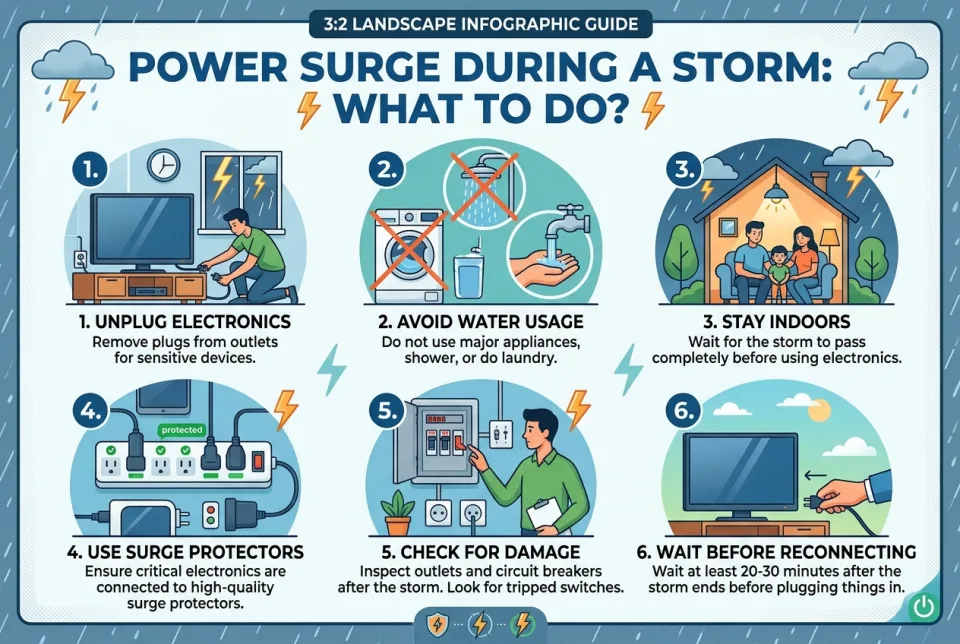
Quick answer
5 steps — read this before anything else
-
1
Unplug sensitive electronics to prevent damage.
-
2
Avoid using corded phones and plumbing during the storm.
-
3
If you see smoke, fire, or smell burning, evacuate and call emergency services.
-
4
After the storm, check for damage and reset tripped breakers.
-
5
Consider whole-home surge protection for future storms.
Warning
If you see smoke, fire, or downed power lines, call emergency services immediately. Do not touch electrical equipment if you suspect damage or if it is wet.
A power surge is a sudden spike in voltage that can damage electronics, start fires, and pose safety risks. During a storm, lightning strikes and grid switching are common causes. Knowing what to do can protect your home and family.
What is happening?
Power surges can occur when lightning strikes near power lines or when the utility company reroutes power. Even if your home isn't directly hit, surges can travel through wiring and damage plugged-in devices. Most surges last only a fraction of a second but can be intense.
Emergency warning
If you see smoke, flames, or smell burning, evacuate immediately and call your local emergency services. Do not attempt to fight the fire yourself.
What to do first
- Unplug sensitive electronics such as computers, TVs, and chargers. Do this only if it is safe and the storm is not immediately overhead.
- Avoid using corded phones and plumbing during the storm, as they can conduct electricity.
- Stay away from windows and avoid touching electrical outlets or appliances.
- If you see sparks or smoke, evacuate and call emergency services.
What NOT to do
- Do not touch electrical equipment or outlets if you suspect damage or if they are wet.
- Do not use a generator indoors or in enclosed spaces due to carbon monoxide risk.
- Do not attempt to reset breakers or replace fuses if you are unsure or if the area is wet.
- Do not ignore burning smells or sparks; treat them as emergencies.
After the storm
- Check for damage to your electrical system. Look for scorched outlets, tripped breakers, or burning smells.
- Reset tripped breakers only if it is safe and you are knowledgeable. If breakers trip repeatedly, call a qualified electrician.
- Replace damaged electronics or have them inspected by a professional before use.
- Consider surge protection for your home. Whole-home surge protectors can be installed by a licensed electrician.
When to call for help
- Call emergency services if you see fire, smoke, or downed power lines.
- Call a licensed electrician if you suspect damage to your electrical panel or wiring.
- Call your utility company to report downed lines or outages.
How to prevent surge damage
- Install whole-home surge protection.
- Use point-of-use surge protectors for sensitive electronics.
- Unplug electronics during storms when possible.
- Ensure your home has a grounded electrical system.
Stay safe and act quickly if you suspect danger. For future storms, consider professional surge protection to safeguard your home.
Sources & references
Spotted an error? Report it — we correct factual mistakes promptly.
Read next
Burned socket smell in the wall: what to do?
A burning smell from a wall socket is a serious fire hazard. Act quickly to cut power and get professional help.
Boiler pressure too low or too high: what to do?
Boiler pressure problems can stop your heating or damage the system. Learn safe steps to diagnose and correct low or high pressure, and when to call a professional.
Radiator cold at the top but hot at the bottom: what to do?
A radiator that is cold at the top and hot at the bottom usually means trapped air or sludge. Learn how to diagnose and fix it safely.
Ceiling fan wobbling or noisy: what to do?
A wobbling or noisy ceiling fan is usually fixable with simple adjustments. Learn safe steps to diagnose and correct the problem before it worsens.
Related handy tools
Checklists, decision guides, scenarios and quizzes for the same situation.