Heating failure in winter: what to do?
When your heating stops in freezing weather, act quickly to stay warm and prevent pipes from bursting. Follow these steps to protect your home and health.
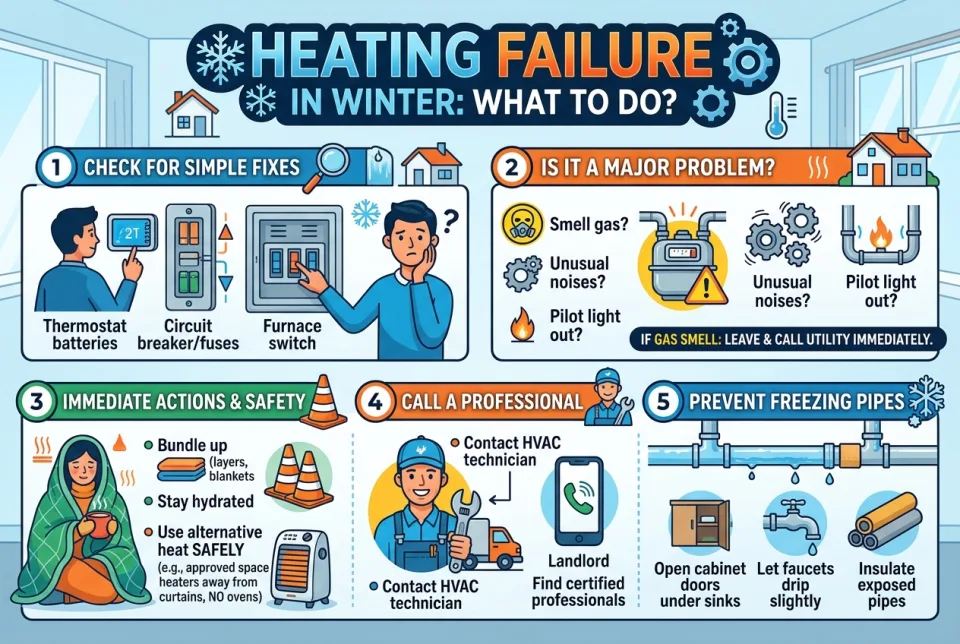
Quick answer
5 steps — read this before anything else
-
1
Check if neighbors have heat; if not, call your utility company.
-
2
If only your home is affected, check thermostat, power, and fuel supply.
-
3
Prevent pipes from freezing: let faucets drip and open cabinet doors.
-
4
Use safe alternative heat sources and never bring generators or grills indoors.
-
5
If you cannot restore heat quickly, consider relocating to a warm place.
Warning
Never use generators, grills, or camp stoves indoors: they cause fatal carbon monoxide poisoning. If you smell gas or suspect a CO leak, leave immediately and call emergency services.
Important — please read
This content is general educational and informational only, and is not a substitute for professional medical advice, diagnosis or treatment. Always seek the advice of a qualified health provider with any questions you may have about a medical condition. Never disregard or delay seeking professional medical care because of something you read here. In an emergency or life-threatening situation, call your local emergency services (police, fire or ambulance) immediately.
A heating failure in winter can quickly become an emergency. Without heat, indoor temperatures can drop rapidly, risking hypothermia and frozen pipes that may burst and cause flooding. Stay calm and act methodically.
What to do first
- Check if the problem is widespread. Ask neighbors if they have heat. If many homes are affected, call your utility company or building manager to report the outage.
- If only your home is affected, do basic troubleshooting. Verify the thermostat is set to heat and above room temperature. Check that the furnace has power (circuit breaker not tripped) and that you have fuel (natural gas, propane, or oil). For a boiler, check the pilot light or ignition system according to the manufacturer's instructions.
- Call a qualified technician if the issue is not obvious. Do not attempt repairs beyond your skill level, especially with gas or electrical systems.
- Protect your pipes. Open cabinet doors under sinks to let warm air circulate. Let faucets drip slightly to relieve pressure. If you expect prolonged cold, consider shutting off the main water valve and draining the system, but only if you know how to do it safely.
- Stay warm safely. Close off unused rooms. Use blankets, warm clothing, and hats. If you use a space heater, keep it at least 3 feet (1 meter) from flammable objects and never leave it unattended. Do not use ovens, stoves, or outdoor grills for heat.
Emergency warning
If indoor temperatures drop below 50°F (10°C) or if you or anyone in the household shows signs of hypothermia (confusion, shivering, slurred speech), call local emergency services immediately. Also call emergency services if you smell gas or suspect a carbon monoxide leak (headache, dizziness, nausea).
What NOT to do
- Never bring a generator, charcoal grill, or propane camp stove indoors. They produce deadly carbon monoxide.
- Do not use a gas oven or stovetop as a heat source.
- Do not attempt to repair a gas furnace or boiler yourself if you are not qualified.
- Do not ignore a gas smell; leave the building and call the gas company from a safe location.
- Do not let pipes freeze; if they do, thaw them gently with a hair dryer or warm towels, never with an open flame.
When to call for help
Call a professional heating technician if you cannot restore heat within a few hours. Call emergency services if you suspect carbon monoxide exposure, if someone is showing signs of hypothermia, or if pipes have burst and you cannot stop the water.
What to monitor
Keep an eye on indoor temperature and check on vulnerable neighbors, especially older adults and those with medical conditions. Watch for signs of frozen pipes (no water flow, frost on pipes) and act before they burst.
How to prevent future failures
Schedule annual heating system maintenance before winter. Keep the area around your furnace and vents clear. Insulate exposed pipes. Have a backup plan, such as a safe space heater or a place to stay with friends or family.
If you cannot restore heat quickly, do not wait: move to a warm place until repairs are complete. This is general information and not a substitute for professional advice. In an emergency, always call your local emergency services.
Sources & references
Spotted an error? Report it — we correct factual mistakes promptly.
Read next
What Should You Do If Your Oven Stops Heating? 8 Things to Check First
When your oven stops heating, a few simple checks can often solve the problem. Learn 8 things to check before calling a professional.
What to Do If Your Oven Stops Heating: 8 Things to Check First
When your oven stops heating, a few simple checks can often solve the problem before you call a repair service. Here are eight things to check, in order, to get your oven working again safely.
Burned socket smell in the wall: what to do?
A burning smell from a wall socket is a serious fire hazard. Act quickly to cut power and get professional help.
Boiler pressure too low or too high: what to do?
Boiler pressure problems can stop your heating or damage the system. Learn safe steps to diagnose and correct low or high pressure, and when to call a professional.
Related handy tools
Checklists, decision guides, scenarios and quizzes for the same situation.