Overheating electrical outlet: what to do?
An overheating outlet can be a sign of a serious electrical hazard. Learn the safe steps to take and when to call for help.
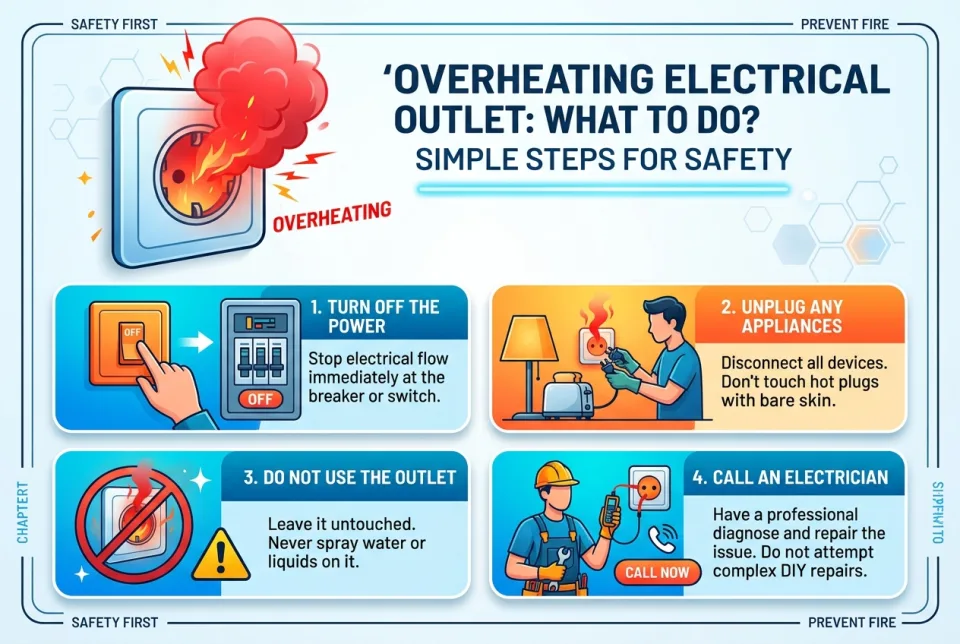
Quick answer
4 steps — read this before anything else
-
1
Stop using the outlet immediately and unplug any devices if it is safe to do so.
-
2
If you see smoke, sparks, or flames, call the fire department right away.
-
3
Turn off the power to the outlet at the circuit breaker if you can do so safely.
-
4
Do not use the outlet again until a qualified electrician has inspected it.
Warning
If you see smoke, sparks, or flames, evacuate and call the fire department immediately. Do not touch the outlet or attempt to fight the fire.
Important — please read
This content is general educational and informational only, and is not a substitute for professional medical advice, diagnosis or treatment. Always seek the advice of a qualified health provider with any questions you may have about a medical condition. Never disregard or delay seeking professional medical care because of something you read here. In an emergency or life-threatening situation, call your local emergency services (police, fire or ambulance) immediately.
An electrical outlet that feels hot to the touch, shows scorch marks, or emits a burning smell is a serious hazard. It can indicate an overloaded circuit, loose wiring, or a failing outlet, all of which can lead to a fire. Act quickly and cautiously.
What to do first
- Stop using the outlet. If it is safe to do so, unplug any devices from the outlet. Do not touch the outlet if it is wet or if you see sparks.
- Turn off the power at the circuit breaker. If you can safely reach the electrical panel, switch off the breaker that controls the outlet. If you are unsure which breaker it is, turn off the main breaker. Never touch the outlet or wiring if you suspect it is live.
- Check for smoke or fire. If you see smoke, flames, or smell burning, evacuate everyone immediately and call the fire department. Do not try to fight the fire yourself.
- Keep the area clear. Do not plug anything back into the outlet until it has been inspected by a qualified electrician.
What NOT to do
- Do not ignore the warning signs. A warm outlet, discoloration, or a burning smell should never be dismissed.
- Do not use the outlet again until it has been repaired or replaced by a professional.
- Do not attempt to repair the outlet yourself unless you are trained and authorized to do so.
- Do not use extension cords or power strips as a permanent solution; they can overload the circuit.
When to call for help
Call your local emergency services immediately if you see flames, smoke, or smell burning, or if anyone is injured. For non-emergency situations, contact a licensed electrician as soon as possible. If you rent, notify your landlord or building manager right away.
What to monitor
After the power is off, monitor the outlet for any signs of heat or smoke. Do not use the outlet until an electrician has confirmed it is safe. If the outlet is part of a circuit that powers critical equipment, consider using a different circuit temporarily.
How to prevent overheating
- Avoid overloading outlets. Do not plug too many high-wattage appliances into one outlet or circuit.
- Use appliances according to their instructions. Some devices, like space heaters, should be plugged directly into a wall outlet, not an extension cord.
- Check cords and plugs regularly for damage, and replace any that are frayed or worn.
- Have your electrical system inspected by a qualified electrician if your home is old or if you frequently experience tripped breakers.
If you are unsure whether an outlet is safe, err on the side of caution: keep it turned off and call a professional. Electrical fires can start silently, so never take chances with a hot or damaged outlet.
This is general information and not a substitute for professional advice. In an emergency, call your local emergency services.
Sources & references
Spotted an error? Report it — we correct factual mistakes promptly.
Read next
Short circuit at home: what to do?
A short circuit can cause sparks, smoke, or fire. Learn the safe steps to take immediately and how to prevent future hazards.
Christmas lights trip the fuse: what to do?
When your holiday lights keep tripping the fuse, it is a sign of overload or a fault. Learn how to reset safely, find the cause, and prevent a fire hazard.
Outlet stopped working: what to do?
A dead outlet can be a simple fix or a sign of a serious electrical hazard. Follow these safe steps to diagnose the problem without risking shock or fire.
Lights flickering in the house: what to do?
Flickering lights can signal anything from a loose bulb to a dangerous wiring fault. Learn how to assess the risk safely and when to call a professional.
Related handy tools
Checklists, decision guides, scenarios and quizzes for the same situation.