Lightning storm safety: what to do?
Lightning can strike anywhere and is dangerous. Learn how to protect yourself indoors and outdoors during a thunderstorm.
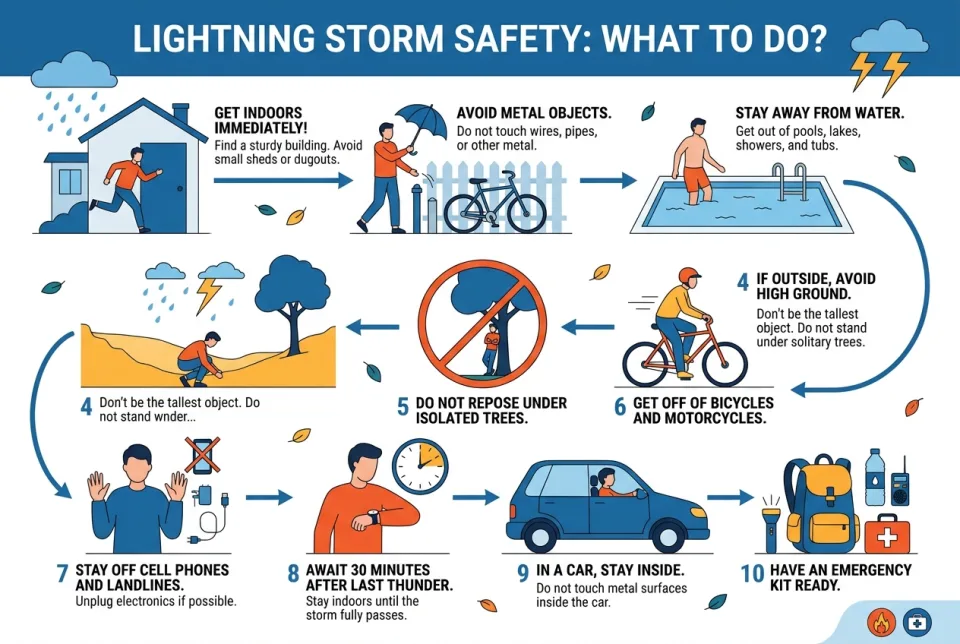
Quick answer
5 steps — read this before anything else
-
1
Seek shelter in a sturdy building or a hard-topped vehicle immediately.
-
2
Avoid open areas, tall objects, and water.
-
3
Stay away from windows and plumbing.
-
4
Wait at least 30 minutes after the last thunder before going outside.
-
5
Call emergency services if someone is struck by lightning.
Warning
Lightning can kill. Seek shelter in a sturdy building or hard-topped vehicle at the first sound of thunder. Do not stand under trees or in open areas.
Important — please read
This content is general educational and informational only, and is not a substitute for professional medical advice, diagnosis or treatment. Always seek the advice of a qualified health provider with any questions you may have about a medical condition. Never disregard or delay seeking professional medical care because of something you read here. In an emergency or life-threatening situation, call your local emergency services (police, fire or ambulance) immediately.
Lightning is a serious hazard that can strike even when it is not raining. When thunder roars, go indoors. This guide explains what to do to stay safe during a lightning storm.
What is happening
Thunderstorms produce lightning, which is a massive electrical discharge. Lightning can strike people, trees, buildings, and bodies of water. It can cause serious injury or death. The safest place is inside a substantial building or a hard-topped vehicle.
Emergency warning
If someone is struck by lightning, call your local emergency services immediately. Lightning strike victims do not carry an electrical charge and are safe to touch. Start CPR if the person is unresponsive and not breathing, but only if you are trained and it is safe to do so.
What to do first
- Seek shelter immediately. Go to a sturdy, enclosed building or a hard-topped vehicle with windows closed. Avoid open structures like picnic shelters or bus stops.
- If you are caught outdoors with no shelter, move to a low-lying area away from tall trees, poles, and open water. Crouch down on the balls of your feet with your head lowered, but do not lie flat. Spread out if you are in a group.
- Stay away from water and plumbing. Do not shower, bathe, or use sinks during a storm. Avoid swimming or boating.
- Avoid electronic equipment. Unplug sensitive devices before the storm arrives. Do not use corded phones or touch electrical outlets.
- Stay away from windows, doors, and porches. Keep away from concrete walls and floors, which can conduct electricity.
- Wait at least 30 minutes after the last thunder before going outside. Lightning can strike far from the rain area.
What NOT to do
- Do not stand under a tall, isolated tree or in an open field.
- Do not lie flat on the ground during a storm.
- Do not use a corded phone or take a shower during a storm.
- Do not assume that because it is not raining, you are safe. Lightning can strike miles from the storm.
- Do not touch metal objects like fences or railings.
When to call for help
Call emergency services if someone is struck by lightning, even if they appear unharmed. Symptoms like confusion, difficulty breathing, or burns require immediate medical attention. If a structure is hit and catches fire, evacuate and call for help.
What to monitor
Keep an eye on weather forecasts and alerts. If you hear thunder, you are within striking distance. Monitor the time between lightning and thunder: the shorter the gap, the closer the lightning.
How to prevent it
Plan ahead: check the weather before outdoor activities and identify nearby shelter options. When outdoors, avoid being the tallest object. Carry a portable weather radio or use a weather app with alerts. At home, consider installing a lightning protection system and surge protectors.
Remember: when thunder roars, go indoors. Stay safe and act quickly. This is general information and not a substitute for professional medical advice. In an emergency, call your local emergency services.
Sources & references
Spotted an error? Report it — we correct factual mistakes promptly.
Read next
Flash flood in a Moroccan oued: what to do?
Dry riverbeds (oueds) in Morocco can turn into violent torrents within minutes after rain falls far away. Knowing how to read the warning signs and where to move can save your life.
Tornado warning: what to do?
A tornado warning means a tornado has been sighted or indicated by radar. Act immediately: get to a safe shelter, protect your head, and stay tuned to official alerts.
Flash flood alert: what to do?
Flash floods can strike within minutes. Learn the immediate steps to protect yourself and your family, and what never to do when water rises.
Lightning storm catches you hiking: what to do?
When thunder roars, go indoors. If you are caught on a trail, descend and seek shelter in a building or a vehicle. If none is available, spread out and crouch low.
Related handy tools
Checklists, decision guides, scenarios and quizzes for the same situation.