Flash flood alert: what to do?
Flash floods can strike within minutes. Learn the immediate steps to protect yourself and your family, and what never to do when water rises.
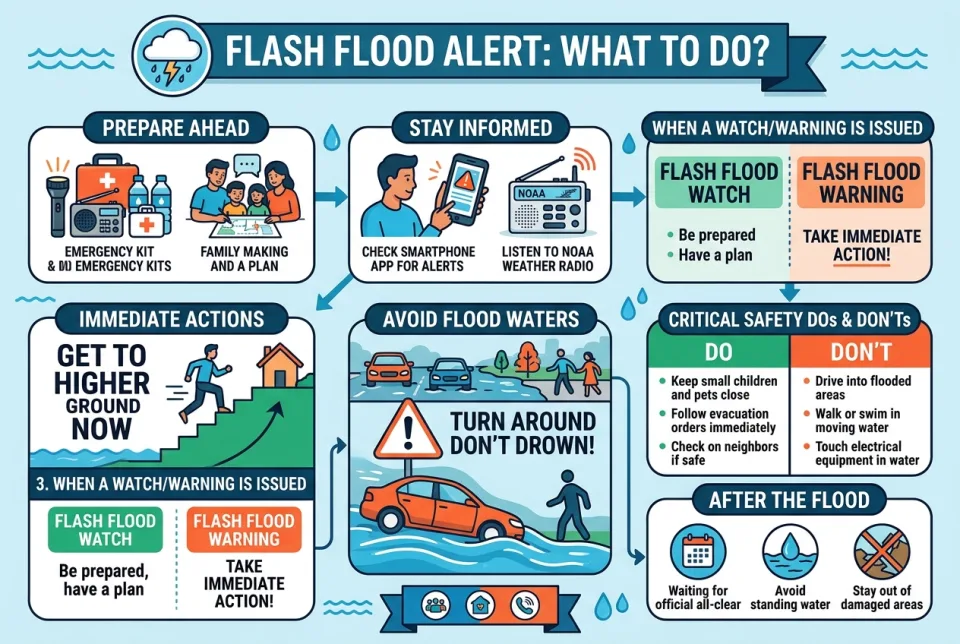
Quick answer
5 steps — read this before anything else
-
1
Move to higher ground immediately, on foot if necessary.
-
2
Never walk, swim, or drive through floodwater.
-
3
Avoid low-lying areas, underpasses, and riverbeds.
-
4
Follow evacuation orders and avoid blocked roads.
-
5
Call emergency services only for life-threatening situations.
Warning
Flash floods can kill within minutes. Never walk or drive through floodwater. Move to higher ground immediately.
Important — please read
This content is general educational and informational only, and is not a substitute for professional medical advice, diagnosis or treatment. Always seek the advice of a qualified health provider with any questions you may have about a medical condition. Never disregard or delay seeking professional medical care because of something you read here. In an emergency or life-threatening situation, call your local emergency services (police, fire or ambulance) immediately.
A flash flood alert means flooding is happening or imminent. These events can develop in minutes, leaving little time to react. Your priority is to get to safety without putting yourself or others at risk.
What is happening
Flash floods are rapid rises of water in a short period, often caused by heavy rain, dam or levee failures, or sudden snowmelt. They can turn dry creeks into raging torrents and make roads impassable in minutes. The danger is not just the water depth but also debris, hidden currents, and contaminated water.
Emergency warning
If you are in immediate danger or trapped by rising water, call your local emergency services right away. Do not wait until water reaches your location.
What to do first
- Move to higher ground immediately. Do not wait for instructions if you see water rising. Go to the highest floor of a sturdy building or climb to elevated terrain. Avoid basements and underground shelters.
- Stay off roads. More than half of flood deaths involve vehicles. If your car is surrounded by water, abandon it and move to higher ground if you can do so safely. Never drive through flooded roadways.
- Evacuate if told to do so. Follow official routes and avoid shortcuts. If you have time, take your emergency kit and important medications.
- Avoid contact with floodwater. It can contain sewage, chemicals, and sharp debris, and may be electrically charged from downed power lines. Wash your hands after any contact.
- Stay informed. Use a battery-powered radio or official alerts on your phone to track the situation. Do not rely on social media rumors.
What NOT to do
- Never walk through moving water. Six inches of fast-moving water can knock you off your feet.
- Never drive into flooded areas. Two feet of water can float most vehicles, and you cannot see road damage underneath.
- Do not shelter in a basement or underground garage. These can fill with water rapidly.
- Do not touch electrical equipment if you are wet or standing in water.
- Do not ignore barricades or warning signs. They are there for your safety.
When to call for help
Call emergency services if someone is trapped, injured, or in immediate danger from rising water. If you are safe, avoid calling unless necessary to keep lines open for emergencies. Report downed power lines or gas leaks to the appropriate utility company.
What to monitor
Keep listening to official alerts for updates on water levels and evacuation orders. Watch for signs of flash flooding such as rapidly rising water, unusual noises upstream, or muddy water. Be prepared to evacuate again if conditions worsen.
How to prevent it
You cannot prevent a flash flood, but you can reduce risk. Know your evacuation route and have an emergency kit ready. Sign up for local alert systems. Avoid camping or parking in dry washes and low-lying areas when rain is forecast. Never attempt to cross flooded roads, even if you know the area.
Stay calm, act quickly, and prioritize your safety over property. Once the water recedes, wait for official clearance before returning home. This is general information and not a substitute for professional emergency advice. In an emergency, always call your local emergency services.
Sources & references
Spotted an error? Report it — we correct factual mistakes promptly.
Read next
Tornado warning: what to do?
A tornado warning means a tornado has been sighted or indicated by radar. Act immediately: get to a safe shelter, protect your head, and stay tuned to official alerts.
Tsunami warning after a coastal earthquake: what to do?
If you feel strong or long shaking near the coast, a tsunami may follow within minutes. Move inland or to high ground immediately and stay there until officials say it is safe.
Lightning storm catches you hiking: what to do?
When thunder roars, go indoors. If you are caught on a trail, descend and seek shelter in a building or a vehicle. If none is available, spread out and crouch low.
Hailstorm damage: what to do?
Hailstorms can damage roofs, windows, vehicles, and siding. Learn how to stay safe, document damage, and start the recovery process.
Related handy tools
Checklists, decision guides, scenarios and quizzes for the same situation.