Severe storm or gale: what to do?
Severe storms and gales can cause injury from flying debris and falling trees. Know how to stay safe before, during, and after the storm.
Quick answer
5 steps — read this before anything else
-
1
Move indoors immediately and stay away from windows.
-
2
Avoid using corded phones and plumbing during lightning.
-
3
If caught outside, avoid trees, poles, and open ground; crouch low if no shelter is available.
-
4
After the storm, watch for downed power lines and report them.
-
5
Check on neighbors and follow local emergency instructions.
Warning
Severe storms can produce life-threatening winds, lightning, and flash floods. Seek sturdy shelter immediately and never touch downed power lines.
Important — please read
This content is general educational and informational only, and is not a substitute for professional medical advice, diagnosis or treatment. Always seek the advice of a qualified health provider with any questions you may have about a medical condition. Never disregard or delay seeking professional medical care because of something you read here. In an emergency or life-threatening situation, call your local emergency services (police, fire or ambulance) immediately.
Severe storms and gales bring strong winds, heavy rain, lightning, and sometimes hail or tornadoes. These conditions can cause serious injury from flying debris, falling trees, and power lines. The following guidance is based on recommendations from emergency management and weather agencies. Always prioritize your safety and follow instructions from local authorities.
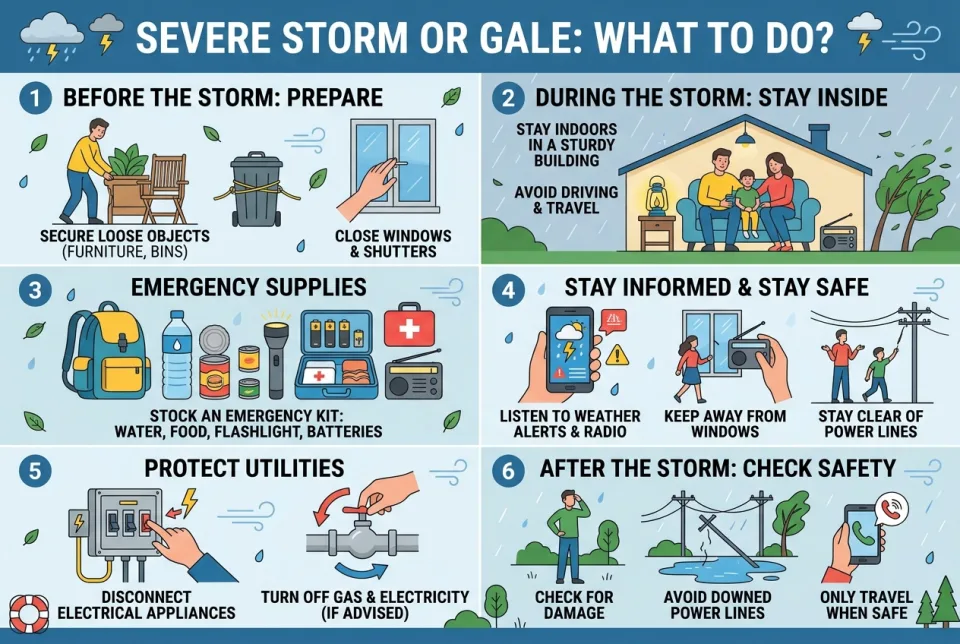
Before the storm
Preparation reduces risk. Stay informed by monitoring local weather forecasts and warnings. Secure loose outdoor items such as furniture, bins, and tools. Trim trees and branches that could fall on your home. Identify a safe room or interior space on the lowest floor, away from windows. Prepare an emergency kit with water, non-perishable food, a flashlight, a battery-powered radio, and a first-aid kit. Keep mobile devices charged.
During the storm
When a severe storm or gale warning is issued, go indoors immediately. Stay away from windows, glass doors, and skylights. Close all doors and windows. Avoid using corded phones and plumbing during lightning; mobile phones are safe. If you are in a vehicle, pull over safely, away from trees and power lines, and stay inside with your seatbelt fastened. If you are caught outside, seek shelter in a sturdy building. Avoid isolated trees, poles, and open fields. If no shelter is available, crouch low in a low-lying area, but be aware of flash flood risk. Do not attempt to drive through flooded roads.
What NOT to do
- Do not go outside to watch the storm or to retrieve items.
- Do not use a corded phone or take a shower during lightning.
- Do not drive through water covering the road; turn around.
- Do not touch downed power lines or anything in contact with them.
- Do not ignore evacuation orders or warnings.
After the storm
Continue listening to local news for updates. Avoid going outside until authorities say it is safe. Watch for downed power lines and report them to the utility company. Do not enter damaged buildings. Check on neighbors, especially the elderly and those with disabilities. If you use a generator, place it outdoors away from windows to prevent carbon monoxide poisoning. Document any damage for insurance purposes if it is safe to do so.
When to call for help
Call local emergency services immediately if someone is injured, trapped, or in immediate danger. If you smell gas or see sparks or fire, leave the area and call for help from a safe distance.
Prevention and preparation
Stay informed about weather alerts. Have a family emergency plan and practice it. Keep your emergency kit stocked and accessible. Consider reinforcing windows and doors if you live in a storm-prone area. Regularly inspect your property for potential hazards.
Severe storms are unpredictable, but taking these steps can help you stay safe. Always follow the guidance of local emergency officials. This information is general and not a substitute for professional advice. In an emergency, call your local emergency number.
Sources & references
Spotted an error? Report it — we correct factual mistakes promptly.
Read next
Lightning storm safety: what to do?
Lightning can strike anywhere and is dangerous. Learn how to protect yourself indoors and outdoors during a thunderstorm.
Tornado warning: what to do?
A tornado warning means a tornado has been sighted or indicated by radar. Act immediately: get to a safe shelter, protect your head, and stay tuned to official alerts.
Flash flood alert: what to do?
Flash floods can strike within minutes. Learn the immediate steps to protect yourself and your family, and what never to do when water rises.
Lightning storm catches you hiking: what to do?
When thunder roars, go indoors. If you are caught on a trail, descend and seek shelter in a building or a vehicle. If none is available, spread out and crouch low.
Related handy tools
Checklists, decision guides, scenarios and quizzes for the same situation.