Wildfire approaching: what to do?
When a wildfire nears, your safety depends on acting early and following official evacuation orders. This guide covers immediate steps, what not to do, and how to protect yourself from smoke and flames.
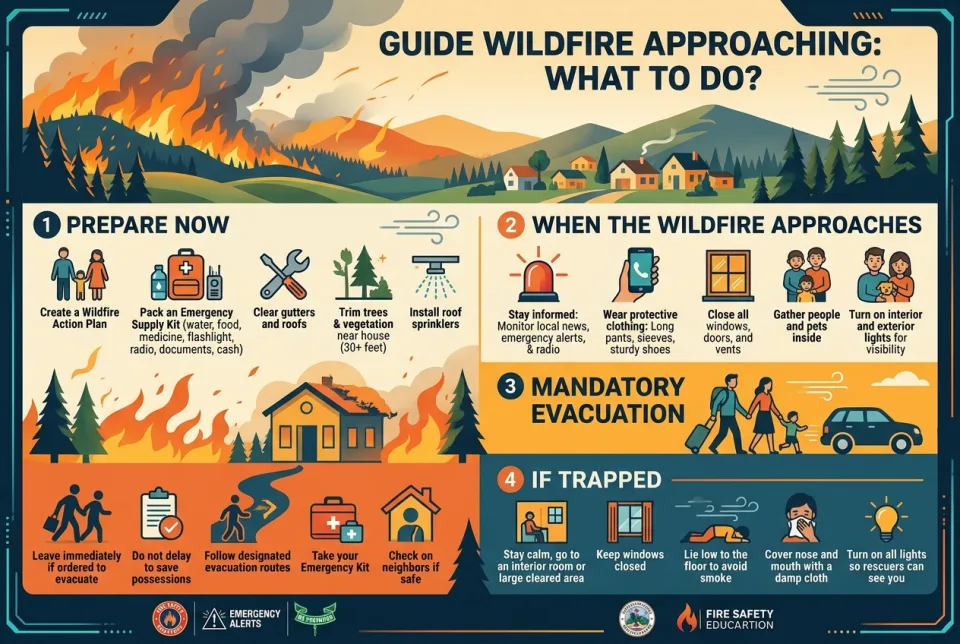
Quick answer
5 steps — read this before anything else
-
1
Leave immediately if authorities issue an evacuation order.
-
2
Call local emergency services only if you are trapped or see a new fire.
-
3
Close all windows and doors, and shut off gas and electricity if instructed.
-
4
Take your emergency kit and pets, and follow the designated evacuation route.
-
5
If you cannot evacuate, shelter in a cleared area and call for help.
Warning
Wildfires can spread rapidly and unpredictably. Evacuate immediately when ordered. Do not attempt to fight the fire yourself.
Important — please read
This content is general educational and informational only, and is not a substitute for professional medical advice, diagnosis or treatment. Always seek the advice of a qualified health provider with any questions you may have about a medical condition. Never disregard or delay seeking professional medical care because of something you read here. In an emergency or life-threatening situation, call your local emergency services (police, fire or ambulance) immediately.
A wildfire can spread faster than you can imagine, and conditions can change within minutes. Your best protection is to act early, stay informed, and follow official instructions without delay. This guide gives you clear steps to take when a wildfire is approaching.
Emergency warning
If you are in immediate danger or see flames, call your local emergency services right away. Do not wait to confirm the situation. If authorities issue an evacuation order, leave immediately. Do not try to defend your property unless you are a trained professional.
What to do first
- Stay informed. Monitor local news, official emergency alerts, and fire authority updates. Keep your phone charged and a battery-powered radio handy.
- Evacuate if told to do so. Follow the designated evacuation routes. Do not take shortcuts or roads that may be blocked by fire or emergency vehicles.
- Grab your emergency kit. Include water, medications, important documents, a flashlight, and a first-aid kit. Take your pets with you and ensure they are secured.
- Prepare your home quickly if you have time. Close all windows and doors. Shut off gas and electricity at the main switches if instructed by authorities. Move flammable items away from windows and outside walls.
- Wear protective clothing. Long sleeves, long pants, sturdy shoes, and a mask (N95 or similar) to reduce smoke inhalation. Avoid synthetic fabrics that can melt.
- If you cannot evacuate, shelter in place. Go to a cleared area away from vegetation, such as a parking lot or a wide road. Close all windows and doors, and call emergency services to let them know your location.
What NOT to do
- Do not ignore evacuation orders. They are issued for your safety, and delaying can trap you.
- Do not drive into smoke or flames. Visibility can drop to zero, and roads may be blocked.
- Do not use elevators during a fire. Use stairs instead.
- Do not attempt to fight the fire yourself. Wildfires are unpredictable and deadly.
- Do not leave pets or livestock behind. They are part of your evacuation plan.
When to call for help
Call emergency services if you are trapped, if you see a new fire start, or if someone is injured or missing. Provide your exact location and follow the dispatcher's instructions.
What to monitor
Keep listening to official updates. Conditions can change rapidly. Watch for changes in wind direction, smoke density, and emergency alerts. Do not return home until authorities say it is safe.
How to prevent it
Create defensible space around your home by clearing dry vegetation and debris. Use fire-resistant building materials and maintain your property. Have an emergency plan and practice it with your household.
Remember: This is general information and not a substitute for professional emergency advice. Always follow the instructions of local authorities and call emergency services in an emergency.
Sources & references
Spotted an error? Report it — we correct factual mistakes promptly.
Read next
Blizzard while driving: what to do?
A blizzard can turn a routine drive into a life-threatening situation in minutes. Know how to react if you're caught on the road.
Lightning storm safety: what to do?
Lightning can strike anywhere and is dangerous. Learn how to protect yourself indoors and outdoors during a thunderstorm.
Tornado warning: what to do?
A tornado warning means a tornado has been sighted or indicated by radar. Act immediately: get to a safe shelter, protect your head, and stay tuned to official alerts.
Flash flood alert: what to do?
Flash floods can strike within minutes. Learn the immediate steps to protect yourself and your family, and what never to do when water rises.
Related handy tools
Checklists, decision guides, scenarios and quizzes for the same situation.