Hailstorm damage: what to do?
Hailstorms can damage roofs, windows, vehicles, and siding. Learn how to stay safe, document damage, and start the recovery process.
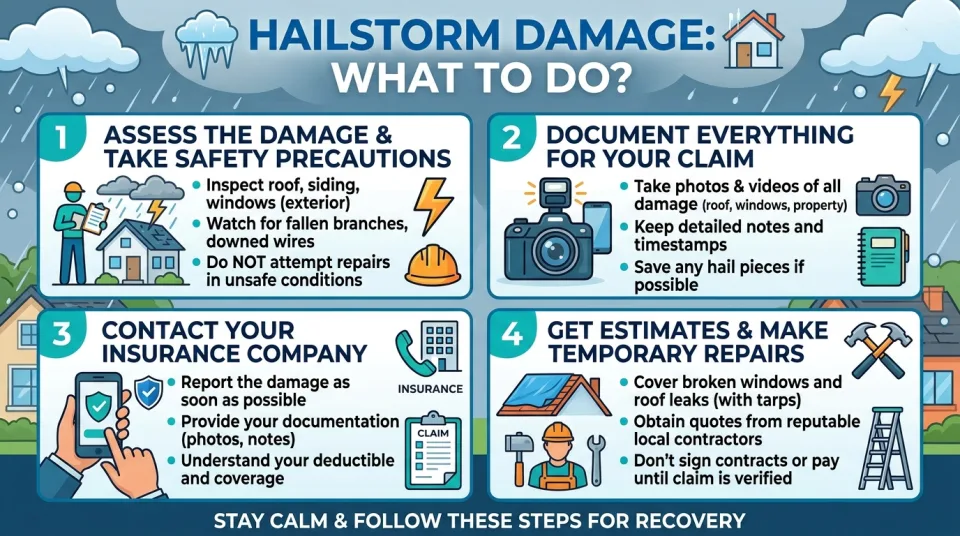
Quick answer
5 steps — read this before anything else
-
1
Stay indoors until the storm passes and check for injuries.
-
2
Avoid damaged structures and downed power lines.
-
3
Document all damage with photos and notes.
-
4
Contact your insurance company to file a claim.
-
5
Make temporary repairs to prevent further damage.
Warning
Avoid downed power lines and damaged structures. Do not attempt roof repairs yourself.
After a hailstorm, your priority is safety. Once the storm has passed, check for injuries and ensure everyone is safe. Then, assess and document damage to your property, and contact your insurance company. This guide walks you through the steps to take.
What to do first
- Stay safe: Remain indoors until the storm has completely passed. Avoid going outside if you hear thunder or see lightning.
- Check for injuries: Ensure everyone in your household is safe. Administer first aid if needed and call emergency services for serious injuries.
- Avoid hazards: Stay away from downed power lines, broken glass, and damaged structures. Do not enter any building with structural damage.
Document the damage
Once it is safe, document all damage thoroughly. This will help with insurance claims.
- Take clear photos and videos of damage to your roof, siding, windows, vehicles, and outdoor items.
- Make a written list of damaged items, including descriptions and estimated values.
- Keep receipts for any temporary repairs or purchases made due to the damage.
Contact your insurance company
Report the damage to your insurance company as soon as possible. Provide them with your documentation and follow their instructions for filing a claim. Ask about temporary repairs and whether they have preferred contractors.
Make temporary repairs
To prevent further damage, make temporary repairs such as covering broken windows with plastic sheeting or tarping damaged roof areas. Keep receipts for materials. Do not make permanent repairs until your insurance company has assessed the damage.
What NOT to do
- Do not climb on the roof yourself. Hail damage can make the roof slippery and unstable. Hire a professional.
- Do not throw away damaged items before documenting them and checking with your insurer.
- Do not sign contracts with unsolicited contractors. Verify their credentials and get multiple quotes.
When to call for help
Call emergency services if anyone is injured, if there is a gas leak, downed power lines, or structural collapse. For non-emergency assistance, contact local authorities or your insurance company.
Prevent future damage
Consider installing impact-resistant roofing materials, hail guards for windows, and trimming trees to reduce future hail damage. Regularly inspect your roof and gutters.
Stay safe and act promptly to protect your property and health.
Spotted an error? Report it — we correct factual mistakes promptly.
Read next
What to Do If You Lose Electricity During Winter
Essential safety steps to retain heat, prevent carbon monoxide poisoning, and protect your home during a cold-weather power outage.
What to Do If You're Stuck During a Snowstorm
If you are stranded in a vehicle or outdoors during a blizzard, remaining calm and following key cold-weather safety steps can save your life.
Earthquake strikes while you are indoors: what to do?
During an earthquake indoors, drop, cover, and hold on to protect yourself from falling debris. Stay put until the shaking stops, then evacuate carefully.
Tsunami warning after a coastal earthquake: what to do?
If you feel strong or long shaking near the coast, a tsunami may follow within minutes. Move inland or to high ground immediately and stay there until officials say it is safe.
Related handy tools
Checklists, decision guides, scenarios and quizzes for the same situation.