Extreme heat combined with a power outage: what to do?
When a heat wave and a blackout hit together, your home can become dangerously hot fast. Here is how to stay safe, cool, and hydrated until power returns.
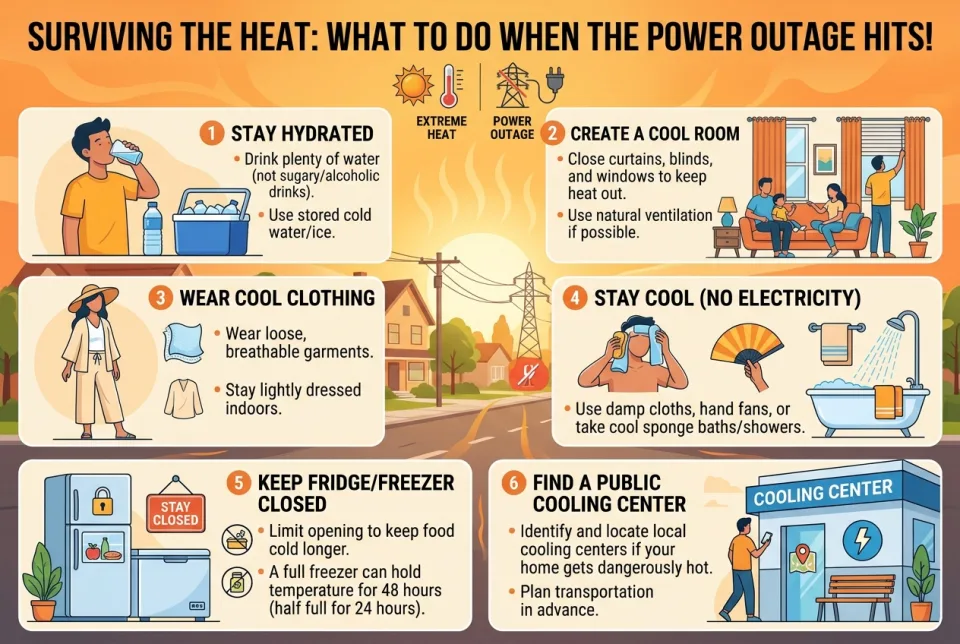
Quick answer
5 steps — read this before anything else
-
1
Move to the coolest room or lowest floor and block direct sun with shades or blankets.
-
2
Drink water often and avoid alcohol and caffeine.
-
3
Check on older adults, young children, and anyone with chronic illness.
-
4
If your home gets too hot, go to a cooling center, library, or another air-conditioned place.
-
5
Call emergency services if someone shows confusion, fainting, or hot dry skin.
Warning
Never run a generator, grill, or camp stove indoors, in a garage, or near windows: carbon monoxide can kill. Call emergency services for signs of heat stroke such as confusion, fainting, or hot dry skin.
Important — please read
This content is general educational and informational only, and is not a substitute for professional medical advice, diagnosis or treatment. Always seek the advice of a qualified health provider with any questions you may have about a medical condition. Never disregard or delay seeking professional medical care because of something you read here. In an emergency or life-threatening situation, call your local emergency services (police, fire or ambulance) immediately.
Extreme heat plus a power outage is a serious combination: without air conditioning or fans, indoor temperatures can climb quickly, especially in apartments and upper floors. The goal is to stay cool, hydrated, and connected to help until electricity returns.
What is happening
When the power fails during a heat wave, your home loses active cooling. Heat builds up indoors, and the risk of heat exhaustion and heat stroke rises, particularly for older adults, infants, and people with heart or lung conditions. Plan for the possibility that the outage lasts hours or longer.
Emergency warning
Call your local emergency services immediately if someone has a high body temperature with confusion, fainting, hot dry skin, or is not sweating. These can be signs of heat stroke, which is life-threatening. While waiting for help, move the person to a cooler place and cool them with cool water or wet cloths.
What to do first
- Close windows and cover them. During the day, keep windows shut and draw shades, curtains, or hang light-colored blankets to block sun. Open windows at night if it is cooler outside and safe to do so.
- Choose the coolest space. Move to the lowest floor or basement if available. Use one room as your base and avoid using heat-producing appliances like ovens or stoves.
- Hydrate regularly. Drink water throughout the day, even if you do not feel thirsty. Avoid alcohol and sugary or caffeinated drinks.
- Use safe cooling methods. Take cool showers or sponge baths. Wear loose, light clothing. A damp cloth on the neck and wrists helps. Do not use a generator, camp stove, or charcoal grill indoors, in a garage, or near windows: they produce deadly carbon monoxide.
- Check on others. Call or visit older neighbors, people with disabilities, and anyone living alone. Infants and older adults may not show early signs of heat illness.
What NOT to do
- Do not rely on a fan alone in extreme heat; fans do not prevent heat illness when indoor temperatures are very high.
- Do not leave children or pets in a parked car, even for a minute.
- Do not run a generator or fuel-burning device indoors or in an attached garage.
- Do not ignore symptoms like dizziness, nausea, headache, or muscle cramps; act early.
- Do not open the refrigerator or freezer often; keep food cold as long as possible.
When to seek help
Seek medical advice if you or someone else has heat cramps that do not improve with rest and fluids, or heat exhaustion symptoms such as heavy sweating, weakness, dizziness, nausea, or headache. Move to a cool place, loosen clothing, and sip water. If symptoms worsen or do not improve within an hour, get medical help. Call emergency services for any sign of heat stroke.
What to monitor
Watch indoor temperature if you have a thermometer. Check on people in your household regularly for confusion, irritability, or unusual tiredness. Keep a battery-powered radio or phone charged for outage updates and heat alerts.
How to prevent it
Before a heat wave, identify nearby cooling centers, libraries, or shopping malls. Keep extra water, battery-powered fans, and a first-aid kit ready. If your home becomes too hot, leave for an air-conditioned place and do not wait until you feel unwell.
This is general information and not a substitute for professional medical advice. In an emergency, call your local emergency services.
Sources & references
Spotted an error? Report it — we correct factual mistakes promptly.
Read next
Blizzard while driving: what to do?
A blizzard can turn a routine drive into a life-threatening situation in minutes. Know how to react if you're caught on the road.
Tornado warning: what to do?
A tornado warning means a tornado has been sighted or indicated by radar. Act immediately: get to a safe shelter, protect your head, and stay tuned to official alerts.
Flash flood alert: what to do?
Flash floods can strike within minutes. Learn the immediate steps to protect yourself and your family, and what never to do when water rises.
Hailstorm damage: what to do?
Hailstorms can damage roofs, windows, vehicles, and siding. Learn how to stay safe, document damage, and start the recovery process.
Related handy tools
Checklists, decision guides, scenarios and quizzes for the same situation.