Blizzard while driving: what to do?
A blizzard can turn a routine drive into a life-threatening situation in minutes. Know how to react if you're caught on the road.
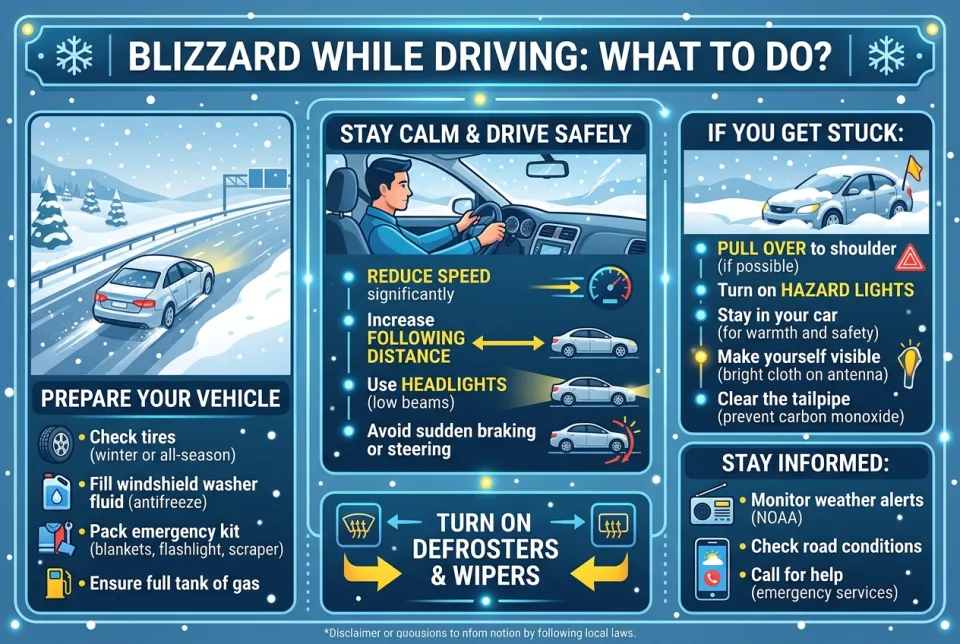
Quick answer
5 steps — read this before anything else
-
1
Slow down and turn on your headlights and hazard lights if visibility is poor.
-
2
If conditions become too dangerous, pull off the road as far as possible and stay in your vehicle.
-
3
Call emergency services if you are stranded, injured, or in immediate danger.
-
4
Run the engine only occasionally for heat, and crack a window to avoid carbon monoxide buildup.
-
5
Stay with your car and make it visible to rescuers.
Warning
Carbon monoxide is a silent killer. Never run your engine if the exhaust pipe is blocked by snow, and always crack a window for ventilation.
Important — please read
This content is general educational and informational only, and is not a substitute for professional medical advice, diagnosis or treatment. Always seek the advice of a qualified health provider with any questions you may have about a medical condition. Never disregard or delay seeking professional medical care because of something you read here. In an emergency or life-threatening situation, call your local emergency services (police, fire or ambulance) immediately.
Being caught in a blizzard while driving is dangerous: whiteout conditions can reduce visibility to near zero, roads become icy, and you can become stranded quickly. The following steps can help you stay safe until conditions improve or help arrives.
What to do first
- Slow down and increase your following distance. Turn on your headlights and, if visibility is very poor, your hazard lights. Avoid sudden braking or steering.
- If you must stop, pull off the road as far as possible. Turn on your hazard lights and keep your seatbelt on. Do not get out of the vehicle unless absolutely necessary.
- Call for help if you are stranded or in danger. Use your phone to call emergency services. Give your location using highway markers, mileposts, or GPS coordinates if possible.
If you are stranded
- Stay in your vehicle. It provides shelter and makes it easier for rescuers to find you. Do not wander into the storm.
- Run the engine only occasionally for heat. Run it for about 10 minutes per hour, then turn it off. Before running the engine, ensure the exhaust pipe is clear of snow to prevent carbon monoxide poisoning. Crack a window slightly for fresh air.
- Make your vehicle visible. Turn on interior lights and hazard lights. Tie a brightly colored cloth to the antenna or door handle. At night, keep a dome light on.
- Stay warm. Use blankets, extra clothing, or emergency blankets. Move around to maintain circulation but avoid overexertion.
- Conserve phone battery. Use your phone sparingly and keep it warm (e.g., in an inside pocket).
What NOT to do
- Do not leave your vehicle to search for help unless you can see a building clearly and it is safe to do so.
- Do not run the engine continuously in an enclosed space or if the exhaust is blocked by snow.
- Do not overexert yourself by shoveling snow or pushing the car; this can lead to injury or heart strain.
- Do not ignore emergency warnings or road closures.
When to call for help
Call emergency services immediately if you are stranded, injured, or in immediate danger. If you have a medical emergency, call first and follow dispatcher instructions.
How to prevent getting caught
- Check weather forecasts and road conditions before traveling. Avoid unnecessary travel during blizzard warnings.
- Keep an emergency kit in your vehicle: blankets, extra warm clothing, food, water, flashlight, first-aid kit, phone charger, shovel, and sand or cat litter for traction.
- Keep your gas tank at least half full.
- Inform someone of your route and expected arrival time.
Stay calm, stay in your vehicle, and wait for help. This is general information and not a substitute for professional advice. In an emergency, call your local emergency services immediately.
Sources & references
Spotted an error? Report it — we correct factual mistakes promptly.
Read next
Flash flood in a Moroccan oued: what to do?
Dry riverbeds (oueds) in Morocco can turn into violent torrents within minutes after rain falls far away. Knowing how to read the warning signs and where to move can save your life.
Sandstorm hits while driving: what to do?
A sudden sandstorm can drop visibility to zero in seconds. Knowing how to react quickly can prevent a serious crash.
Lightning storm safety: what to do?
Lightning can strike anywhere and is dangerous. Learn how to protect yourself indoors and outdoors during a thunderstorm.
Tornado warning: what to do?
A tornado warning means a tornado has been sighted or indicated by radar. Act immediately: get to a safe shelter, protect your head, and stay tuned to official alerts.
Related handy tools
Checklists, decision guides, scenarios and quizzes for the same situation.