Cease and desist letter received: what to do?
A cease and desist letter demands you stop an activity and may threaten legal action. Learn how to respond calmly, protect your rights, and avoid common mistakes.
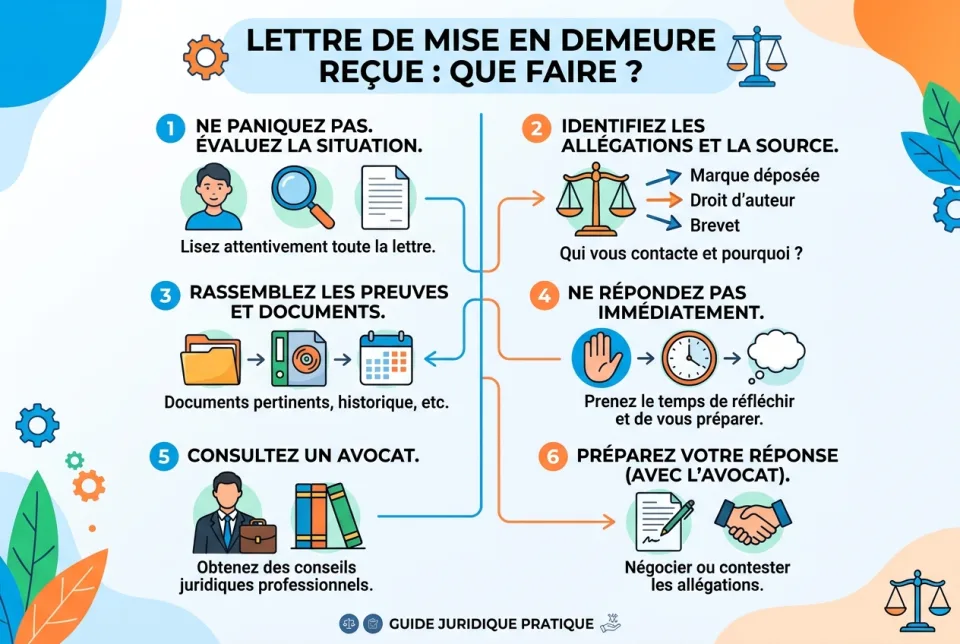
Quick answer
5 steps — read this before anything else
-
1
Do not ignore the letter: note the date you received it and the deadline given.
-
2
Do not contact the sender directly or admit fault without legal advice.
-
3
Preserve all related documents, messages, and records.
-
4
Consult a lawyer who handles the area of law involved (e.g., intellectual property, employment, debt).
-
5
Respond by the deadline through your lawyer, or send a brief acknowledgment if you need more time.
Important — please read
This content is general educational and informational only, and is not a substitute for professional medical advice, diagnosis or treatment. Always seek the advice of a qualified health provider with any questions you may have about a medical condition. Never disregard or delay seeking professional medical care because of something you read here. In an emergency or life-threatening situation, call your local emergency services (police, fire or ambulance) immediately.
Receiving a cease and desist letter can be alarming, but it is not a lawsuit. It is a formal demand to stop a specific activity and often threatens legal action if you do not comply. How you respond in the first few days can significantly affect your legal position. Stay calm, avoid rash actions, and get informed before you reply.
What is happening
A cease and desist letter is typically sent by a lawyer or an individual claiming that your actions infringe their rights, breach an agreement, or cause harm. Common examples include copyright or trademark infringement, harassment, defamation, or debt collection. The letter usually states what you must stop doing, sets a deadline, and may ask for confirmation or payment. It is not a court order, but ignoring it can lead to a lawsuit.
What to do first
- Note the date of receipt and any deadlines. Write down when you received the letter and the date by which the sender demands a response. Keep the envelope and any delivery records.
- Do not respond immediately. Avoid firing off an angry email or calling the sender. Anything you say can be used against you later. Take time to understand the claims.
- Preserve evidence. Save all related documents, emails, text messages, social media posts, contracts, and records. Do not delete anything, even if it seems unimportant.
- Consult a lawyer. Find an attorney who practices in the relevant area (intellectual property, employment, contracts, etc.). Many offer a free or low-cost initial consultation. Bring the letter and all related documents.
- Consider your options. With legal advice, decide whether to comply, negotiate, or dispute the claims. Your lawyer can help you draft a response that protects your rights.
What NOT to do
- Do not ignore the letter. Ignoring it may lead to a lawsuit and could be seen as an admission of the claims.
- Do not admit fault or apologize. Even a casual "sorry" can be used as evidence against you.
- Do not contact the sender directly unless your lawyer advises it. Let your lawyer handle communications.
- Do not destroy or alter evidence. Deleting files or messages can be illegal and will harm your case.
- Do not assume it is a scam. While some letters are baseless, treat every letter seriously until you verify its legitimacy with a lawyer.
When to call for help
Contact a lawyer immediately if the letter threatens imminent legal action, demands a large payment, involves criminal allegations, or if you are unsure about your rights. If you cannot afford a lawyer, look for legal aid services or a local bar association's referral program.
What to monitor
Keep track of all deadlines and any further correspondence from the sender. If you receive a court summons or complaint, respond promptly as required by law. Do not miss court dates.
How to prevent future issues
Review your business practices and content to ensure you have the rights to use all materials. Keep clear records of your own creations and agreements. Consider legal insurance or a prepaid legal plan if you frequently face such risks.
This guide is general information, not legal advice. Laws vary by jurisdiction, and every situation is unique. Consult a qualified lawyer for advice tailored to your circumstances.
Spotted an error? Report it — we correct factual mistakes promptly.
Read next
Rental deposit dispute: what to do?
If your landlord won't return your deposit, you have options. Learn how to document the issue, request an itemized statement, and escalate your dispute effectively.
Burglary: what to do?
If you discover a burglary, your safety comes first. Learn the steps to take, what not to touch, and how to secure your home and report the crime.
Received a court summons: what to do?
A court summons is a serious legal document that requires your immediate attention. Learn the steps to respond correctly and protect your rights.
Filing in small claims court: what to do?
Small claims court can resolve disputes over modest amounts without a lawyer. Learn the key steps to file, prepare, and present your case effectively.
Related handy tools
Checklists, decision guides, scenarios and quizzes for the same situation.