Sandstorm hits while driving: what to do?
A sudden sandstorm can drop visibility to zero in seconds. Knowing how to react quickly can prevent a serious crash.
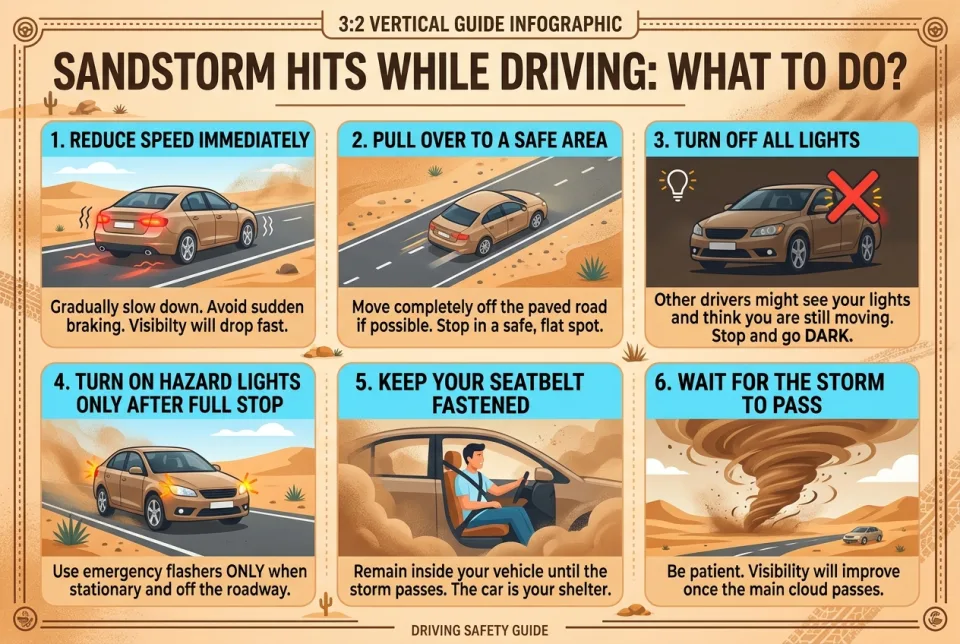
Quick answer
5 steps — read this before anything else
-
1
Slow down gradually and turn on your headlights and hazard lights.
-
2
Pull as far off the road as you safely can, away from traffic lanes.
-
3
Turn off the engine, close all windows and vents, and set the parking brake.
-
4
Stay in the vehicle with seatbelts fastened until the storm passes.
-
5
Call emergency services if you are injured, trapped, or blocking the road.
Warning
A sandstorm can reduce visibility to near zero in seconds. Do not stop in a traffic lane and do not leave your vehicle. Call emergency services if you are injured or blocking the road.
Important — please read
This content is general educational and informational only, and is not a substitute for professional medical advice, diagnosis or treatment. Always seek the advice of a qualified health provider with any questions you may have about a medical condition. Never disregard or delay seeking professional medical care because of something you read here. In an emergency or life-threatening situation, call your local emergency services (police, fire or ambulance) immediately.
A sandstorm or dust storm can turn a clear road into a blinding wall of dust within seconds. The biggest danger is not the sand itself but the loss of visibility, which can lead to rear-end and multi-vehicle crashes. The safest response is to get off the road and wait it out inside your vehicle.
What is happening
Strong winds lift loose sand and dust into the air, creating a dense cloud that can reduce visibility to a few metres or less. These storms can last from a few minutes to several hours and may be accompanied by sudden gusts. The dust can also clog air filters and irritate your eyes and lungs.
Emergency warning
If you are injured, trapped, or your vehicle is blocking a traffic lane and cannot be moved, call your local emergency services immediately. Do not leave your vehicle and walk into the storm, as you can easily become disoriented and be struck by another vehicle.
What to do first
- Slow down gradually. Do not brake suddenly, as drivers behind you may not see you in time.
- Turn on your headlights and hazard lights. This makes your vehicle more visible to others.
- Pull off the road as far as safely possible. Aim for a safe spot away from the traffic lane, such as a lay-by or the shoulder. If possible, turn your wheels away from the road.
- Stop and secure the vehicle. Turn off the engine, set the parking brake, and close all windows, vents, and the air conditioning to keep dust out.
- Stay inside with seatbelts fastened. Keep your headlights and hazard lights on so other drivers can see you. Wait until visibility improves before moving again.
What NOT to do
- Do not stop in the middle of a traffic lane. If you cannot pull off safely, keep moving slowly with hazard lights on until you find a safe place.
- Do not get out of the vehicle to inspect the storm or take photos. You are safer inside.
- Do not use cruise control. You need full control of the vehicle.
- Do not follow the taillights of the vehicle ahead too closely. They may not be moving.
- Do not turn on your hazard lights while driving at normal speed; use them only when you are slowing down or stopped.
When to call for help
Call emergency services if you are involved in a collision, if someone is injured, if your vehicle is stuck or blocking the road, or if you feel unsafe and cannot move to a safe location. If you have a medical condition that makes you vulnerable to dust, such as asthma, seek medical advice if you experience difficulty breathing.
What to monitor
Watch for improving visibility and listen to local weather alerts or radio updates. Be aware that sand can accumulate on the road and reduce traction. After the storm, check your vehicle's air filter and lights, and clean your windscreen and mirrors before driving on.
How to prevent it
Before driving in dusty regions, check the weather forecast and avoid travel during known storm periods if possible. Keep a dust mask, water, and a torch in your vehicle. Ensure your headlights, hazard lights, and windscreen wipers are working. If you have respiratory problems, carry any prescribed medication and avoid exposure.
Stay calm, get off the road safely, and wait inside your vehicle. Once visibility returns, drive cautiously and be prepared for reduced traction.
This is general information and not a substitute for professional advice. In an emergency, call your local emergency services.
Spotted an error? Report it — we correct factual mistakes promptly.
Read next
What Should You Do If a Tornado Warning Is Issued While You Are at Home?
A tornado warning means a tornado has been detected or is occurring. Know the safest room in your home and act immediately, without waiting to see the storm.
What to Do If You Get Lost While Hiking in Canada
If you lose your trail while hiking in Canada, stop moving immediately and stay calm. Following the STOP protocol increases your chances of a quick rescue.
Sandstorm in the desert: what to do?
A desert sandstorm can reduce visibility to zero and cause serious breathing problems. Learn how to protect yourself, your vehicle, and your group when the dust rolls in.
Caught in a rip current while swimming: what to do?
Rip currents can pull even strong swimmers away from shore. Learn the correct actions to escape safely and help others without becoming a victim.
Related handy tools
Checklists, decision guides, scenarios and quizzes for the same situation.