Writing your first will: what to do?
A straightforward guide to creating your first will: the key decisions, how to make it legally valid, and common pitfalls to avoid.
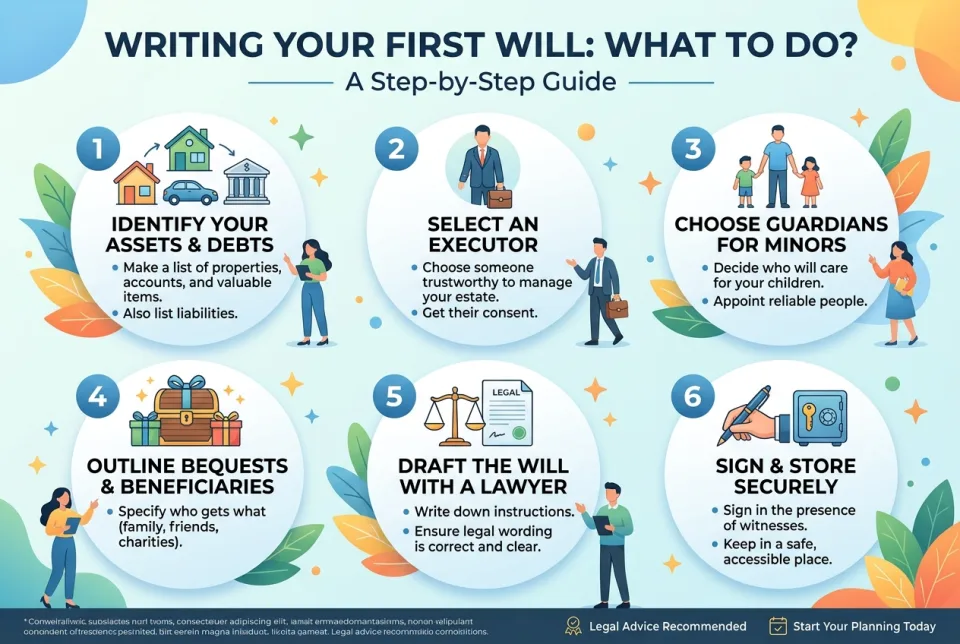
Quick answer
5 steps — read this before anything else
-
1
List your assets and decide who should inherit them.
-
2
Choose an executor and a guardian for any minor children.
-
3
Check your state or country's legal requirements for a valid will.
-
4
Draft the will, sign it, and have it witnessed as required by law.
-
5
Store the original safely and tell your executor where it is.
Important — please read
This content is general educational and informational only, and is not a substitute for professional medical advice, diagnosis or treatment. Always seek the advice of a qualified health provider with any questions you may have about a medical condition. Never disregard or delay seeking professional medical care because of something you read here. In an emergency or life-threatening situation, call your local emergency services (police, fire or ambulance) immediately.
Writing your first will is a responsible step that ensures your wishes are followed after your death. This guide outlines the practical and legal considerations, but it is general information, not legal advice. Laws vary by location, so always confirm the rules for your state or country.
What is happening
A will is a legal document that states how your property should be distributed, who should care for minor children, and who should manage your estate. Without a valid will, the law decides these matters, which may not match your preferences.
What to do first
- Take inventory. List your assets (home, bank accounts, investments, personal property) and note any debts. This helps you decide what to include in the will.
- Decide on beneficiaries. Determine who should receive each asset. Consider family, friends, and charities.
- Choose an executor. Pick a trustworthy person to carry out the will's instructions. Consider naming a backup.
- Name a guardian. If you have minor children, decide who should raise them if both parents die.
Step by step
- Check legal requirements. Most jurisdictions require the will to be in writing, signed by you, and witnessed by two adults who are not beneficiaries. Some states allow holographic (handwritten) wills with fewer formalities. Confirm the exact rules with a local legal source.
- Draft the will. You can use a reputable template or software, but for complex situations (blended families, business ownership, large estates) consult a lawyer. Include clear identification of beneficiaries and assets.
- Sign and witness. Sign the will in front of the required witnesses. They must watch you sign and then sign themselves. Do not let beneficiaries act as witnesses.
- Store the original safely. Keep it in a fireproof safe, a bank safe deposit box, or with your lawyer. Tell your executor where it is.
- Review and update. Revisit the will after major life events (marriage, divorce, birth, death, significant asset changes) and update it as needed.
What NOT to do
- Do not rely on a DIY will without checking your state's witnessing requirements; an invalid will is useless.
- Do not name a beneficiary as a witness; this can invalidate the will or the gift.
- Do not forget to sign and date the will.
- Do not keep the will a secret; at least your executor should know it exists and where to find it.
- Do not assume a will covers all assets; some (like retirement accounts and life insurance) pass by beneficiary designation.
When to seek professional help
Consult a qualified estate planning attorney if you have a complex estate, own a business, have minor children, want to set up trusts, or are unsure about legal requirements. A lawyer can ensure your will is valid and reflects your wishes.
What to monitor
After creating your will, review it periodically and after any major life change. Also review beneficiary designations on accounts and insurance policies to ensure they align with your will.
How to prevent problems
- Keep the original will in a safe place and inform your executor.
- Consider a living will or healthcare proxy for medical decisions.
- Discuss your plans with family to reduce confusion.
Creating a will brings peace of mind. Start by taking inventory and checking your local legal requirements, then take action to draft and sign your will.
Spotted an error? Report it — we correct factual mistakes promptly.
Read next
What Should You Do If a Contractor Takes Your Deposit and Never Starts the Work?
A contractor took your deposit but never started the job. Learn the practical steps to document the problem, demand your money back, and pursue legal options if needed.
Rental deposit dispute: what to do?
If your landlord won't return your deposit, you have options. Learn how to document the issue, request an itemized statement, and escalate your dispute effectively.
Harassment by phone or online: what to do?
Harassment by phone or online can be distressing and sometimes dangerous. Learn practical steps to protect yourself, document incidents, and seek help.
Unfair fine or traffic ticket: what to do?
Received a fine or traffic ticket you believe is wrong? Learn the practical steps to dispute it, from gathering evidence to meeting deadlines and preparing your case.
Related handy tools
Checklists, decision guides, scenarios and quizzes for the same situation.