Unfair fine or traffic ticket: what to do?
Received a fine or traffic ticket you believe is wrong? Learn the practical steps to dispute it, from gathering evidence to meeting deadlines and preparing your case.
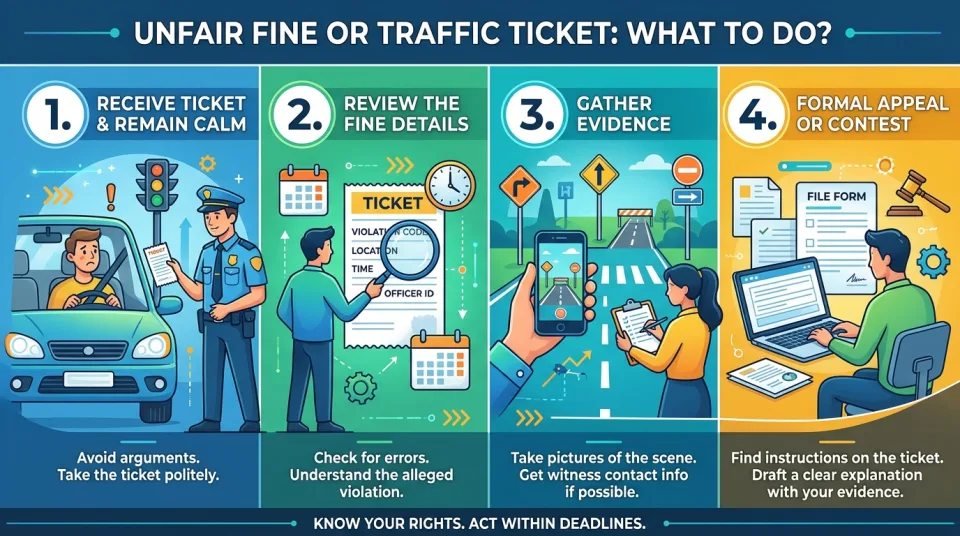
Quick answer
5 steps — read this before anything else
-
1
Read the ticket carefully and note the deadline to respond or appeal.
-
2
Gather evidence: photos, witness details, dashcam footage, and any documents.
-
3
Follow the official dispute process stated on the ticket or the issuing authority's website.
-
4
Submit your dispute or appeal before the deadline, keeping copies of everything.
-
5
Consider seeking legal advice if the amount is significant or the consequences are serious.
Important — please read
This content is general educational and informational only, and is not a substitute for professional medical advice, diagnosis or treatment. Always seek the advice of a qualified health provider with any questions you may have about a medical condition. Never disregard or delay seeking professional medical care because of something you read here. In an emergency or life-threatening situation, call your local emergency services (police, fire or ambulance) immediately.
Receiving a fine or traffic ticket you believe is unfair can be frustrating. Whether it is a parking fine, a speeding ticket, or another penalty, you have the right to challenge it. This guide outlines practical steps to dispute a fine or ticket in a safe and effective way.
What is happening
A fine or traffic ticket is an official notice that you have allegedly broken a law or regulation. It will usually state the offence, the amount, and the deadline to pay or contest. If you believe it is wrong, you can typically dispute it through an official process. The exact steps vary by location, so always refer to the instructions on the ticket or the issuing authority's website.
What to do first
- Read the ticket thoroughly. Note the alleged offence, date, time, location, and the deadline to respond. Do not ignore it, as penalties can increase.
- Do not pay immediately if you intend to dispute. Paying is often treated as an admission of guilt, though in some places you can pay and still appeal. Check the rules for your area.
- Gather evidence. Take clear photos of the scene, any signs, road markings, or your vehicle. Collect witness statements, dashcam footage, or receipts that support your case.
- Check the details for errors. A mistake in the ticket (wrong date, location, or vehicle details) may be grounds for cancellation, but not always.
How to dispute the fine or ticket
The dispute process depends on where you are. Common steps include:
- Informal review: Some authorities allow you to request a review online or by post. Provide a clear explanation and attach evidence.
- Formal appeal: If the informal review fails, you may need to submit a formal appeal to a tribunal or court. There is usually a deadline, so act quickly.
- Court hearing: For serious offences, you may need to attend a hearing. Prepare your evidence and arguments in advance.
Always keep copies of all correspondence and note any reference numbers. Follow up if you do not receive a response within the stated time.
What NOT to do
- Do not ignore the ticket. Failing to respond can lead to higher fines, license points, or even a court summons.
- Do not argue with the issuing officer at the scene. It rarely helps and can escalate the situation. Save your dispute for the official process.
- Do not provide false information. Lying on an appeal can have legal consequences.
- Do not miss deadlines. Mark the dates in your calendar and submit everything on time.
When to seek professional help
Consider consulting a lawyer or a legal advice service if the fine is large, if you face license points or a driving ban, or if the dispute process is complex. In some regions, free legal advice is available through citizen advice bureaus or similar organizations.
How to prevent future fines
- Familiarize yourself with local traffic and parking rules.
- Use navigation apps that alert you to speed limits and restrictions.
- Keep your vehicle documents up to date and displayed as required.
Disputing a fine requires patience and organization, but it is your right to challenge an unfair penalty. Start by reading the ticket carefully and acting before the deadline. This guide is general information and not legal advice; for specific legal concerns, consult a qualified professional.
Spotted an error? Report it — we correct factual mistakes promptly.
Read next
What Should You Do If a Contractor Takes Your Deposit and Never Starts the Work?
A contractor took your deposit but never started the job. Learn the practical steps to document the problem, demand your money back, and pursue legal options if needed.
What Should You Do If You Receive a Surprise Medical Bill?
A surprise medical bill can be confusing and stressful. Learn how to verify the charges, understand your rights under the No Surprises Act, and take action to dispute or reduce the bill.
What to Do in Case of a Layoff
Experiencing a job layoff can be overwhelming, but taking immediate, organized steps will help protect your finances, health coverage, and future career.
Burglary: what to do?
If you discover a burglary, your safety comes first. Learn the steps to take, what not to touch, and how to secure your home and report the crime.
Related handy tools
Checklists, decision guides, scenarios and quizzes for the same situation.