Window will not close or lock: what to do?
A window that will not close or lock is a security and weather risk. Learn safe steps to secure it and when to call a professional.
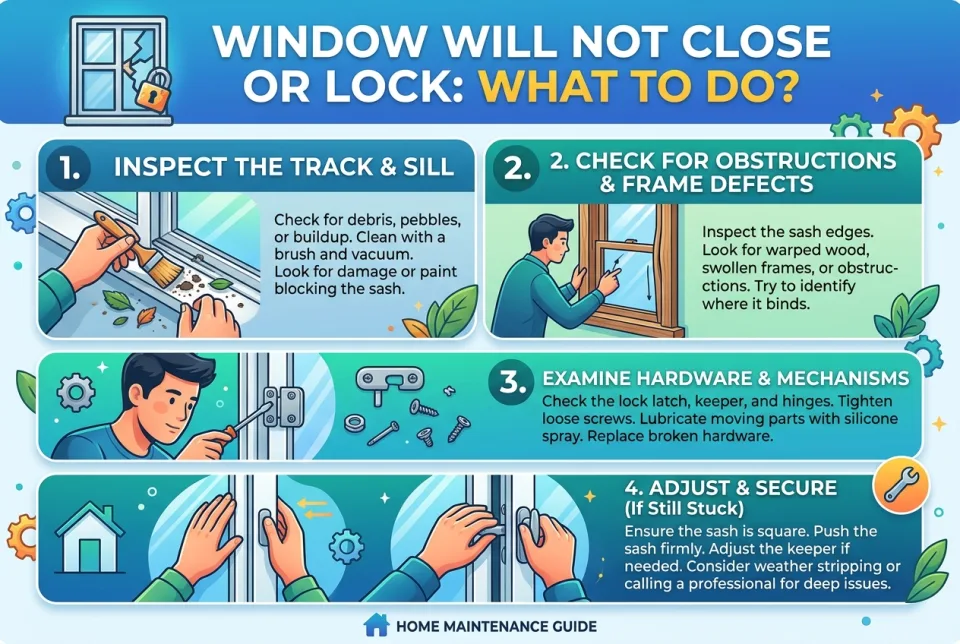
Quick answer
4 steps — read this before anything else
-
1
Check for obstructions in the track or hinge and clear them.
-
2
Try lifting the sash slightly while turning the lock to realign it.
-
3
If it still will not close, secure the window temporarily and call a window repair specialist.
-
4
For ground-floor or accessible windows, consider a temporary lock or block to deter intruders.
Warning
A window that cannot be closed or locked on a ground floor or accessible level is a security risk. Secure it temporarily and arrange repairs promptly.
A window that will not close or lock can leave your home insecure and exposed to weather. Most problems have simple causes, but some require a professional. This guide covers safe steps to try and when to get help.
What is happening
Windows fail to close or lock for common reasons: debris in the track, a misaligned sash, a broken lock mechanism, swollen wood, or damaged hinges. Identifying the cause helps you choose the right fix.
Step by step: what to do first
- Check for obstructions. Open the window fully and inspect the track, hinges, and lock area for dirt, leaves, or objects. Clear any debris with a brush or vacuum.
- Try realigning the sash. For sliding windows, lift the sash slightly while turning the lock. For casement windows, check that the handle is in the correct position and the sash is not stuck on the frame.
- Lubricate moving parts. Apply a silicone-based lubricant to the track, hinges, and lock mechanism. Avoid WD-40 on locks as it can attract dirt.
- Test the lock separately. If the window closes but the lock will not engage, the lock may be misaligned. Try adjusting the strike plate or latch with a screwdriver.
- Secure temporarily if needed. If the window cannot be closed fully, use a window security bar or a cut-to-size wooden dowel in the track to prevent opening. For ground-floor windows, consider a temporary lock or block.
What NOT to do
- Do not force the window or lock; this can cause damage or injury.
- Do not use excessive force on glass; it may shatter.
- Do not ignore a window that will not lock on the ground floor; it is a security risk.
- Do not attempt major repairs if you are not confident; call a professional.
When to call a professional
Call a window repair specialist if:
- The window is stuck open and cannot be secured.
- The lock mechanism is broken or missing parts.
- The frame or sash is damaged or rotten.
- You have tried basic troubleshooting without success.
For security concerns, consider a locksmith or security specialist.
What to monitor
After a temporary fix, monitor the window for drafts, water leaks, or loosening. If the problem recurs, a permanent repair is needed.
How to prevent it
- Clean and lubricate window tracks and hinges every six months.
- Check locks and latches regularly for smooth operation.
- Repair any wood rot or damage promptly.
- Keep debris away from window exteriors.
If in doubt, contact a professional. A secure window protects your home and family.
Spotted an error? Report it — we correct factual mistakes promptly.
Read next
Burned socket smell in the wall: what to do?
A burning smell from a wall socket is a serious fire hazard. Act quickly to cut power and get professional help.
Water heater no hot water: what to do?
When your water heater stops making hot water, follow these steps to diagnose the problem safely. Learn when to call a professional and how to avoid dangerous mistakes.
Boiler pressure too low or too high: what to do?
Boiler pressure problems can stop your heating or damage the system. Learn safe steps to diagnose and correct low or high pressure, and when to call a professional.
Power surge during a storm: what to do?
A power surge can damage electronics and start fires. Learn how to stay safe during and after a surge, and how to protect your home.
Related handy tools
Checklists, decision guides, scenarios and quizzes for the same situation.