Water heater no hot water: what to do?
When your water heater stops making hot water, follow these steps to diagnose the problem safely. Learn when to call a professional and how to avoid dangerous mistakes.
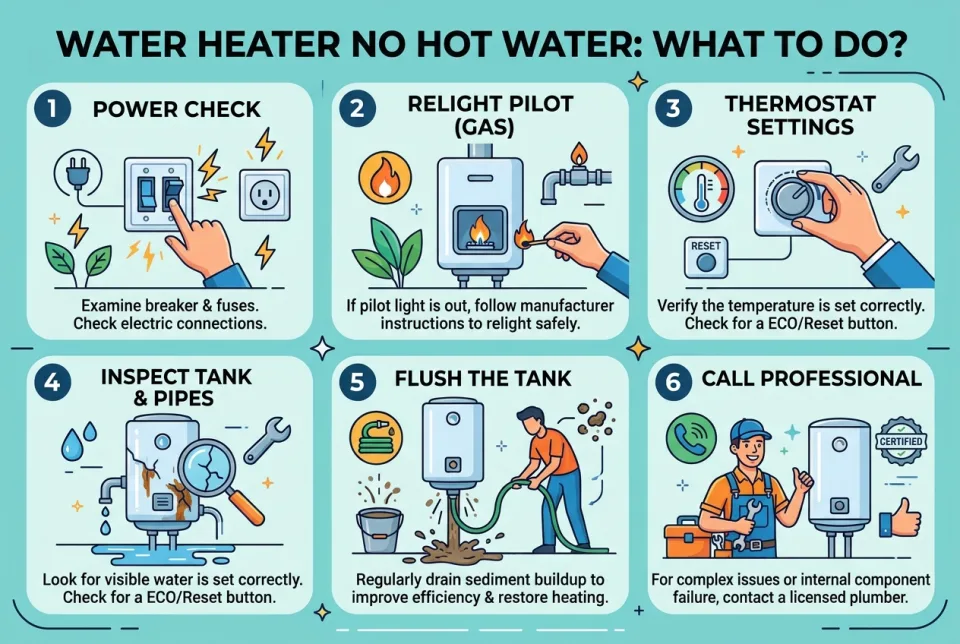
Quick answer
4 steps — read this before anything else
-
1
Check if the pilot light is lit (gas) or if the circuit breaker has tripped (electric).
-
2
Verify the thermostat setting is at least 120°F (49°C).
-
3
Inspect for leaks or unusual noises around the tank.
-
4
If the problem persists, call a qualified plumber or HVAC technician.
Warning
If you smell gas, leave the building immediately and call your gas provider or emergency services from a safe location. Do not operate electrical switches or use your phone inside.
Having no hot water is inconvenient, but it can also signal a safety issue. This guide helps you diagnose common causes safely. Always prioritize safety: if you smell gas or see electrical damage, stop and call for help.
Emergency warning
If you smell gas or suspect a gas leak, leave the building immediately and call your gas provider or emergency services from a safe location. Do not operate electrical switches or use your phone inside.
What to do first
- Check the power source. For electric heaters, verify the circuit breaker has not tripped. Reset it once if tripped. For gas heaters, check if the pilot light is lit. If it is out, follow the manufacturer's relighting instructions, usually found on a label near the burner.
- Confirm the thermostat setting. Ensure the thermostat is set to at least 120°F (49°C). A lower setting may feel like no hot water.
- Inspect for leaks or corrosion. Look for water pooling around the base or rust on the tank. Small leaks may require professional repair; large leaks or a corroded tank usually mean replacement.
- Listen for unusual noises. Popping or rumbling sounds may indicate sediment buildup, which can reduce efficiency.
- Test the hot water at multiple taps. If only one fixture lacks hot water, the issue may be a faulty faucet or a clogged aerator, not the heater.
What NOT to do
- Do not attempt to relight the pilot light if you smell gas. Call a professional.
- Do not ignore a leaking tank. Water damage can be extensive and may lead to mold.
- Do not adjust the thermostat above 120°F (49°C) without caution. Higher temperatures increase scalding risk, especially for children and older adults.
- Do not perform electrical repairs yourself. Electric water heaters involve high voltage; always turn off power at the breaker before inspection.
When to call for help
Call a qualified plumber or water heater technician if:
- You cannot relight the pilot light or the burner does not ignite.
- You see a leak from the tank itself (not just a loose fitting).
- The circuit breaker trips repeatedly.
- You hear loud banging or popping noises.
- You notice rusty or discolored hot water.
What to monitor
After restarting the heater, monitor for consistent hot water and check for any new leaks or strange noises. If the problem returns, schedule a professional inspection.
How to prevent it
- Flush the tank annually to remove sediment.
- Test the pressure relief valve yearly.
- Insulate exposed pipes to reduce heat loss.
- Schedule routine maintenance with a professional every 1-2 years.
Most no-hot-water issues can be resolved by checking the power source and thermostat. However, safety comes first: if you are unsure or encounter gas or electrical hazards, call a professional immediately.
This information is for general guidance only. Always consult a licensed professional for repairs and follow local codes.
Spotted an error? Report it — we correct factual mistakes promptly.
Read next
What Should You Do If Your Home Loses Water? 8 Things to Check and Prepare For
A sudden loss of water at home can be alarming. Learn the 8 key checks and preparations to handle it safely and efficiently.
What Should You Do If Your Home Loses Water?
A sudden loss of water at home can be caused by a burst pipe, a frozen line, a municipal outage, or a problem with your own plumbing. Here is a calm, step-by-step plan to check the right things and protect your home.
Burned socket smell in the wall: what to do?
A burning smell from a wall socket is a serious fire hazard. Act quickly to cut power and get professional help.
Boiler pressure too low or too high: what to do?
Boiler pressure problems can stop your heating or damage the system. Learn safe steps to diagnose and correct low or high pressure, and when to call a professional.
Related handy tools
Checklists, decision guides, scenarios and quizzes for the same situation.