Water leak: what to do in an emergency?
A sudden water leak can cause serious damage in minutes. Knowing how to shut off the water and what to do next can limit the harm and keep you safe.
Quick answer
5 steps — read this before anything else
-
1
Turn off the main water valve immediately.
-
2
Switch off electricity to wet areas if it is safe to do so.
-
3
Move valuables and furniture away from the water.
-
4
Call a licensed plumber for help.
-
5
Document the damage with photos for insurance.
Warning
Never enter a flooded area with electrical appliances or outlets submerged. Water and electricity together can cause fatal shocks. If you suspect a gas leak or structural collapse, evacuate and call emergency services.
Important — please read
This content is general educational and informational only, and is not a substitute for professional medical advice, diagnosis or treatment. Always seek the advice of a qualified health provider with any questions you may have about a medical condition. Never disregard or delay seeking professional medical care because of something you read here. In an emergency or life-threatening situation, call your local emergency services (police, fire or ambulance) immediately.
A water leak can quickly escalate from a small drip to a flooded room. Acting fast and knowing the right steps can reduce damage and keep you safe. This guide covers what to do in a water leak emergency.
What to do first
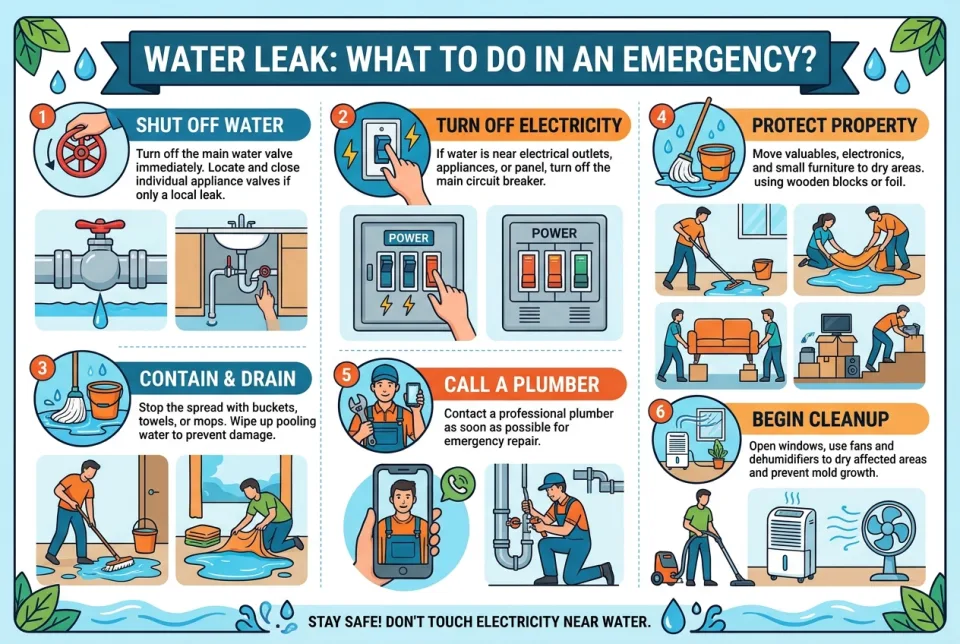
- Shut off the main water valve. Locate the main shut-off valve (often near the water meter or where the water line enters your home) and turn it clockwise until it stops. If you cannot find it, call a plumber or your water utility for help.
- Turn off electricity to affected areas. If water is near electrical outlets, appliances, or the fuse box, switch off the power at the main breaker if it is safe to reach. Do not touch electrical items in standing water.
- Stop the flow if possible. For a leak from a fixture or appliance, close the local supply valve (e.g., under a sink or behind a toilet). For a burst pipe, wrap it with a towel or use a pipe repair clamp if you have one.
- Contain the water. Use towels, buckets, or a wet/dry vacuum to soak up water and prevent it from spreading. Move furniture, rugs, and electronics away from the wet area.
- Call a professional. Contact a licensed plumber to fix the leak. If the leak is severe or you suspect a sewer line break, also call your local water authority.
What NOT to do
- Do not ignore the leak. Even a small leak can cause mold and structural damage.
- Do not touch electrical switches or appliances if you are standing in water or if they are wet.
- Do not use a regular vacuum to remove water; use a wet/dry vacuum only.
- Do not attempt major repairs unless you are qualified; improper fixes can worsen the leak.
When to call for help
Call a plumber immediately if you cannot stop the leak, if water is near electrical panels, or if the leak is from a sewer line (which may pose a health hazard). If water has entered walls or ceilings, a restoration professional may be needed to prevent mold.
What to monitor
- Check for water stains on ceilings and walls, which may indicate hidden leaks.
- Watch for mold growth (musty odors, visible spots) in the days following the leak.
- Monitor your water meter; if it keeps running after shutting off all fixtures, you may have a hidden leak.
How to prevent future leaks
- Know the location of your main water valve and test it annually.
- Insulate pipes in unheated areas to prevent freezing.
- Replace old hoses on washing machines and dishwashers every 5 years.
- Consider installing a water leak detector or automatic shut-off system.
After the immediate crisis is handled, document the damage with photos and contact your insurance company to file a claim. Regular maintenance and awareness can help prevent future emergencies.
Sources & references
Spotted an error? Report it — we correct factual mistakes promptly.
Read next
What Should You Do If Your Home Loses Water?
A sudden loss of water at home can be caused by a burst pipe, a frozen line, a municipal outage, or a problem with your own plumbing. Here is a calm, step-by-step plan to check the right things and protect your home.
Burned socket smell in the wall: what to do?
A burning smell from a wall socket is a serious fire hazard. Act quickly to cut power and get professional help.
Water heater no hot water: what to do?
When your water heater stops making hot water, follow these steps to diagnose the problem safely. Learn when to call a professional and how to avoid dangerous mistakes.
Kitchen tap dripping constantly: what to do?
A dripping kitchen tap wastes water and can damage your sink area. Learn how to diagnose and fix common causes safely.
Related handy tools
Checklists, decision guides, scenarios and quizzes for the same situation.