Kitchen tap dripping constantly: what to do?
A dripping kitchen tap wastes water and can damage your sink area. Learn how to diagnose and fix common causes safely.
Quick answer
4 steps — read this before anything else
-
1
Turn off the water supply under the sink before any repair.
-
2
Identify the tap type: washer, ceramic cartridge, or ball valve.
-
3
Replace the worn washer or cartridge; usually the cause of dripping.
-
4
If unsure or the leak persists, call a licensed plumber.
Warning
Turn off the water supply before starting any repair. If water is leaking near electrical outlets or appliances, do not touch them; turn off the main water supply and call a plumber.
A constantly dripping kitchen tap is more than an annoyance: it wastes water, can stain the sink, and may signal a worn internal part. Most drips come from a failed washer, O-ring, or cartridge, which you can often replace yourself with basic tools. This guide explains how to diagnose and fix the problem safely.
What is happening
When a tap drips, water is escaping past a seal that should be watertight. Common causes include a worn washer (in traditional compression taps), a damaged ceramic cartridge (in modern lever or quarter-turn taps), or a corroded valve seat. Less often, the drip comes from a loose packing nut or a faulty O-ring inside the spout.
Emergency warning
If water is spraying or pouring from the tap body or under the sink, and you cannot stop it by closing the isolation valves, turn off the main water supply to your home and call a plumber immediately. Water near electrical outlets or appliances is dangerous: do not touch anything electrical while standing in water.
Step by step
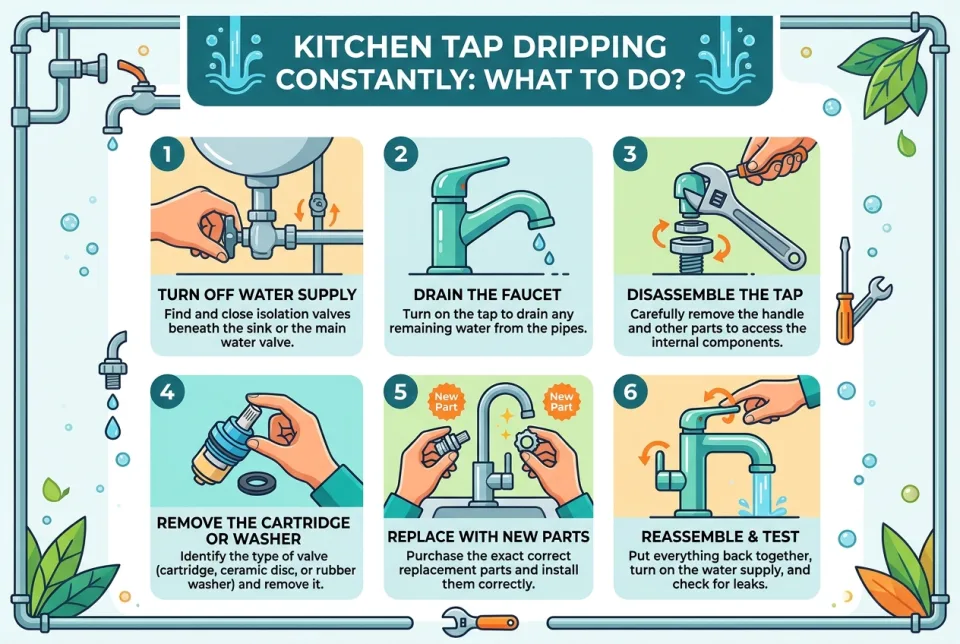
- Turn off the water supply. Close the isolation valves under the sink (usually two small taps on the supply pipes). If they are stuck or missing, turn off the main water valve for the house.
- Open the tap to release any remaining water and confirm the supply is off.
- Identify your tap type. Look for a brand name or model. Compression taps have a rubber washer at the base of the spindle; ceramic cartridge taps have a removable cartridge; ball taps have a metal ball with rubber seats.
- Dismantle the tap. Remove the handle (often a screw under a cap), then unscrew the retaining nut or cartridge housing. Take photos as you go to help reassembly.
- Inspect the parts. Look for a flattened, torn, or hardened washer; a cracked cartridge; or debris on the valve seat. Clean any limescale with white vinegar.
- Replace the faulty part. Take the old part to a hardware store to match it exactly. Fit the new washer or cartridge, reassemble, and tighten gently, do not overtighten.
- Restore water and test. Open the isolation valves slowly, then run the tap for a minute to flush air. Check for leaks around the base and under the sink.
What NOT to do
- Do not force stiff isolation valves; they may break and cause a flood. If they will not turn, use the main valve instead.
- Do not overtighten nuts or cartridges, as this can crack ceramic parts or strip threads.
- Do not use excessive force on plastic components; they become brittle with age.
- Do not ignore a drip under the sink; it can rot cabinets and promote mould.
When to call a professional
Call a licensed plumber if: the leak continues after replacing the obvious part; the tap body itself is cracked; you cannot shut off the water supply; or you are uncomfortable dismantling the tap. Also seek help if the drip is accompanied by low water pressure elsewhere, which may indicate a wider plumbing issue.
How to prevent it
- Fix drips promptly; a small leak often worsens.
- In hard-water areas, descale the tap regularly with vinegar to prolong seal life.
- Close taps gently rather than forcing them shut.
- Consider fitting a water softener if limescale is a recurring problem.
Most kitchen tap drips are a straightforward DIY fix. Start by turning off the water, identify the worn part, and replace it. If the problem persists or you feel unsure, stop and call a qualified plumber.
This is general information and not a substitute for professional plumbing advice. For any water leak that you cannot control, contact a licensed professional.
Spotted an error? Report it — we correct factual mistakes promptly.
Read next
What Should You Do If Your Home Loses Water?
A sudden loss of water at home can be caused by a burst pipe, a frozen line, a municipal outage, or a problem with your own plumbing. Here is a calm, step-by-step plan to check the right things and protect your home.
Boiler pressure too low or too high: what to do?
Boiler pressure problems can stop your heating or damage the system. Learn safe steps to diagnose and correct low or high pressure, and when to call a professional.
Christmas lights trip the fuse: what to do?
When your holiday lights keep tripping the fuse, it is a sign of overload or a fault. Learn how to reset safely, find the cause, and prevent a fire hazard.
Power surge during a storm: what to do?
A power surge can damage electronics and start fires. Learn how to stay safe during and after a surge, and how to protect your home.
Related handy tools
Checklists, decision guides, scenarios and quizzes for the same situation.