Stolen personal data: what to do?
If your personal information has been compromised, act quickly to limit damage. Learn the steps to secure accounts, monitor for fraud, and protect yourself.
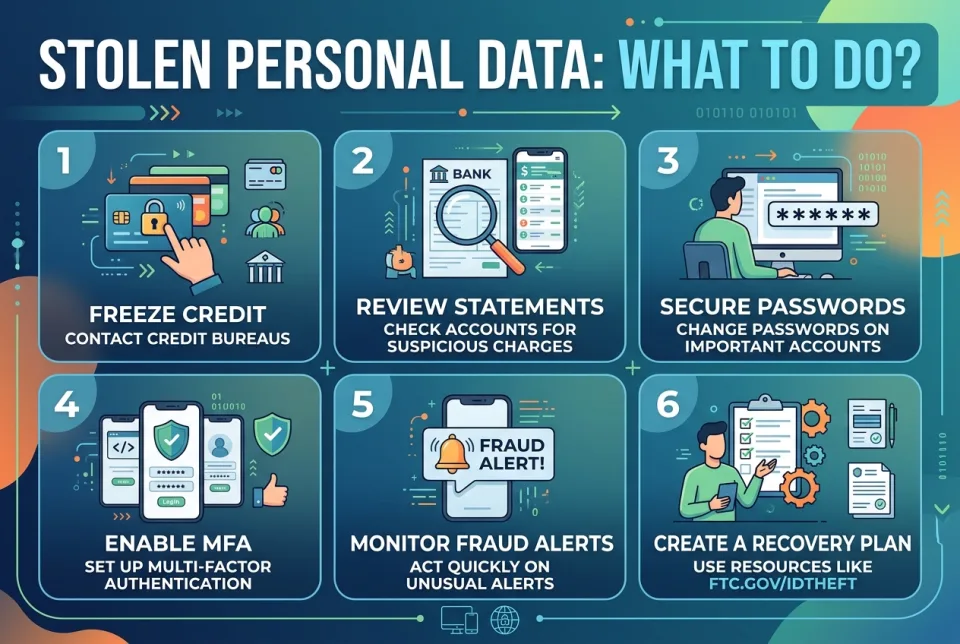
Quick answer
5 steps — read this before anything else
-
1
Change passwords for all affected accounts and enable two-factor authentication.
-
2
Contact your bank and credit card companies to flag suspicious activity.
-
3
Place a fraud alert or freeze your credit with the major credit bureaus.
-
4
Report the theft to the relevant authorities (e.g., FTC, local police).
-
5
Monitor your accounts and credit reports closely for unauthorized activity.
Warning
If you suspect identity theft, act immediately to prevent financial loss. Contact your bank and credit bureaus without delay.
Discovering that your personal data has been stolen can be alarming, but taking swift action can significantly reduce the risk of identity theft and financial loss. This guide outlines practical steps to secure your information and respond effectively.
What Is Happening?
Personal data theft occurs when someone gains unauthorized access to sensitive information such as your name, address, Social Security number, bank account details, or passwords. This can happen through data breaches, phishing, lost devices, or stolen documents. The stolen data may be used to open fraudulent accounts, make unauthorized purchases, or commit identity theft.
What to Do First
- Secure your accounts: Immediately change passwords for any compromised accounts, especially email, banking, and social media. Use strong, unique passwords and enable two-factor authentication (2FA) wherever possible.
- Contact your bank and credit card companies: Report any suspicious activity or unauthorized transactions. They can freeze or close affected accounts and issue new cards. Ask them to flag your accounts for fraud alerts.
- Place a fraud alert or credit freeze: Contact one of the major credit bureaus (Equifax, Experian, TransUnion) to place a fraud alert, which makes it harder for someone to open credit in your name. A credit freeze is a stronger step that restricts access to your credit report.
- Report the theft: File a report with the Federal Trade Commission (FTC) at IdentityTheft.gov, which provides a personalized recovery plan. Also report to your local police, especially if you know who stole your data or if it involves physical theft.
- Review your credit reports: Obtain free copies from AnnualCreditReport.com and check for unauthorized accounts or inquiries.
What NOT to Do
- Do not ignore the breach: Hoping it will go away can lead to bigger problems.
- Do not share more information: Avoid giving out additional personal details unless you have verified the recipient is legitimate.
- Do not click on suspicious links: Phishing emails may try to trick you into revealing more data.
- Do not use the same password across accounts: This makes it easier for hackers to access multiple accounts.
When to Seek Professional Help
If you suspect identity theft, consider consulting a professional such as an identity theft recovery service or a lawyer specializing in fraud. If you receive notices about unpaid bills or debts you don't recognize, contact the companies directly and dispute the charges. In cases where your Social Security number is compromised, you may need to contact the Social Security Administration.
What to Monitor
- Bank and credit card statements: Review them regularly for unauthorized charges.
- Credit reports: Check them periodically for new accounts or inquiries.
- Explanation of Benefits (EOB) from health insurers: Watch for fraudulent medical claims.
- Tax records: File your taxes early and watch for notices from the IRS about suspicious filings.
How to Prevent Future Theft
- Use strong, unique passwords and a password manager.
- Enable two-factor authentication on all accounts that offer it.
- Be cautious with sharing personal information online and offline.
- Shred documents containing sensitive information before disposing of them.
- Monitor your accounts regularly and sign up for breach notifications.
Acting quickly and staying vigilant are key to minimizing the impact of stolen personal data. Start by securing your accounts and contacting your financial institutions, then follow through with monitoring and reporting to protect yourself in the long term.
Sources & references
Spotted an error? Report it — we correct factual mistakes promptly.
Read next
Phishing email clicked by mistake: what to do?
Clicking a phishing link can expose your accounts and device. Act quickly to limit damage and secure your information.
Laptop stolen: what to do?
If your laptop is stolen, act quickly to protect your data and accounts. Here is a step-by-step guide to secure your information and report the theft.
Deleted files by mistake: what to do?
Accidentally deleted a file? Stop using the drive immediately and follow these steps to maximize your chances of recovery.
Ransomware screen appears: what to do?
A ransomware screen is a serious security incident. Stay calm, isolate the device, and follow these steps to limit damage and recover safely.
Related handy tools
Checklists, decision guides, scenarios and quizzes for the same situation.