Severe windstorm: protecting your property
Severe windstorms can cause serious damage to your home and belongings. Learn how to prepare before, stay safe during, and recover after a windstorm.
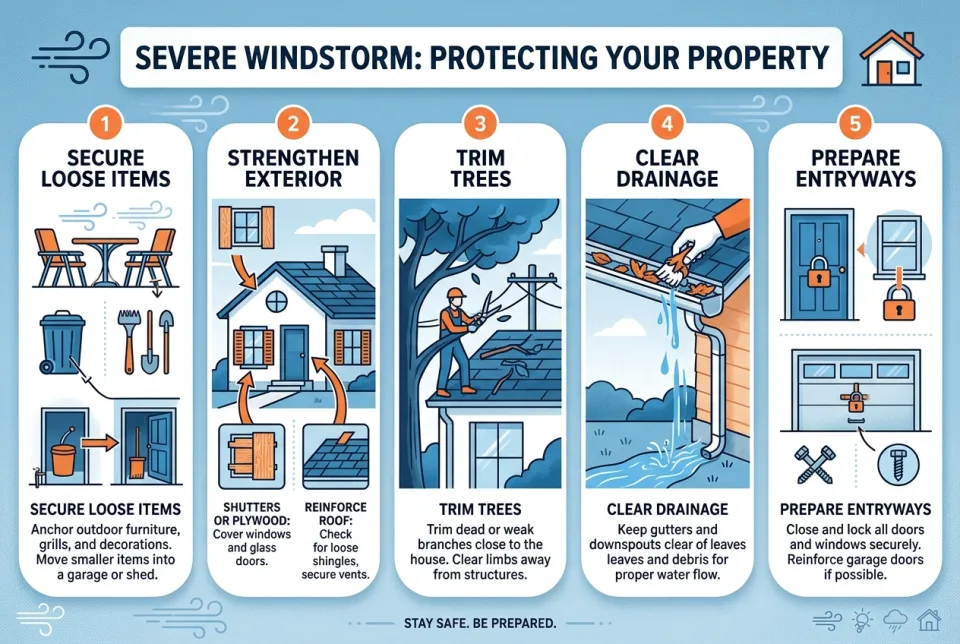
Quick answer
5 steps — read this before anything else
-
1
Secure or store loose outdoor items like furniture, trash cans, and decorations.
-
2
Trim trees and remove dead branches that could fall on your home.
-
3
Close and lock all windows and doors, and lower storm shutters if you have them.
-
4
Stay indoors and away from windows during the storm.
-
5
After the storm, check for damage safely and report downed power lines.
Warning
Severe windstorms can produce flying debris and downed power lines. Stay indoors during the storm and never touch or approach a downed power line. Call your utility company and emergency services if needed.
Severe windstorms can strike with little warning, bringing damaging gusts that can tear off roofs, topple trees, and turn loose objects into dangerous projectiles. Taking a few practical steps before, during, and after a windstorm can reduce the risk of injury and property damage.
Before the storm
Preparation is your best defense. When a windstorm is forecast, act quickly:
- Secure outdoor items: Bring in or tie down patio furniture, trash cans, garden tools, and decorations. These can become dangerous projectiles in high winds.
- Trim trees and shrubs: Remove dead branches and weak limbs that could break off and damage your home or power lines. Consider hiring a professional for large trees.
- Check your roof and gutters: Repair loose shingles or tiles and clear gutters so water can drain properly. Ensure your roof is in good condition.
- Install storm shutters or plywood covers: If you live in a windy area, consider permanent storm shutters or keep pre-cut plywood panels ready to cover windows.
- Reinforce garage doors: Garage doors are often the weakest point; a wind-rated bracing kit can help prevent collapse.
- Create an emergency kit: Include flashlights, batteries, a first-aid kit, water, non-perishable food, and a battery-powered weather radio.
- Know your safe room: Identify an interior room on the lowest floor, away from windows, to shelter in during the storm.
During the storm
Your safety comes first. Stay inside and away from windows, even if the wind seems to calm. Keep a battery-powered radio or your phone handy for updates. If you lose power, use flashlights, not candles, to avoid fire risk. Avoid using generators indoors. If you must go outside, wait until authorities say it is safe.
After the storm
Once the storm has passed, be cautious. Check for downed power lines and report them immediately to the utility company. Do not touch anything in contact with a power line. Inspect your property for damage, but avoid entering structures with obvious damage. Take photos for insurance claims if it is safe to do so. Contact your insurance company to report damage and start the claims process. If your home is unsafe, find alternative shelter.
What NOT to do
- Do not go outside during the storm or immediately after, as flying debris and downed lines remain hazardous.
- Do not use candles for light during a power outage.
- Do not run a generator indoors or in a garage, even with the door open.
- Do not attempt to move downed power lines yourself.
When to call for help
Call local emergency services if someone is injured, if there is a fire, or if you smell gas. For downed power lines, call your utility company. For non-emergency damage, contact your local authorities for guidance.
Prevention and maintenance
Regular home maintenance, such as trimming trees, cleaning gutters, and checking the roof, can reduce windstorm damage. Consider installing impact-resistant windows or a wind-rated garage door if you live in a high-wind area. Review your insurance policy to understand what is covered.
Stay informed and follow instructions from local officials. Your safety and the safety of your family are the top priority.
Spotted an error? Report it — we correct factual mistakes promptly.
Read next
Hurricane evacuation order given: what to do?
When a hurricane evacuation order is issued, you need to act quickly and safely. Follow these steps to protect yourself and your family.
Earthquake strikes while you are indoors: what to do?
During an earthquake indoors, drop, cover, and hold on to protect yourself from falling debris. Stay put until the shaking stops, then evacuate carefully.
Hailstorm damage: what to do?
Hailstorms can damage roofs, windows, vehicles, and siding. Learn how to stay safe, document damage, and start the recovery process.
Air quality alert (smoke): what to do?
When wildfire smoke triggers an air quality alert, protect your lungs by staying indoors, filtering your air, and limiting outdoor activity. Follow these steps to reduce exposure and know when to get help.
Related handy tools
Checklists, decision guides, scenarios and quizzes for the same situation.