Hurricane evacuation order given: what to do?
When a hurricane evacuation order is issued, you need to act quickly and safely. Follow these steps to protect yourself and your family.
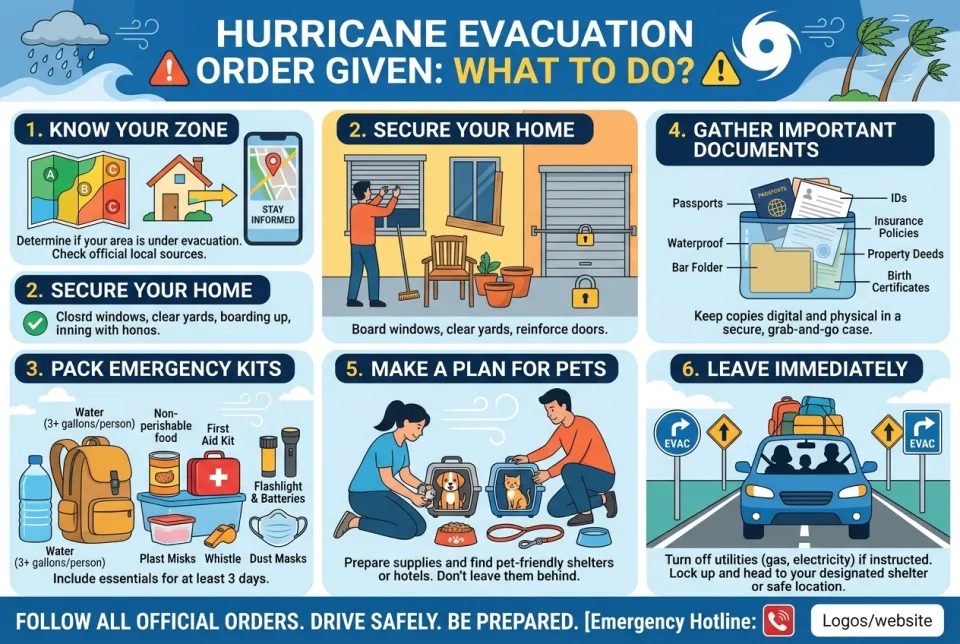
Quick answer
5 steps — read this before anything else
-
1
Leave immediately if an evacuation order is issued for your area.
-
2
Follow official evacuation routes and avoid shortcuts.
-
3
Take your emergency kit, medications, and important documents.
-
4
Turn off utilities if instructed by officials.
-
5
Stay informed through official sources and avoid rumors.
Warning
Evacuation orders are issued for your safety. Do not delay or ignore them. Floodwaters can be deadly; never drive through them.
Important — please read
This content is general educational and informational only, and is not a substitute for professional medical advice, diagnosis or treatment. Always seek the advice of a qualified health provider with any questions you may have about a medical condition. Never disregard or delay seeking professional medical care because of something you read here. In an emergency or life-threatening situation, call your local emergency services (police, fire or ambulance) immediately.
When a hurricane evacuation order is issued for your area, it means that local officials have determined that staying put is more dangerous than leaving. You should take the order seriously and act without delay. This guide outlines what to do before, during, and after you evacuate.
Emergency warning
If you are told to evacuate, do so immediately. Do not wait to see how the storm develops. Delaying can put you and your family at risk and may also hinder emergency responders. If you need help evacuating, call local emergency services for assistance.
What to do first
- Stay calm and confirm the order. Check official sources such as your local emergency management agency, the National Hurricane Center (for U.S. residents), or local news for the evacuation zone and routes.
- Gather your emergency kit. Include water, non-perishable food, medications, first aid supplies, flashlight, batteries, phone charger, important documents, cash, and supplies for pets.
- Secure your home. Close and lock windows and doors. If time permits, cover windows with storm shutters or plywood. Turn off utilities (electricity, gas, water) only if instructed by officials or if you suspect damage.
- Inform family and friends. Let someone outside the evacuation zone know your plans and destination.
- Leave early. Follow official evacuation routes and avoid shortcuts. Traffic will be heavy, so be patient and stay in your vehicle.
What NOT to do
- Do not ignore the order. Even if the storm seems to be weakening, conditions can change rapidly.
- Do not drive through flooded roads. Turn around, don't drown. Just six inches of moving water can knock you down, and a foot can float a car.
- Do not use elevators during a power outage. Use stairs instead.
- Do not leave pets behind. If you must evacuate, take them with you or arrange for their care in advance.
- Do not rely on rumors or social media for evacuation information. Always verify with official sources.
When to call for help
Call local emergency services immediately if you or someone else is in immediate danger, such as being trapped by rising water, experiencing a medical emergency, or if you cannot evacuate safely on your own. Do not call emergency services for general information about the storm; use official information lines instead.
What to monitor
Keep monitoring official channels for updates on the storm's path and any changes to evacuation orders. Listen to a battery-powered or hand-crank radio if the power goes out. Check on neighbors who may need assistance, especially the elderly or those with disabilities.
How to prevent it
While you cannot prevent a hurricane, you can reduce risks by preparing in advance. Know your evacuation zone, have a go-bag ready, and plan multiple evacuation routes. Stay informed and follow instructions from local authorities.
After the storm passes, do not return home until officials say it is safe. Be cautious of downed power lines and debris. This is general information and not a substitute for professional advice. In an emergency, always call your local emergency services.
Sources & references
Spotted an error? Report it — we correct factual mistakes promptly.
Read next
What to Do If You Receive an Emergency Evacuation Order
Receiving an emergency evacuation order means you must leave immediately. Learn the critical steps to evacuate safely, protect your family, and avoid hazards.
Earthquake strikes while you are indoors: what to do?
During an earthquake indoors, drop, cover, and hold on to protect yourself from falling debris. Stay put until the shaking stops, then evacuate carefully.
Tsunami warning after a coastal earthquake: what to do?
If you feel strong or long shaking near the coast, a tsunami may follow within minutes. Move inland or to high ground immediately and stay there until officials say it is safe.
Hailstorm damage: what to do?
Hailstorms can damage roofs, windows, vehicles, and siding. Learn how to stay safe, document damage, and start the recovery process.
Related handy tools
Checklists, decision guides, scenarios and quizzes for the same situation.