Air quality alert (smoke): what to do?
When wildfire smoke triggers an air quality alert, protect your lungs by staying indoors, filtering your air, and limiting outdoor activity. Follow these steps to reduce exposure and know when to get help.
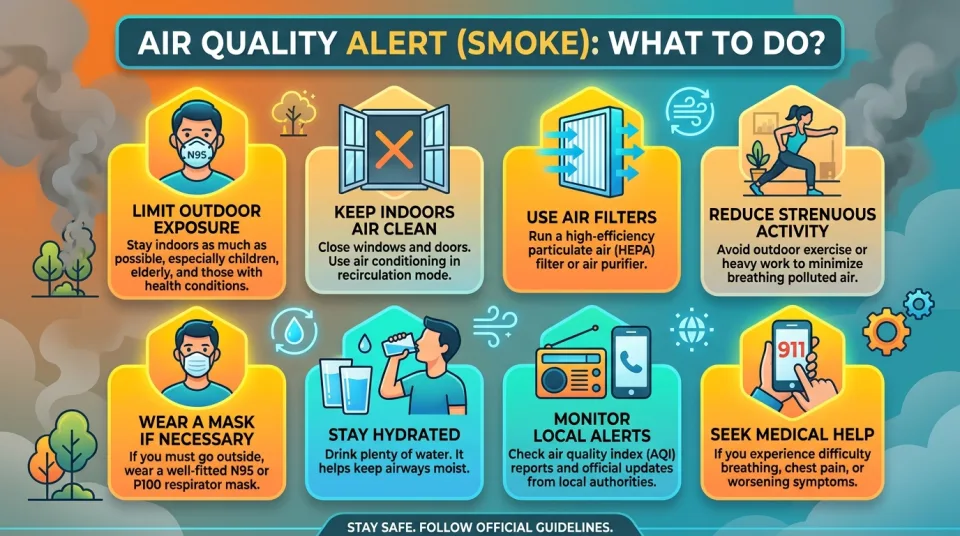
Quick answer
5 steps — read this before anything else
-
1
Stay indoors with windows and doors closed.
-
2
Run an air conditioner or air purifier on recirculate mode, or create a clean room.
-
3
Avoid outdoor exercise and strenuous activity.
-
4
Check local air quality reports and follow public health advisories.
-
5
If you have trouble breathing, call your healthcare provider or emergency services.
Warning
Smoke can cause serious health problems. If you have trouble breathing, chest pain, or other severe symptoms, call emergency services immediately.
Important — please read
This content is general educational and informational only, and is not a substitute for professional medical advice, diagnosis or treatment. Always seek the advice of a qualified health provider with any questions you may have about a medical condition. Never disregard or delay seeking professional medical care because of something you read here. In an emergency or life-threatening situation, call your local emergency services (police, fire or ambulance) immediately.
Wildfire smoke can travel hundreds of miles and turn the sky hazy, even if the fire is far away. When an air quality alert is issued for smoke, the air you breathe may contain tiny particles that can irritate your eyes, nose, throat, and lungs. People with heart or lung disease, older adults, children, and pregnant women are especially vulnerable. The steps below help you reduce exposure and stay safe.
What is happening
Smoke from wildfires contains a mixture of gases and fine particles. The smallest particles (PM2.5) can penetrate deep into your lungs and even enter your bloodstream. An air quality alert means levels of these pollutants are high enough to be unhealthy, especially for sensitive groups. The alert may last hours or days, depending on weather and fire conditions.
Emergency warning
If you or someone nearby has severe trouble breathing, chest pain, or fainting, call your local emergency services immediately. Smoke can worsen heart and lung conditions. Do not wait to get help.
What to do first
- Go indoors and close windows and doors. If you have an air conditioner, set it to recirculate mode and close the fresh-air intake. If you don't have AC and it's hot, seek a local cooling center or shelter.
- Use an air purifier with a HEPA filter in the room where you spend most time. If you don't have one, create a clean room: choose a room with few windows, keep the door closed, and run a portable air cleaner or a DIY box fan filter (follow reputable instructions).
- Avoid indoor sources of smoke and particles. Don't burn candles, incense, or use a gas stove without ventilation. Don't vacuum, as it can stir up particles.
- Limit outdoor activity. Cancel or move outdoor events. If you must go out, keep it brief and avoid strenuous exertion. Consider wearing a well-fitting N95 or KN95 mask if you have to be outside for a short time, but masks are not a substitute for staying indoors.
- Check local air quality. Use official sources like AirNow (airnow.gov) or your local health department for current AQI levels and advisories.
What NOT to do
- Do not rely on dust masks or surgical masks for protection against smoke; they don't seal well and won't filter fine particles.
- Do not run a whole-house fan or window fan that pulls outside air in.
- Do not exercise outdoors or do other activities that make you breathe hard.
- Do not ignore symptoms. If you feel chest pain, shortness of breath, or severe fatigue, seek medical help.
When to seek professional care
Contact a healthcare provider if you experience coughing that won't stop, wheezing, difficulty breathing, chest tightness, or worsening of a chronic condition. For severe symptoms such as inability to catch your breath, blue lips, or confusion, call emergency services right away.
What to monitor
- Local air quality index (AQI) and health advisories.
- Your own symptoms, especially if you have asthma, COPD, heart disease, or are pregnant.
- Indoor air quality: keep windows closed and use filtration.
- Weather forecasts for wind shifts that may clear or worsen smoke.
How to prevent exposure
Plan ahead: keep a supply of N95 masks, a portable HEPA air cleaner, and extra medications on hand if you have respiratory conditions. Sign up for local emergency alerts. If you live in a wildfire-prone area, create a clean room in advance and know evacuation routes.
This is general information and not a substitute for professional medical advice. In an emergency, call your local emergency services.
Sources & references
Spotted an error? Report it — we correct factual mistakes promptly.
Read next
What to Do If You Receive an Emergency Evacuation Order
Receiving an emergency evacuation order means you must leave immediately. Learn the critical steps to evacuate safely, protect your family, and avoid hazards.
What to Do If You Lose Electricity During Winter
Essential safety steps to retain heat, prevent carbon monoxide poisoning, and protect your home during a cold-weather power outage.
What to Do If You're Stuck During a Snowstorm
If you are stranded in a vehicle or outdoors during a blizzard, remaining calm and following key cold-weather safety steps can save your life.
Earthquake strikes while you are indoors: what to do?
During an earthquake indoors, drop, cover, and hold on to protect yourself from falling debris. Stay put until the shaking stops, then evacuate carefully.
Related handy tools
Checklists, decision guides, scenarios and quizzes for the same situation.