Landslide warning signs on a hillside: what to do?
Landslides often give warning signs before they fail. Learn what to watch for on a hillside and the safe actions to take to protect yourself and others.
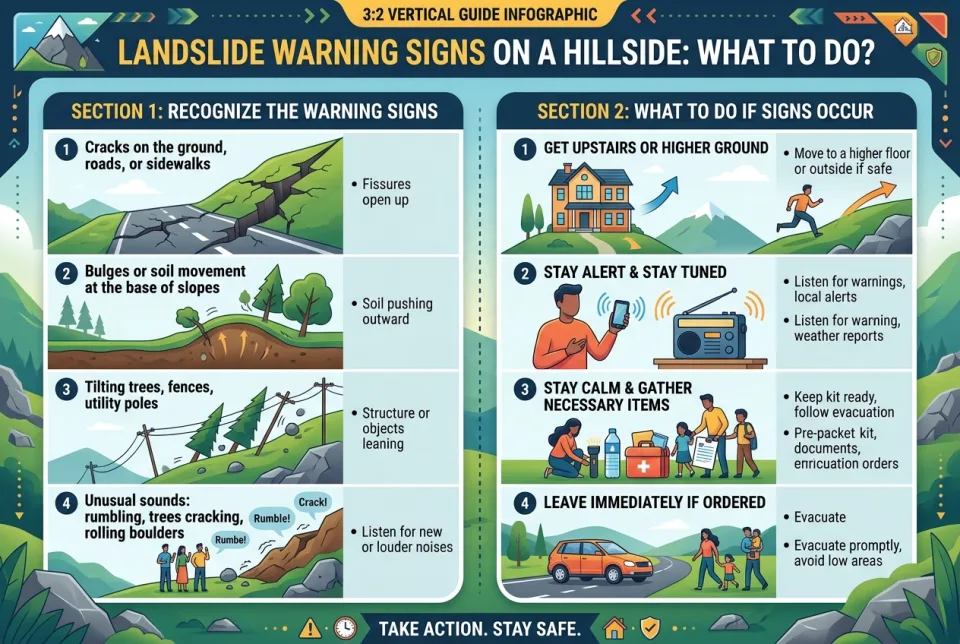
Quick answer
5 steps — read this before anything else
-
1
Move away from the slope and get to higher, stable ground if you are below it, or well back from the edge if you are above it.
-
2
Call local emergency services if there is an immediate threat to people or property.
-
3
Evacuate downhill areas and the base of the slope, and warn others nearby.
-
4
Listen for unusual sounds like cracking trees, rumbling, or snapping wood.
-
5
Do not return until authorities say the area is safe.
Warning
Landslides can fail suddenly and without much warning. Never approach a moving or recently moved slope, and call local emergency services if people are trapped or in danger.
Important — please read
This content is general educational and informational only, and is not a substitute for professional medical advice, diagnosis or treatment. Always seek the advice of a qualified health provider with any questions you may have about a medical condition. Never disregard or delay seeking professional medical care because of something you read here. In an emergency or life-threatening situation, call your local emergency services (police, fire or ambulance) immediately.
A landslide is the movement of rock, soil, or debris down a slope. It can happen slowly over hours or suddenly with little warning, and hillsides often show subtle signs before they fail. Recognizing those signs and knowing how to react can keep you and the people around you out of harm's way.
What is happening
Slopes become unstable when water, gravity, erosion, or human activity weakens the ground. Heavy or prolonged rain, rapid snowmelt, earthquakes, and construction can all trigger movement. The warning signs below mean the ground may already be shifting, so treat them as a reason to act, not to investigate.
Emergency warning
If you see or hear signs of an active landslide, or the ground is moving, call your local emergency services immediately. Do not wait to confirm. If you are in danger, evacuate first and call once you are safe.
Warning signs to watch for
- New cracks or widening gaps in the ground, pavement, or foundations.
- Doors or windows that suddenly stick or jam, or walls and floors that tilt.
- Tilting trees, utility poles, or fences, or trees leaning in one direction.
- Soil moving away from foundations, or sunken or displaced road surfaces.
- Springs, seeps, or muddy water appearing where none were before.
- Rumbling, cracking, or snapping sounds, or the sound of moving debris.
- Small slides, rockfalls, or debris trickling onto roads.
What to do first
- Move away from the slope. If you are below it, move sideways out of the likely path and to higher, stable ground. If you are above it, back away from the edge.
- Warn others nearby and keep them away from the base of the hill.
- Call local emergency services and report what you see and where.
- Avoid the area and do not cross the slope or the debris field.
- Follow official instructions and evacuate if told to do so.
What NOT to do
- Do not walk toward the slide to get a closer look or take photos.
- Do not try to cross a moving or recently moved slope.
- Do not shelter under or near trees, poles, or structures on the slope.
- Do not ignore small cracks or trickles of debris: they can be the start of a larger failure.
- Do not return until authorities confirm the area is safe.
When to call for help
Call emergency services if anyone is trapped, injured, or missing, if a slide is blocking a road or threatening buildings, or if the ground is actively moving. Give your location, what you can see, and whether people are in danger.
What to monitor
After you are safe, watch for continuing movement: new cracks, falling debris, or changing sounds. Keep listening to official alerts and weather warnings, since heavy rain can trigger further slides. Stay clear of the area and let trained responders assess it.
How to prevent it
You cannot stop a landslide, but you can reduce risk. Avoid building or parking at the base of steep slopes, keep drainage clear, and watch for changes after heavy rain or snowmelt. If you live on or near a hillside, learn your local evacuation routes and report new cracks or ground movement to local authorities.
If you notice any warning sign on a hillside, act early: move to safety, warn others, and call for help. This guide is general information and not a substitute for professional advice. In an emergency, call your local emergency services immediately.
Sources & references
Spotted an error? Report it — we correct factual mistakes promptly.
Read next
What Should You Do If a Tornado Warning Is Issued While You Are at Home?
A tornado warning means a tornado has been detected or is occurring. Know the safest room in your home and act immediately, without waiting to see the storm.
Blizzard while driving: what to do?
A blizzard can turn a routine drive into a life-threatening situation in minutes. Know how to react if you're caught on the road.
Tornado warning: what to do?
A tornado warning means a tornado has been sighted or indicated by radar. Act immediately: get to a safe shelter, protect your head, and stay tuned to official alerts.
Tsunami warning after a coastal earthquake: what to do?
If you feel strong or long shaking near the coast, a tsunami may follow within minutes. Move inland or to high ground immediately and stay there until officials say it is safe.
Related handy tools
Checklists, decision guides, scenarios and quizzes for the same situation.