Radiator cold at the top but hot at the bottom: what to do?
A radiator that is cold at the top and hot at the bottom usually means trapped air or sludge. Learn how to diagnose and fix it safely.
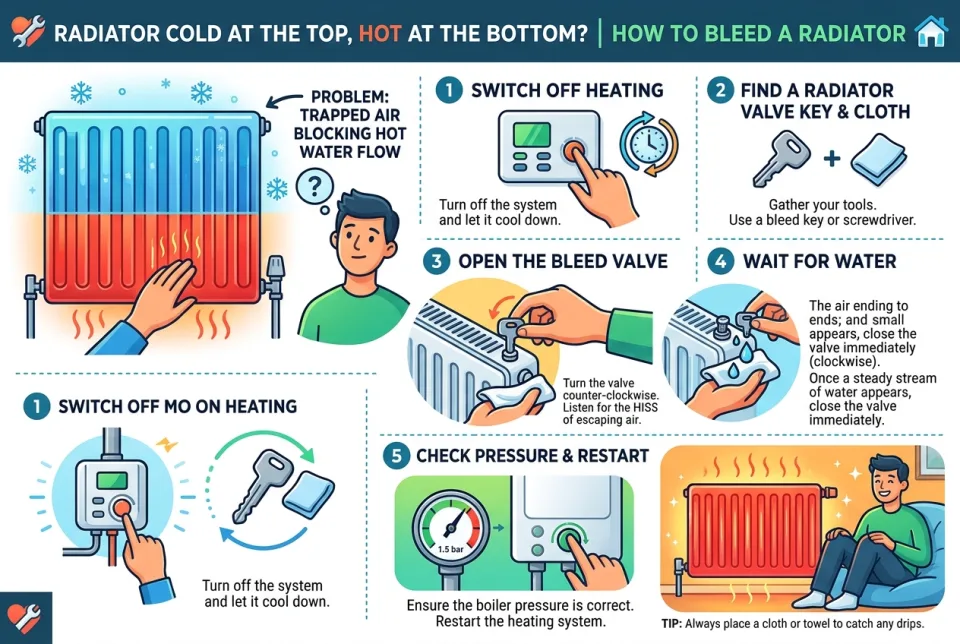
Quick answer
4 steps — read this before anything else
-
1
Turn off the heating and let the radiator cool completely.
-
2
Bleed the radiator using a radiator key to release trapped air.
-
3
If bleeding doesn't work, the system may need flushing or balancing by a professional.
-
4
Check for leaks and ensure the boiler pressure is correct after bleeding.
Warning
Hot water and steam can cause severe burns. Always let the radiator cool completely before bleeding. If you smell gas or suspect a carbon monoxide leak, evacuate and call the gas emergency service immediately.
If your radiator is cold at the top and hot at the bottom, it is usually a sign of trapped air or a buildup of sludge inside the radiator. This is a common issue that can often be fixed with a simple bleed, but sometimes it requires professional help.
What is happening?
When air gets trapped in the radiator, it rises to the top, preventing hot water from filling the whole unit. Alternatively, sludge (a mix of rust and debris) can accumulate at the bottom, blocking heat. Both cause uneven heating: cold at the top, warm at the bottom.
What to do first
- Turn off the heating and allow the radiator to cool completely to avoid burns.
- Bleed the radiator: Use a radiator key to slowly open the bleed valve at the top corner. You should hear a hiss as air escapes. Once water starts to dribble out, close the valve tightly.
- Check boiler pressure: After bleeding, the system pressure may drop. If it is below the recommended level (usually 1-1.5 bar when cold), top it up using the filling loop, following the boiler manual.
- Turn the heating back on and see if the radiator heats evenly. If not, repeat bleeding after it cools.
What NOT to do
- Do not bleed a hot radiator – scalding water can cause serious burns.
- Do not over-tighten the bleed valve – it can break or strip the thread.
- Do not ignore persistent cold spots – they may indicate a bigger issue like sludge buildup or a failing pump.
- Do not attempt to remove the radiator yourself unless you are competent; it can cause leaks or damage.
When to call a professional
If bleeding does not solve the problem, or if the radiator remains cold at the top after several attempts, call a qualified heating engineer. They can flush the system, check for sludge, and balance the radiators. Also seek professional help if you notice leaks, unusual noises, or if the boiler pressure keeps dropping.
What to monitor
After bleeding, monitor the radiator over a few heating cycles. Check for consistent heat distribution and watch for any water leaks around the valve. Keep an eye on the boiler pressure gauge; if it falls frequently, there may be a leak or air ingress.
How to prevent it
Regular maintenance helps: bleed radiators annually before winter, consider adding a magnetic filter to trap sludge, and have the system serviced by a professional every few years. This keeps your heating efficient and prevents cold spots.
If you are unsure or uncomfortable performing these steps, contact a qualified heating engineer. Safety first: never work on a hot radiator or a pressurized system without proper knowledge.
Spotted an error? Report it — we correct factual mistakes promptly.
Read next
Burned socket smell in the wall: what to do?
A burning smell from a wall socket is a serious fire hazard. Act quickly to cut power and get professional help.
Boiler pressure too low or too high: what to do?
Boiler pressure problems can stop your heating or damage the system. Learn safe steps to diagnose and correct low or high pressure, and when to call a professional.
Ceiling fan wobbling or noisy: what to do?
A wobbling or noisy ceiling fan is usually fixable with simple adjustments. Learn safe steps to diagnose and correct the problem before it worsens.
Garbage disposal jammed: what to do?
A jammed garbage disposal can often be freed safely without calling a plumber. Learn the correct steps, the dangerous mistakes to avoid, and when to get professional help.
Related handy tools
Checklists, decision guides, scenarios and quizzes for the same situation.