Oven on fire: what to do?
An oven fire can be frightening, but quick action can prevent it from spreading. Learn the safe steps to take and what never to do.
Quick answer
5 steps — read this before anything else
-
1
Turn off the oven and keep the door closed.
-
2
Do not open the oven door.
-
3
If the fire does not go out immediately, evacuate and call the fire service.
-
4
Never use water on a grease fire.
-
5
If safe, use a fire extinguisher designed for kitchen fires.
Warning
Never use water on a grease fire. It can cause a violent explosion and spread the fire. If the fire does not go out immediately, evacuate and call the fire service.
Important — please read
This content is general educational and informational only, and is not a substitute for professional medical advice, diagnosis or treatment. Always seek the advice of a qualified health provider with any questions you may have about a medical condition. Never disregard or delay seeking professional medical care because of something you read here. In an emergency or life-threatening situation, call your local emergency services (police, fire or ambulance) immediately.
An oven fire is a common kitchen emergency, often caused by grease buildup or food catching fire. Knowing how to react quickly and safely can prevent the fire from spreading and keep you and your home safe.
What is happening
Oven fires usually start when food, grease, or residue inside the oven ignites. The fire may be small and contained, or it may spread if the oven door is opened, allowing oxygen in and flames out.
Emergency warning
If the fire is large, spreading beyond the oven, or producing heavy smoke, evacuate immediately and call your local emergency services. Do not attempt to fight a large fire yourself.
What to do first
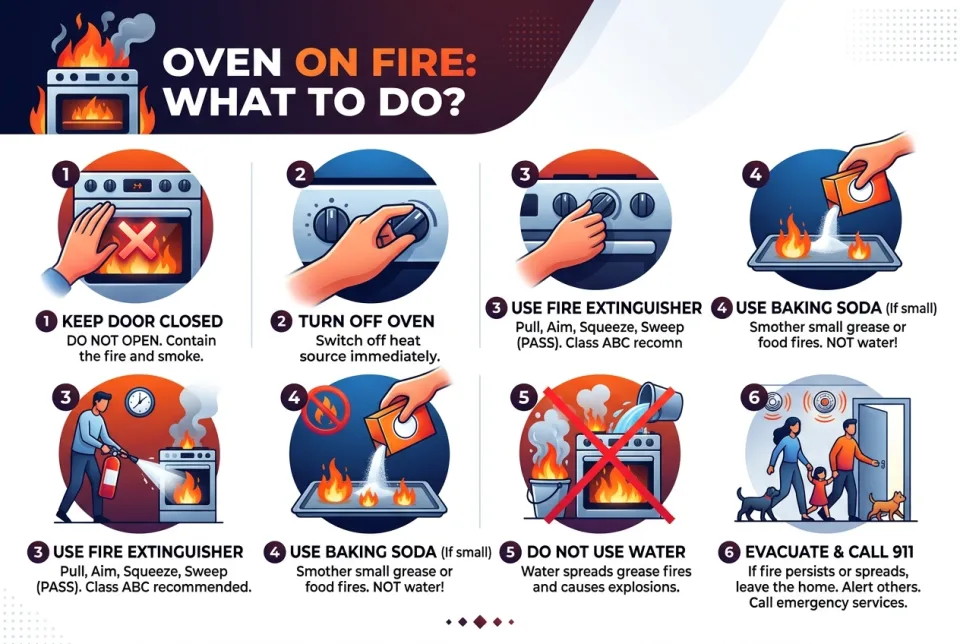
- Turn off the oven and any nearby heat sources. If safe to do so, switch off the oven and the stove.
- Keep the oven door closed. This starves the fire of oxygen and helps contain it.
- Do not open the door. Opening it can cause a surge of flames and spread the fire.
- If the fire does not go out immediately, leave the house and call the fire service. Even if it appears small, if it persists for more than a few seconds, treat it as an emergency.
- If you have a fire extinguisher rated for kitchen fires (Class B or K), and the fire is small and contained, you may use it. Aim at the base of the fire and follow the PASS technique (Pull, Aim, Squeeze, Sweep).
What NOT to do
- Never use water on a grease fire. Water can cause a violent steam explosion and spread the fire.
- Do not open the oven door to check on the fire. Keep it closed until the fire is out and the oven has cooled.
- Do not attempt to move a burning pan or oven. You risk severe burns and spreading the fire.
- Do not use flour or baking soda to extinguish a fire. These can make the fire worse.
- Do not turn on the exhaust fan. It can pull flames into the ductwork.
When to call for help
Call your local emergency services immediately if:
- The fire does not go out within a few seconds after turning off the oven.
- Flames are visible outside the oven.
- There is heavy smoke filling the room.
- Anyone is injured or trapped.
- You are unsure or feel unsafe.
What to monitor
After the fire is out, keep the oven door closed and monitor for any signs of smoke or heat. Do not use the oven again until it has been inspected and cleaned by a professional.
How to prevent it
- Clean your oven regularly to prevent grease buildup.
- Never leave cooking unattended, especially when using high heat or oil.
- Keep flammable items away from the stovetop and oven.
- Use a timer to remind you when food is cooking.
- Have a fire extinguisher rated for kitchen fires in your home and know how to use it.
Stay calm, act quickly, and always prioritize your safety. If in doubt, evacuate and call for help.
This is general information and not a substitute for professional advice. In an emergency, call your local emergency services immediately.
Sources & references
Spotted an error? Report it — we correct factual mistakes promptly.
Read next
Hidden food allergens when dining out: what to do?
Learn how to identify hidden allergens when eating out, communicate with restaurant staff, and respond safely to a reaction.
Raw chicken and cross-contamination: what to do?
Raw chicken can spread harmful bacteria like Salmonella and Campylobacter to hands, utensils, and surfaces. Learn how to clean up safely and prevent cross-contamination.
Freezer defrosted overnight: what to do?
A freezer that thaws overnight can compromise food safety. Learn how to assess the situation, decide what to keep, and prevent future thawing.
Gas stove won't light: what to do?
A gas stove that won't light can be a simple fix or a sign of a dangerous gas leak. Learn the safe steps to take before you try again.
Related handy tools
Checklists, decision guides, scenarios and quizzes for the same situation.