Raw chicken and cross-contamination: what to do?
Raw chicken can spread harmful bacteria like Salmonella and Campylobacter to hands, utensils, and surfaces. Learn how to clean up safely and prevent cross-contamination.
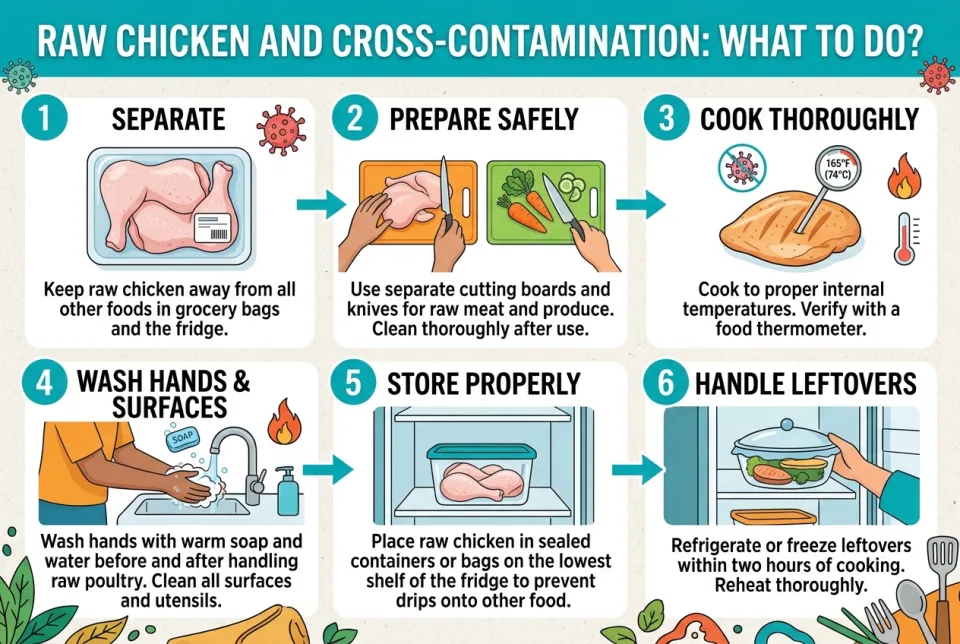
Quick answer
5 steps — read this before anything else
-
1
Wash hands with soap and warm water for at least 20 seconds after touching raw chicken.
-
2
Clean and sanitize all surfaces, utensils, and cutting boards that touched raw chicken.
-
3
Do not wash raw chicken under running water; it splashes bacteria around.
-
4
Cook chicken to a safe internal temperature (165°F / 74°C) to kill bacteria.
-
5
If you develop severe symptoms like bloody diarrhea or high fever, seek medical care.
Warning
Raw chicken can carry dangerous bacteria. Never wash raw chicken under running water, as splashing spreads bacteria. Always cook chicken to 165°F (74°C) and sanitize all surfaces that touched raw meat.
Important — please read
This content is general educational and informational only, and is not a substitute for professional medical advice, diagnosis or treatment. Always seek the advice of a qualified health provider with any questions you may have about a medical condition. Never disregard or delay seeking professional medical care because of something you read here. In an emergency or life-threatening situation, call your local emergency services (police, fire or ambulance) immediately.
Raw chicken is a common source of foodborne bacteria, especially Salmonella and Campylobacter. Cross-contamination happens when these bacteria spread from raw chicken to ready-to-eat foods, utensils, or surfaces. It is a leading cause of food poisoning. This guide explains what to do if you have handled raw chicken and how to prevent contamination.
What is happening
Raw chicken juices can contain harmful bacteria. If they touch other foods, cutting boards, knives, or your hands, those items become contaminated. You cannot see, smell, or taste the bacteria. The only reliable way to stay safe is to follow strict hygiene and cooking practices.
What to do first
- Wash your hands thoroughly with soap and warm water for at least 20 seconds after handling raw chicken. Dry with a clean paper towel or a clean cloth towel.
- Clean and sanitize any surface, cutting board, or utensil that touched raw chicken. First wash with hot soapy water, then apply a sanitizer (such as a diluted bleach solution or a commercial kitchen sanitizer) following the product instructions. Let it air dry.
- Do not wash raw chicken under running water. This splashes bacteria up to 3 feet away, contaminating sinks, counters, and nearby food. Cooking kills the bacteria.
- Separate raw and cooked foods. Use separate cutting boards and utensils for raw meat and ready-to-eat foods. Never place cooked food back on a plate that held raw chicken.
- Cook chicken thoroughly. Use a food thermometer to ensure the thickest part reaches 165°F (74°C). Juices should run clear, and meat should not be pink.
What NOT to do
- Do not rinse raw chicken in the sink.
- Do not use the same unwashed cutting board for raw chicken and vegetables or cooked foods.
- Do not touch your face, phone, or other surfaces with contaminated hands.
- Do not rely on sight or smell to judge if chicken is cooked; use a thermometer.
When to call for help
If you or someone else develops symptoms of food poisoning after handling or eating raw chicken, such as nausea, vomiting, diarrhea, or fever, monitor for signs of severe dehydration. Call local emergency services or seek urgent medical care if you experience bloody diarrhea, high fever (above 102°F / 39°C), severe abdominal pain, signs of dehydration (dry mouth, little urine, dizziness), or if symptoms last more than 3 days. Infants, young children, pregnant women, older adults, and people with weakened immune systems are at higher risk and should seek medical advice early.
What to monitor
Watch for symptoms of food poisoning, which can appear within hours to days. Keep hydrated with clear fluids. If symptoms worsen or you cannot keep fluids down, seek medical care.
How to prevent it
- Always wash hands before and after handling raw chicken.
- Keep raw chicken separate from other foods in your shopping cart, refrigerator, and preparation area.
- Use color-coded cutting boards (e.g., red for raw meat, green for vegetables).
- Clean and sanitize countertops, sinks, and utensils immediately after contact with raw chicken.
- Store raw chicken in a sealed container on the bottom shelf of the refrigerator to prevent drips onto other foods.
- Thaw chicken in the refrigerator, not on the counter.
By following these steps, you can greatly reduce the risk of cross-contamination and foodborne illness. When in doubt, throw it out.
This is general information and not a substitute for professional medical advice. In an emergency, call your local emergency services.
Sources & references
Spotted an error? Report it — we correct factual mistakes promptly.
Read next
What Do You Do If Your Homemade Food Tastes Bland? 9 Ways to Improve Flavor
Bland food is usually missing one of a few key elements: salt, acid, fat, or umami. Here are nine practical ways to fix the flavor of a dish without starting over.
What to Do If Your Chicken Always Turns Out Dry?
Dry chicken is usually a temperature and timing problem, not a recipe problem. These eight practical tricks help you keep chicken juicy every time, from brining to resting.
What to Do If You Keep Ordering Takeout: 8 Ways to Make Home Cooking Easier
If takeout has become your default dinner, small changes to planning, shopping and kitchen setup can make home cooking the easier choice. Here are 8 practical ways to cook at home more often without relying on willpower alone.
Freezer defrosted overnight: what to do?
A freezer that thaws overnight can compromise food safety. Learn how to assess the situation, decide what to keep, and prevent future thawing.
Related handy tools
Checklists, decision guides, scenarios and quizzes for the same situation.