Hidden food allergens when dining out: what to do?
Learn how to identify hidden allergens when eating out, communicate with restaurant staff, and respond safely to a reaction.
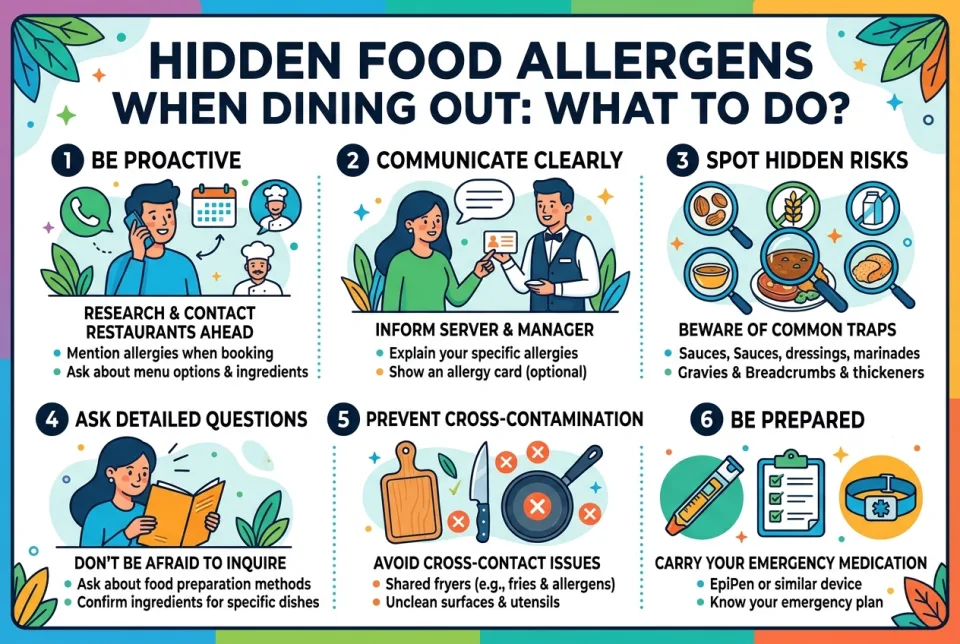
Quick answer
4 steps — read this before anything else
-
1
Inform the server of your allergy clearly and ask to speak with the chef or manager.
-
2
Ask detailed questions about ingredients, cross-contact, and cooking surfaces.
-
3
Carry your prescribed epinephrine auto-injector and a written allergy action plan.
-
4
If symptoms of a severe reaction (anaphylaxis) occur, use epinephrine and call emergency services immediately.
Warning
If you have a severe allergy, always carry epinephrine and call emergency services immediately if you experience signs of anaphylaxis.
Important — please read
This content is general educational and informational only, and is not a substitute for professional medical advice, diagnosis or treatment. Always seek the advice of a qualified health provider with any questions you may have about a medical condition. Never disregard or delay seeking professional medical care because of something you read here. In an emergency or life-threatening situation, call your local emergency services (police, fire or ambulance) immediately.
Dining out with a food allergy requires vigilance, but with the right approach you can reduce the risk of an allergic reaction. Hidden allergens can appear in unexpected places, from sauces and marinades to shared fryers and cutting boards. Here is what to do.
What to do first
- Speak up before you order. Tell your server about your allergy as soon as you are seated. Be specific: name the allergen and describe what happens if you are exposed. Ask to speak with the chef or manager, especially if the restaurant is busy or the menu is complex.
- Ask detailed questions. Inquire about every ingredient in the dish, including oils, spices, sauces, and garnishes. Ask how the food is prepared and whether there is a risk of cross-contact with your allergen. For example, are fries cooked in the same oil as breaded items? Is the grill cleaned between orders?
- Review the menu and ask for allergen information. Many restaurants have allergen menus or binders. If they do not, ask staff to check with the kitchen. Do not rely on guesswork.
- Carry your emergency kit. Always bring your prescribed epinephrine auto-injector (if you have one) and any other medications your doctor has recommended. Have a written allergy action plan from your healthcare provider.
- Consider the risk level. If the restaurant cannot confidently answer your questions or seems unsure, it may be safer to choose a different dish or eat elsewhere.
What NOT to do
- Do not assume a dish is safe because it sounds plain or familiar. Hidden allergens can be present in unexpected foods.
- Do not rely on a server's memory or guesswork; ask them to verify with the kitchen.
- Do not be embarrassed to ask for accommodations. Your safety comes first.
- Do not ignore mild symptoms. They can be the first signs of a severe reaction.
When to call for help
If you or someone you are with experiences symptoms of a severe allergic reaction (anaphylaxis), such as difficulty breathing, throat tightness, a swollen tongue or lips, widespread hives, vomiting, dizziness, or a feeling of impending doom, act immediately. Use epinephrine if it has been prescribed and call your local emergency services right away. Do not wait to see if symptoms improve.
What to monitor
After eating, stay alert for any signs of an allergic reaction for at least a few hours. Symptoms can sometimes be delayed or biphasic (returning after initial improvement). If you have a known allergy, watch for hives, itching, swelling, stomach pain, vomiting, coughing, or wheezing.
How to prevent it
- Research restaurants ahead of time. Look for places that have clear allergen protocols or are known to be allergy-friendly.
- Call the restaurant during off-peak hours to discuss your needs with the manager or chef.
- Bring a chef card that lists your allergens and safe alternatives in the local language if traveling.
- Always read labels on packaged foods and ask about ingredients in homemade sauces or dressings.
This is general information and not a substitute for professional medical advice. Always consult your healthcare provider about your allergy management plan, and call emergency services in an emergency.
Sources & references
Spotted an error? Report it — we correct factual mistakes promptly.
Read next
What Do You Do If Your Homemade Food Tastes Bland? 9 Ways to Improve Flavor
Bland food is usually missing one of a few key elements: salt, acid, fat, or umami. Here are nine practical ways to fix the flavor of a dish without starting over.
What Do You Do When You Don't Have Enough Ingredients for a Recipe?
Missing an ingredient doesn't have to ruin your meal. Learn 10 smart substitutions and a simple strategy to adapt any recipe on the fly.
Freezer defrosted overnight: what to do?
A freezer that thaws overnight can compromise food safety. Learn how to assess the situation, decide what to keep, and prevent future thawing.
Gas stove won't light: what to do?
A gas stove that won't light can be a simple fix or a sign of a dangerous gas leak. Learn the safe steps to take before you try again.
Related handy tools
Checklists, decision guides, scenarios and quizzes for the same situation.