Need financial help after a natural disaster: what to do?
A step-by-step guide to accessing financial assistance, managing bills, and avoiding scams after a natural disaster.
Quick answer
5 steps — read this before anything else
-
1
Ensure your safety and document all damage with photos and videos.
-
2
Contact your insurance company to file a claim as soon as possible.
-
3
Apply for FEMA assistance if you are in a declared disaster area.
-
4
Seek help from local charities and disaster relief organizations.
-
5
Request payment relief from creditors and monitor your credit.
Warning
Beware of scams: never pay upfront for disaster repairs or give personal information to unsolicited callers. Verify all charities and contractors.
Important — please read
This content is general educational and informational only, and is not a substitute for professional medical advice, diagnosis or treatment. Always seek the advice of a qualified health provider with any questions you may have about a medical condition. Never disregard or delay seeking professional medical care because of something you read here. In an emergency or life-threatening situation, call your local emergency services (police, fire or ambulance) immediately.
After a natural disaster, your immediate safety comes first. Once you and your family are safe, you may face financial challenges such as home repairs, temporary housing, and lost income. This guide outlines practical steps to get financial help and manage your finances during recovery.
What to Do First
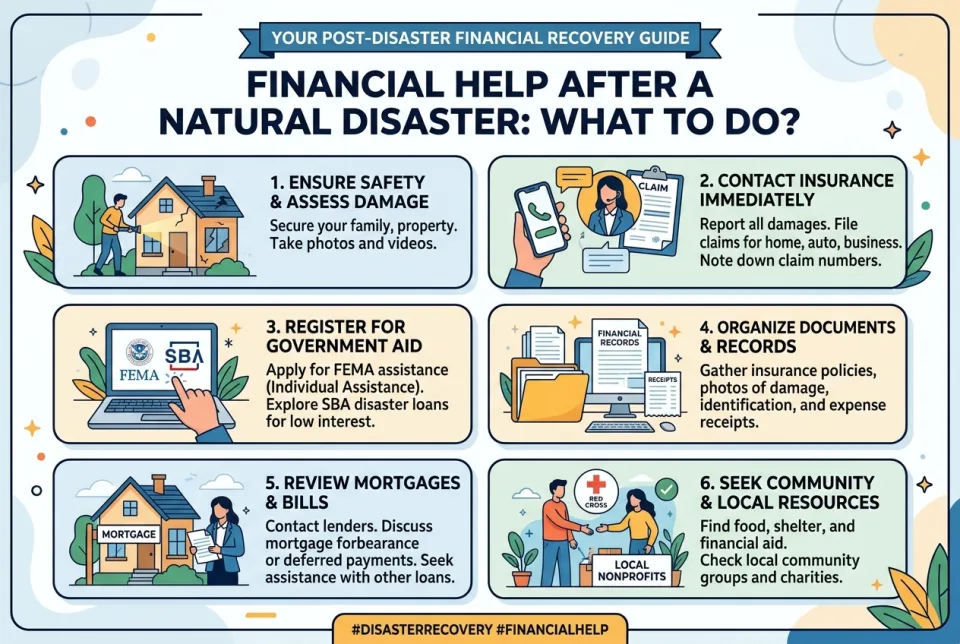
- Document the damage. Take clear photos and videos of all damage to your home, vehicles, and belongings. Keep receipts for any emergency expenses. This documentation is essential for insurance claims and assistance applications.
- Contact your insurance company. File a claim as soon as possible. Ask about temporary housing coverage, additional living expenses, and advance payments. Keep a record of all communications.
- Apply for government assistance. If the president has declared a major disaster for your area, you may be eligible for FEMA assistance. Apply online at DisasterAssistance.gov or by phone at 1-800-621-3362. FEMA may provide grants for temporary housing, home repairs, and other needs.
- Look into SBA disaster loans. The U.S. Small Business Administration offers low-interest loans to homeowners, renters, and businesses for disaster losses. These are loans, not grants, so consider your ability to repay.
- Seek help from charities. Organizations like the American Red Cross, Salvation Army, and local community groups often provide emergency funds, supplies, and shelter. Contact them directly or call 2-1-1 for referrals.
Managing Your Finances
- Request payment relief. Contact your mortgage servicer, landlord, utility companies, and credit card issuers. Many have disaster relief programs that offer deferred payments or waived fees. Ask specifically about forbearance or hardship plans.
- Create a budget. Prioritize essential expenses like food, shelter, and medicine. Cut non-essential spending. Use any emergency savings carefully.
- Monitor your credit. Check your credit reports for free at AnnualCreditReport.com. Watch for unauthorized activity, as disasters can lead to identity theft.
- Avoid scams. Be wary of unsolicited offers for disaster relief, fake charities, and contractors demanding large upfront payments. Verify charities through sites like Charity Navigator or the Better Business Bureau. Never pay in full before work is done.
When to Seek Professional Help
If you are struggling with debt, facing foreclosure, or feeling overwhelmed, consider contacting a nonprofit credit counseling agency. They can help you create a plan and negotiate with creditors. Also, reach out to local social services for food assistance, Medicaid, and other benefits.
How to Prevent Future Financial Hardship
- Build an emergency fund with three to six months of expenses.
- Review your insurance coverage regularly, including flood and earthquake insurance if applicable.
- Keep important documents in a safe, waterproof place or digitally backed up.
Recovery takes time. Take things one step at a time and ask for help when needed. For more information, visit DisasterAssistance.gov or call 2-1-1.
Sources & references
Spotted an error? Report it — we correct factual mistakes promptly.
Read next
Credit score dropped suddenly: what to do?
A sudden credit score drop can be alarming, but it is often fixable. Learn the common causes and the steps to take to identify and address the issue.
Duplicate subscription charges on my statement: what to do?
If you see the same subscription charge twice, act quickly to stop further charges and request a refund. Here is a step-by-step guide to resolve duplicate subscription charges.
Cheque I deposited bounced: what to do?
A bounced cheque means the money is not yours yet. Learn the right steps to protect your account and recover what you are owed.
Tax refund delayed for weeks: what to do?
If your tax refund is weeks late, don't panic. Learn the common reasons for delays and the steps you can take to check your status and get help.
Related handy tools
Checklists, decision guides, scenarios and quizzes for the same situation.