Credit score dropped suddenly: what to do?
A sudden credit score drop can be alarming, but it is often fixable. Learn the common causes and the steps to take to identify and address the issue.
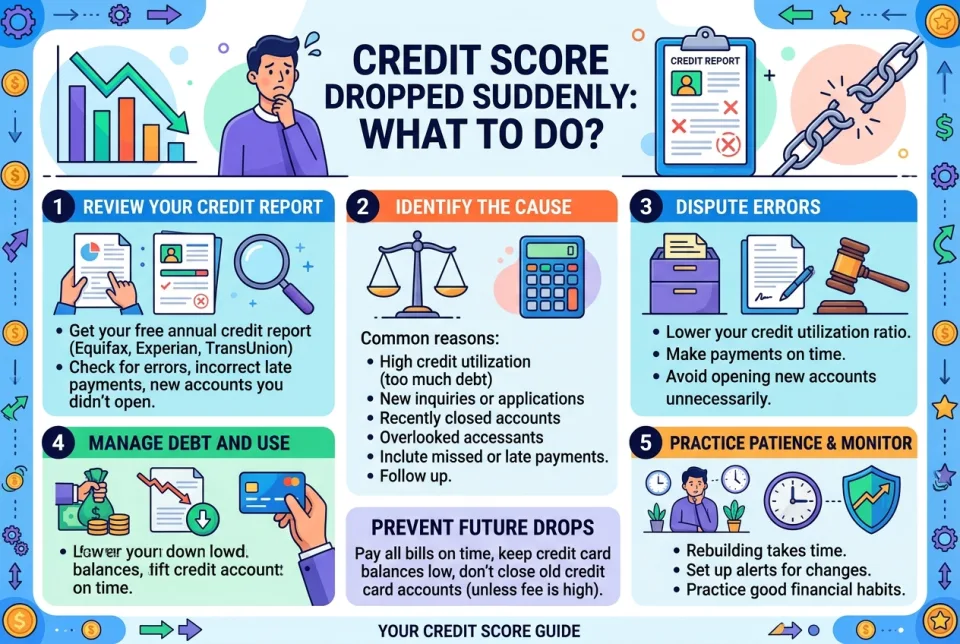
Quick answer
5 steps — read this before anything else
-
1
Check your credit reports for errors or unauthorized accounts.
-
2
Review recent activity for late payments or high balances.
-
3
Dispute any inaccuracies with the credit bureaus.
-
4
Avoid opening new credit or closing old accounts unnecessarily.
-
5
Set up alerts to monitor your credit going forward.
Important — please read
This content is general educational and informational only, and is not a substitute for professional medical advice, diagnosis or treatment. Always seek the advice of a qualified health provider with any questions you may have about a medical condition. Never disregard or delay seeking professional medical care because of something you read here. In an emergency or life-threatening situation, call your local emergency services (police, fire or ambulance) immediately.
A sudden drop in your credit score can be stressful, especially if you have been managing your credit responsibly. Credit scores fluctuate, but a significant decrease usually signals a change in your credit reports. The good news is that many causes are temporary or correctable. This guide explains common reasons for a sudden drop and what you can do to address them.
What is happening
Your credit score is calculated from information in your credit reports, which are maintained by the three major credit bureaus (Equifax, Experian, and TransUnion). A sudden drop typically means new negative information was added, an account balance increased, or your credit mix changed. Sometimes it is simply a scoring model adjustment or a temporary effect from a new credit application.
What to do first
- Get your credit reports. You are entitled to free reports from each bureau annually through AnnualCreditReport.com. Review all three reports carefully.
- Look for errors or unfamiliar accounts. Check for accounts you did not open, incorrect balances, or late payments that are not yours. These could indicate identity theft or reporting mistakes.
- Review recent activity. Note any late payments, collections, or sudden increases in credit card balances. Even a single missed payment can cause a noticeable drop.
- Dispute inaccuracies. If you find errors, file a dispute with the credit bureau and the creditor. The bureau must investigate and correct inaccurate information.
- Avoid quick fixes. Do not close old accounts or open new ones impulsively, as these actions can further affect your score.
Common causes of a sudden drop
- Late or missed payments: Payment history is the largest factor in your score. A single 30-day late payment can cause a significant drop.
- High credit utilization: If your balances increased relative to your credit limits, your score may drop.
- New credit applications: Applying for new credit can cause a small temporary dip due to hard inquiries.
- Account closures: Closing a credit card reduces your available credit and can increase your utilization ratio.
- Negative items: Collections, charge-offs, bankruptcies, or foreclosures can have a major impact.
- Identity theft: Unauthorized accounts opened in your name can damage your score.
What NOT to do
- Do not ignore the drop; it could be a sign of fraud.
- Do not close credit card accounts in a panic, as this can lower your score further.
- Do not apply for new credit to "fix" the problem; multiple applications can hurt your score.
- Do not pay for credit repair services that promise to remove accurate negative information; you can do it yourself for free.
When to seek professional help
If you suspect identity theft, report it to the Federal Trade Commission at IdentityTheft.gov and consider placing a fraud alert or credit freeze. If you are struggling with debt, a nonprofit credit counseling agency can offer guidance. For complex legal issues, consult a consumer law attorney.
How to prevent future drops
- Set up automatic payments or reminders to avoid late payments.
- Keep credit card balances below 30% of your limits.
- Monitor your credit regularly with free tools and alerts.
- Review your credit reports annually for errors.
Taking prompt action can help you understand and address a sudden credit score drop. Start by reviewing your credit reports today.
Sources & references
Spotted an error? Report it — we correct factual mistakes promptly.
Read next
What to Do If You Have Too Much Debt
Managing overwhelming debt requires a clear plan, budgeting, direct creditor communication, and knowing where to seek non-profit assistance. Follow this step-by-step guide to take control of your finances.
What to Do If You Can't Pay Your Bills
Facing overdue bills can be overwhelming, but taking immediate, structured action helps protect your essential living needs and credit. Learn how to prioritize expenses and communicate with creditors effectively.
Duplicate subscription charges on my statement: what to do?
If you see the same subscription charge twice, act quickly to stop further charges and request a refund. Here is a step-by-step guide to resolve duplicate subscription charges.
Cheque I deposited bounced: what to do?
A bounced cheque means the money is not yours yet. Learn the right steps to protect your account and recover what you are owed.
Related handy tools
Checklists, decision guides, scenarios and quizzes for the same situation.