Tax refund delayed for weeks: what to do?
If your tax refund is weeks late, don't panic. Learn the common reasons for delays and the steps you can take to check your status and get help.
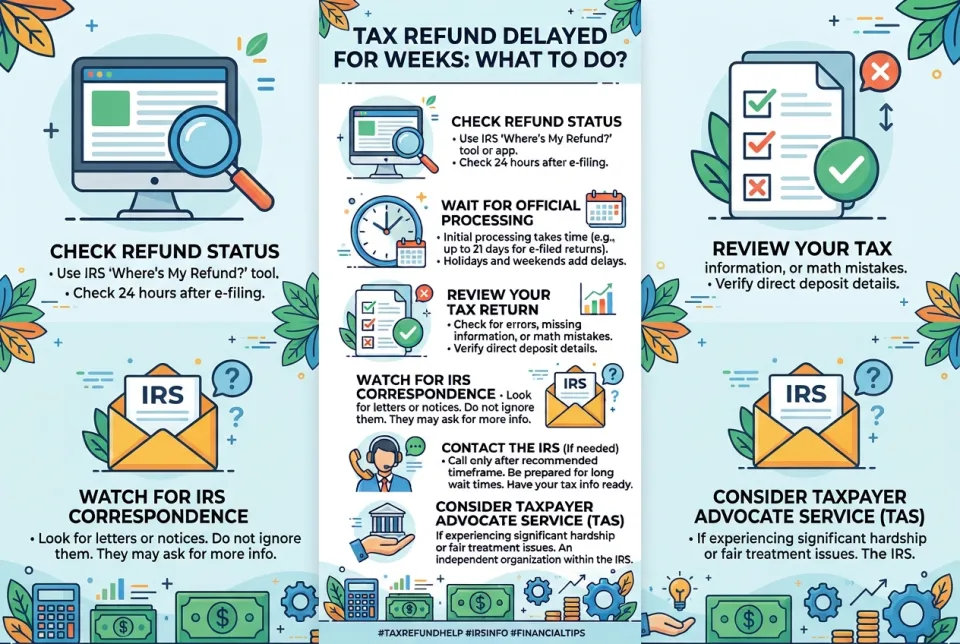
Quick answer
5 steps — read this before anything else
-
1
Check your refund status using the IRS Where's My Refund? tool or your local tax authority's online service.
-
2
Verify your tax return was accepted and review it for errors that could cause delays.
-
3
Wait at least 21 days from the date you filed electronically before contacting the tax authority.
-
4
Respond promptly to any letters or notices from the tax authority.
-
5
If you suspect fraud or identity theft, report it immediately to the tax authority.
Important — please read
This content is general educational and informational only, and is not a substitute for professional medical advice, diagnosis or treatment. Always seek the advice of a qualified health provider with any questions you may have about a medical condition. Never disregard or delay seeking professional medical care because of something you read here. In an emergency or life-threatening situation, call your local emergency services (police, fire or ambulance) immediately.
Waiting for a tax refund can be stressful, especially when weeks pass with no update. Many refunds are delayed for routine reasons, but you can take steps to understand the delay and resolve it.
Why is my refund delayed?
Common reasons for refund delays include:
- Errors or incomplete information on your return, such as incorrect Social Security numbers or bank account details.
- Additional review by the tax authority for certain credits or deductions, which can take longer.
- Identity verification if the tax authority suspects fraud or needs to confirm your identity.
- High volume during peak filing season, which can slow processing.
- Paper returns generally take longer to process than electronic ones.
What to do first
- Check your refund status online. Use the IRS Where's My Refund? tool (for U.S. taxpayers) or the equivalent service from your national tax authority. You will need your taxpayer ID, filing status, and the exact refund amount.
- Confirm your return was accepted. If you filed electronically, you should have received an acknowledgment. If you filed by mail, allow extra time for delivery and processing.
- Review your return for mistakes. Double-check your bank account number, routing number, and personal details. Errors can cause refunds to be rejected or delayed.
- Wait at least 21 days from the date you filed electronically before expecting your refund. If you filed by mail, wait at least 6 weeks.
What to do if it has been more than 21 days
- Use the online tool again. It provides the most up-to-date information and may tell you if additional information is needed.
- Check your mail and email. The tax authority may have sent a notice requesting more information or explaining the delay.
- Respond promptly to any notices. If you receive a letter, follow the instructions carefully and meet any deadlines.
- Contact the tax authority. If the online tool shows no information or you have not received your refund after the expected timeframe, call the tax authority's helpline. Have your tax return and identification ready.
- Contact your tax preparer if you used one, as they may be able to help you understand the delay.
What NOT to do
- Do not file a second return unless instructed by the tax authority. This can cause further delays.
- Do not ignore letters or notices from the tax authority.
- Do not pay for services that promise to speed up your refund unless you understand exactly what they offer; many are unnecessary.
- Do not share your personal or tax information with unofficial websites or callers.
When to seek help
If you suspect identity theft or fraud, contact the tax authority immediately. In the U.S., you can use the IRS Identity Protection PIN or report fraud to the Treasury Inspector General for Tax Administration. If you are facing financial hardship due to the delay, consider contacting a legitimate tax advocacy service or a financial advisor.
How to prevent future delays
- File electronically and choose direct deposit for the fastest processing.
- Double-check your return before submitting to avoid errors.
- Keep your contact information up to date with the tax authority.
- Respond quickly to any requests for information.
Most refund delays are temporary. By following these steps, you can track your refund and resolve issues efficiently. If you continue to experience problems, do not hesitate to contact the tax authority for assistance.
Sources & references
Spotted an error? Report it — we correct factual mistakes promptly.
Read next
What to Do If You Run Out of Money Before Payday
Running out of cash before your next paycheck requires immediate triage to protect essential living needs. Learn how to prioritize expenses, negotiate with creditors, and access temporary relief safely.
What to Do If You Spend Too Much Money
Discover immediate, actionable steps to regain control of your finances after overspending, from halting impulse purchases to creating a recovery budget.
What to Do If You Have Too Much Debt
Managing overwhelming debt requires a clear plan, budgeting, direct creditor communication, and knowing where to seek non-profit assistance. Follow this step-by-step guide to take control of your finances.
What to Do If You Can't Pay Your Bills
Facing overdue bills can be overwhelming, but taking immediate, structured action helps protect your essential living needs and credit. Learn how to prioritize expenses and communicate with creditors effectively.
Related handy tools
Checklists, decision guides, scenarios and quizzes for the same situation.