Missing a mortgage payment: what to do?
Missing a mortgage payment can feel overwhelming, but acting quickly and communicating with your lender can help you avoid serious consequences. Here is a step-by-step guide.
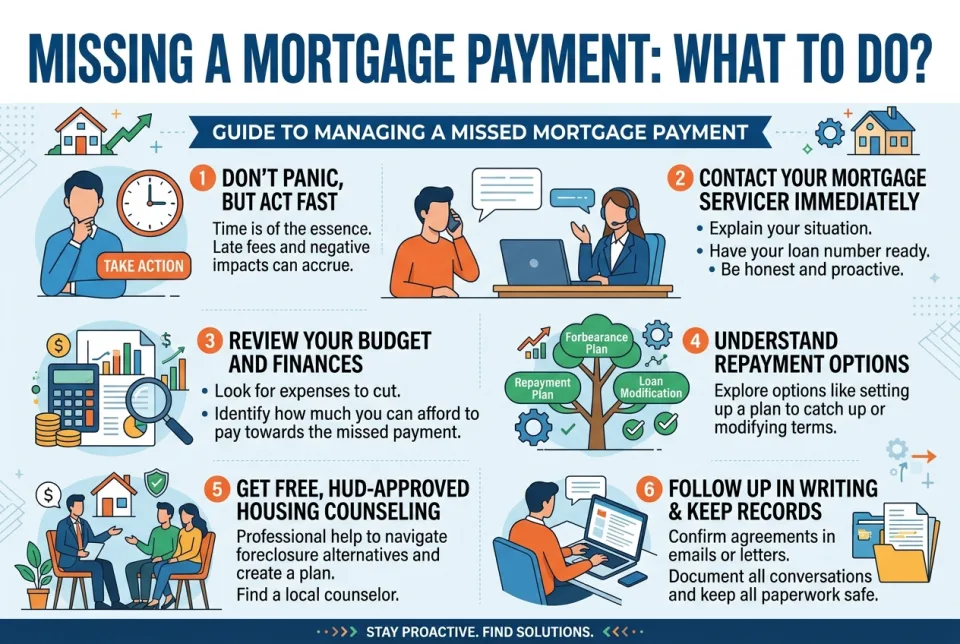
Quick answer
5 steps — read this before anything else
-
1
Contact your mortgage servicer immediately to explain the situation.
-
2
Review your mortgage statement and any late notices for specific deadlines and fees.
-
3
Ask about available options such as a repayment plan or forbearance.
-
4
Create a budget to prioritize essential expenses and avoid further missed payments.
-
5
Seek free housing counseling from a HUD-approved agency for personalized advice.
Important — please read
This content is general educational and informational only, and is not a substitute for professional medical advice, diagnosis or treatment. Always seek the advice of a qualified health provider with any questions you may have about a medical condition. Never disregard or delay seeking professional medical care because of something you read here. In an emergency or life-threatening situation, call your local emergency services (police, fire or ambulance) immediately.
Missing a mortgage payment is a stressful experience, but it is important to act quickly. The sooner you address the issue, the more options you may have to avoid long-term damage to your credit and keep your home.
What happens when you miss a payment
Most mortgage payments are due on the first of the month, with a grace period of up to 15 days. If you miss that window, your lender may charge a late fee. After 30 days, the missed payment is typically reported to credit bureaus, which can lower your credit score. If you continue to miss payments, your lender may initiate foreclosure proceedings, but this usually takes several months and varies by state.
Step-by-step: what to do first
- Contact your mortgage servicer right away. Call the customer service number on your mortgage statement. Explain why you missed the payment and ask what options are available. Being proactive shows good faith and can open doors to assistance.
- Review your mortgage documents and any notices. Understand the terms of your loan, including late fees and grace periods. Check if your lender has sent any letters or emails about the missed payment.
- Ask about hardship options. Many lenders offer programs such as repayment plans (spreading the missed amount over several months), forbearance (temporarily reducing or pausing payments), or loan modification (changing the loan terms). Be honest about your financial situation and provide any requested documentation.
- Assess your budget and prioritize. Determine if the missed payment was a one-time issue or a sign of ongoing financial trouble. Cut non-essential expenses and consider ways to increase income. Prioritize housing, food, and utilities.
- Seek free professional guidance. Contact a HUD-approved housing counselor (in the U.S.) or a similar free debt advice service in your country. They can help you negotiate with your lender and explore all options.
What NOT to do
- Do not ignore the problem. Avoiding calls or letters from your lender will only make the situation worse and reduce your options.
- Do not stop making payments altogether without discussing it with your lender. If you can pay something, even a partial payment, it may help, but confirm with your servicer first.
- Do not fall for scams. Beware of companies that promise to save your home for an upfront fee or tell you to stop communicating with your lender. Legitimate help is often free.
- Do not borrow from high-interest sources like payday loans to cover the mortgage, as this can lead to a cycle of debt.
When to seek professional help
If you are facing foreclosure, have received a notice of default, or are struggling with multiple debts, seek help immediately from a HUD-approved counselor or a nonprofit credit counseling agency. They can advocate on your behalf and help you understand your rights.
How to prevent future missed payments
Set up automatic payments or reminders, build an emergency fund, and review your budget regularly. If your income is unstable, consider a mortgage with more flexible terms or refinancing to a more affordable payment.
Remember, you are not alone. Many homeowners face temporary setbacks. Taking action now can help you protect your home and your financial future.
Sources & references
Spotted an error? Report it — we correct factual mistakes promptly.
Read next
Credit score dropped suddenly: what to do?
A sudden credit score drop can be alarming, but it is often fixable. Learn the common causes and the steps to take to identify and address the issue.
Duplicate subscription charges on my statement: what to do?
If you see the same subscription charge twice, act quickly to stop further charges and request a refund. Here is a step-by-step guide to resolve duplicate subscription charges.
Cheque I deposited bounced: what to do?
A bounced cheque means the money is not yours yet. Learn the right steps to protect your account and recover what you are owed.
Tax refund delayed for weeks: what to do?
If your tax refund is weeks late, don't panic. Learn the common reasons for delays and the steps you can take to check your status and get help.
Related handy tools
Checklists, decision guides, scenarios and quizzes for the same situation.