Microwave sparks inside: what to do?
Sparks inside a microwave can be dangerous. Learn the safe steps to take immediately and how to prevent future incidents.
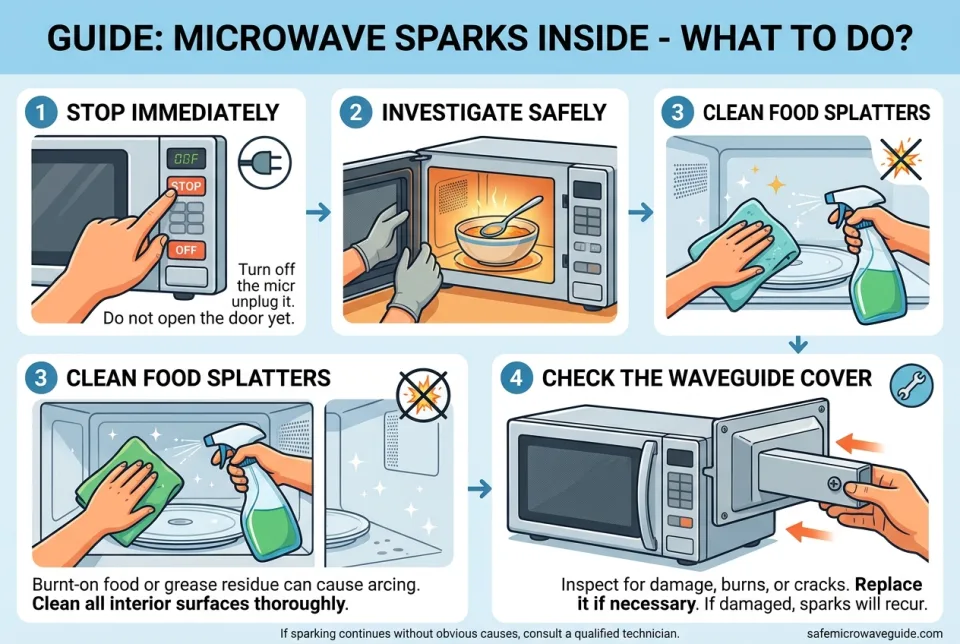
Quick answer
5 steps — read this before anything else
-
1
Stop the microwave and unplug it immediately.
-
2
Do not open the door until the sparking has stopped.
-
3
Check for burnt food, metallic items, or damaged interior.
-
4
If damage is visible, do not use the microwave again.
-
5
Call a qualified technician or replace the appliance if needed.
Warning
Sparks can lead to fire or electric shock. Never open the microwave door while sparking is occurring. Unplug the microwave if safe, and call emergency services if a fire starts.
Important — please read
This content is general educational and informational only, and is not a substitute for professional medical advice, diagnosis or treatment. Always seek the advice of a qualified health provider with any questions you may have about a medical condition. Never disregard or delay seeking professional medical care because of something you read here. In an emergency or life-threatening situation, call your local emergency services (police, fire or ambulance) immediately.
Seeing sparks inside your microwave can be alarming. Sparks, also called arcing, happen when electricity jumps through the air. This can be caused by metal objects, damaged components, or food residue. While it is not always an emergency, it can be a fire hazard. Acting quickly and correctly is important.
What is happening
Arcing occurs when the microwave's high-voltage energy interacts with metal or conductive materials. Common causes include:
- Metal utensils, foil, or twist ties left in the microwave.
- Dishes with metallic paint or trim.
- Food with high mineral content (like grapes or carrots) in large amounts.
- A damaged waveguide cover, door seal, or interior coating.
- Built-up food residue or grease on the interior walls.
Emergency warning
If you see sparks, flames, or smoke, treat it as a potential fire emergency. Do not open the microwave door. Unplug the microwave if it is safe to do so. If a fire starts and does not go out immediately, evacuate and call your local emergency services.
What to do first
- Stop the microwave immediately. Press the stop or cancel button. If the microwave continues to run, unplug it from the wall outlet.
- Do not open the door. Keeping the door closed helps contain any fire or smoke. Wait until the sparking has stopped completely.
- Unplug the microwave from the power outlet once it is safe to do so. This prevents accidental activation.
- Inspect for obvious causes. After unplugging, open the door and look for metal objects, burnt food, or damaged interior parts. Remove any metal items.
- Check for damage. Look for a damaged waveguide cover (the small mica plate on the side wall), door seal, or interior coating. If you see damage, do not use the microwave.
What NOT to do
- Do not open the door while sparks are still occurring. This can expose you to fire or electrical hazards.
- Do not use the microwave again if you suspect damage or if sparks recur. Using a damaged microwave can lead to fire or electric shock.
- Do not attempt to repair the microwave yourself. Microwaves contain high-voltage capacitors that can hold a dangerous charge even when unplugged.
- Do not ignore the problem. Even a single spark can indicate a serious issue.
When to call for help
- Call emergency services if a fire starts and does not go out immediately, or if there is smoke that does not clear.
- Call a qualified appliance technician if you see any damage to the microwave, if sparks continue after removing metal objects, or if you are unsure about the cause.
- Replace the microwave if it is old, damaged, or if repairs are not cost-effective.
What to monitor
After the incident, monitor the microwave for any unusual noises, smells, or further sparking. If you notice any of these, stop using it immediately and seek professional help.
How to prevent it
- Always check that no metal objects, foil, or dishes with metallic trim are inside before use.
- Clean the microwave regularly to prevent food buildup.
- Inspect the door seal and waveguide cover for damage periodically.
- Follow the manufacturer's instructions for safe use.
If you have followed the steps above and the microwave appears undamaged, you may cautiously test it with a cup of water. If any sparking occurs again, unplug it and call a technician. When in doubt, do not use the microwave.
This is general information and not a substitute for professional advice. In an emergency, call your local emergency services.
Spotted an error? Report it — we correct factual mistakes promptly.
Read next
Freezer defrosted overnight: what to do?
A freezer that thaws overnight can compromise food safety. Learn how to assess the situation, decide what to keep, and prevent future thawing.
Gas stove won't light: what to do?
A gas stove that won't light can be a simple fix or a sign of a dangerous gas leak. Learn the safe steps to take before you try again.
Food poisoning suspected: what to do?
If you think you have food poisoning, the priority is to prevent dehydration and watch for signs that need emergency care. Learn the safe steps, what to avoid, and when to get help.
Knife cut in the kitchen: what to do?
A kitchen knife cut can range from a minor scrape to a serious injury. Learn how to stop the bleeding, clean the wound, and know when to get medical help.
Related handy tools
Checklists, decision guides, scenarios and quizzes for the same situation.