Knife cut in the kitchen: what to do?
A kitchen knife cut can range from a minor scrape to a serious injury. Learn how to stop the bleeding, clean the wound, and know when to get medical help.
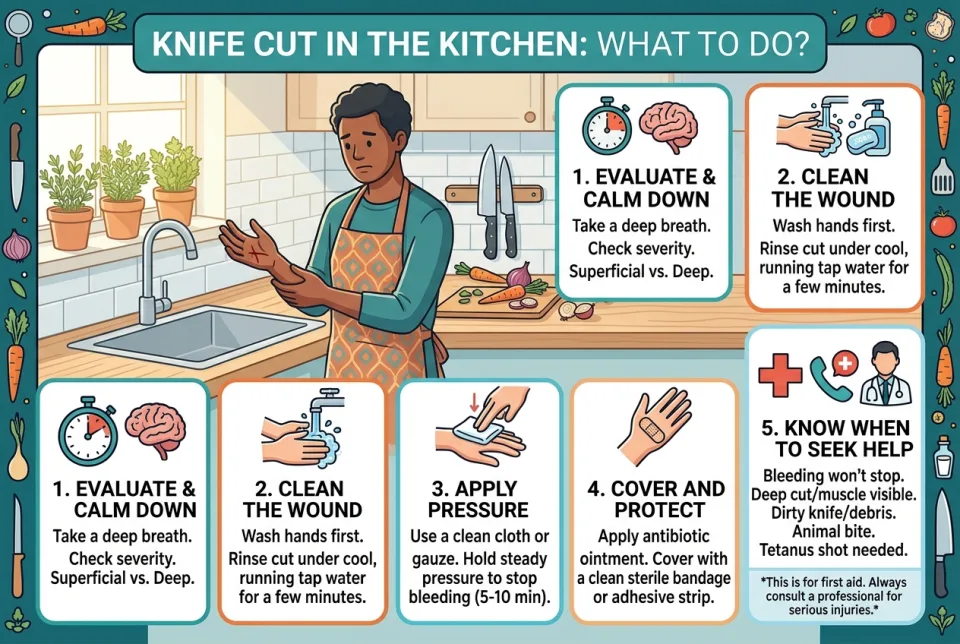
Quick answer
5 steps — read this before anything else
-
1
Wash your hands and put on clean gloves if available.
-
2
Apply firm, direct pressure with a clean cloth or gauze for 10-15 minutes.
-
3
Once bleeding slows, rinse the wound with clean running water.
-
4
Cover with a sterile bandage or clean cloth.
-
5
Call emergency services if bleeding is severe, spurting, or does not stop after 10-15 minutes of pressure.
Warning
If bleeding is severe, spurting, or does not stop after 10-15 minutes of firm pressure, call emergency services immediately.
Important — please read
This content is general educational and informational only, and is not a substitute for professional medical advice, diagnosis or treatment. Always seek the advice of a qualified health provider with any questions you may have about a medical condition. Never disregard or delay seeking professional medical care because of something you read here. In an emergency or life-threatening situation, call your local emergency services (police, fire or ambulance) immediately.
A knife cut in the kitchen is a common injury, but it still needs proper care. Most small cuts can be treated at home, but some require urgent medical attention. This guide explains what to do step by step and when to seek professional help.
What to do first
- Stay calm and assess the wound. Look at how deep the cut is and whether bleeding is heavy. If blood is spurting or soaking through a cloth quickly, treat it as an emergency.
- Wash your hands. Clean your hands with soap and water before touching the wound. Wear disposable gloves if you have them.
- Stop the bleeding. Apply firm, direct pressure with a clean cloth or sterile gauze. Hold continuous pressure for 10 to 15 minutes without lifting to check. If blood soaks through, add more cloth on top and keep pressing.
- Clean the wound. Once bleeding has slowed, rinse the cut under clean running water. Gently wash around the wound with mild soap. Do not scrub the wound itself or use hydrogen peroxide or alcohol, which can damage tissue.
- Cover the wound. Apply a sterile bandage or clean cloth. Change the dressing daily or whenever it gets wet or dirty.
What NOT to do
- Do not keep peeking at the wound to see if it is still bleeding. Constant checking disrupts clot formation.
- Do not use a tourniquet unless bleeding is life-threatening and you have been trained to use one.
- Do not try to remove an object that is stuck in the wound. Leave it in place and get medical help.
- Do not apply butter, oil, or home remedies to the cut.
- Do not ignore signs of infection later.
When to call for help
Call your local emergency number immediately if:
- Bleeding is severe, spurting, or does not stop after 10 to 15 minutes of firm pressure.
- The cut is deep, gaping, or you can see fat, muscle, or bone.
- The injury is on the face, hand, wrist, or another area where scarring or nerve damage is a concern.
- You feel faint, dizzy, or short of breath.
- The cut was caused by a dirty or rusty object and you have not had a tetanus booster in the last 5 years.
For less severe cuts, contact a healthcare provider if:
- The wound does not stop bleeding after 15 minutes of pressure.
- You notice signs of infection such as increasing redness, warmth, swelling, pus, or fever.
- The cut is from an animal or human bite.
- You have a medical condition that affects healing, such as diabetes.
What to monitor
After treating the cut, watch for signs of infection over the next few days. Check for redness spreading from the wound, swelling, pus, or a fever. Also monitor for numbness or tingling in the area, which could indicate nerve damage. If you see any of these signs, seek medical care.
How to prevent kitchen knife cuts
- Keep knives sharp. Dull knives require more pressure and can slip.
- Always cut on a stable cutting board, not in your hand.
- Use the claw grip: curl your fingertips under and use your knuckles to guide the blade.
- Never leave knives in a sink full of water. Wash and store them immediately.
- Do not try to catch a falling knife. Step back and let it fall.
Most kitchen cuts heal well with proper first aid. If you are unsure about the severity, err on the side of caution and seek medical advice. This is general information and not a substitute for professional medical advice. In an emergency, call your local emergency services.
Sources & references
Spotted an error? Report it — we correct factual mistakes promptly.
Read next
What Should You Do If Your Steak Turns Out Tough?
A tough steak is usually a cooking or handling issue, not a lost cause. Here is how to salvage the meat you have and seven practical ways to get a more tender result next time.
What to Do If Your Homemade Pizza Dough Won't Stretch?
When your pizza dough snaps back instead of stretching, it is usually too tight, too dry, or too cold. Here are seven practical fixes that work for any recipe.
What to Do If Your Fridge Is Full of Random Ingredients? 11 Meal Ideas to Try
Turn a fridge full of odds and ends into 11 easy meals. Learn a simple framework, food safety basics, and creative combinations to reduce waste and save money.
What Should You Do If Your Leftovers Are About to Expire?
Leftovers nearing their expiry date can be safely transformed into new meals, frozen for later, or composted. Learn nine practical ways to use them and how to tell when they are no longer safe to eat.
Related handy tools
Checklists, decision guides, scenarios and quizzes for the same situation.