Food poisoning suspected: what to do?
If you think you have food poisoning, the priority is to prevent dehydration and watch for signs that need emergency care. Learn the safe steps, what to avoid, and when to get help.
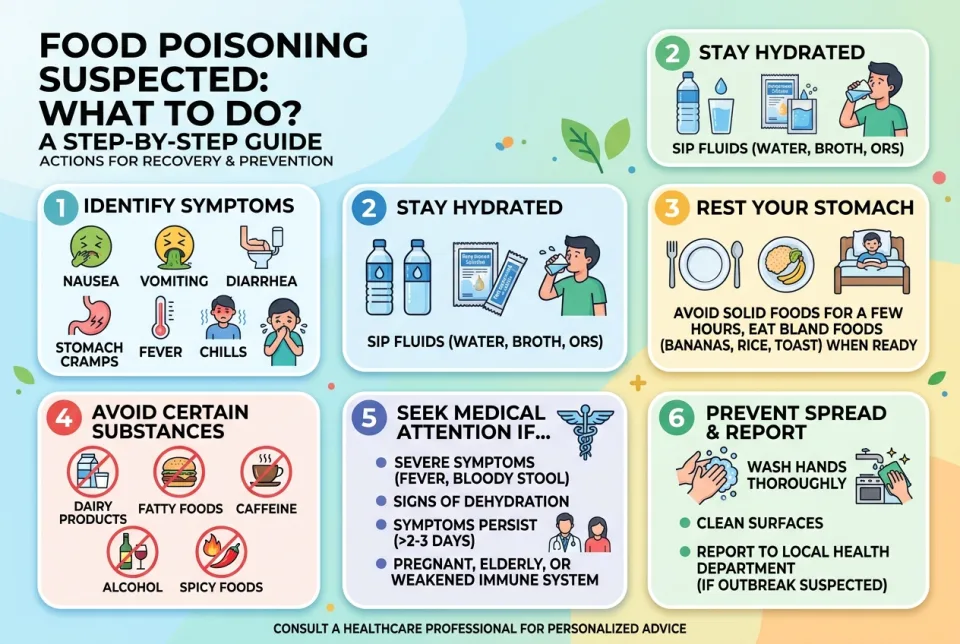
Quick answer
5 steps — read this before anything else
-
1
Stop eating the suspected food and note what you ate and when.
-
2
Drink small, frequent sips of water or an oral rehydration solution to replace fluids.
-
3
Rest and avoid solid food until vomiting settles, then eat bland foods as tolerated.
-
4
Do not take anti-diarrhea medicine without medical advice.
-
5
Call emergency services if you see blood in vomit or stool, have severe abdominal pain, high fever, confusion, or signs of dehydration.
Warning
Seek emergency care immediately if you have blood in vomit or stool, severe abdominal pain, high fever, confusion, or signs of severe dehydration. Do not take anti-diarrhea medicine without medical advice if you have a fever or bloody diarrhea.
Important — please read
This content is general educational and informational only, and is not a substitute for professional medical advice, diagnosis or treatment. Always seek the advice of a qualified health provider with any questions you may have about a medical condition. Never disregard or delay seeking professional medical care because of something you read here. In an emergency or life-threatening situation, call your local emergency services (police, fire or ambulance) immediately.
Food poisoning is common and usually resolves on its own within a few days. The main risk is dehydration from vomiting and diarrhea. Most people can manage at home by replacing fluids and resting, but some situations require urgent medical care.
What is happening
Food poisoning is caused by eating or drinking something contaminated with bacteria, viruses, parasites, or toxins. Symptoms can start within hours or up to several days after eating the contaminated food. Common signs include nausea, vomiting, diarrhea, stomach cramps, and sometimes fever or headache.
Emergency warning
Call your local emergency services immediately if you or someone else has:
- Blood in vomit or stool
- Severe abdominal pain that is constant or worsening
- High fever (above 102°F or 39°C) or fever with confusion
- Signs of severe dehydration: little or no urine, dry mouth, sunken eyes, dizziness on standing, or confusion
- Blurred vision, double vision, difficulty swallowing or breathing, or muscle weakness (possible signs of botulism)
- Vomiting that prevents keeping any fluids down for more than 12 hours
- Diarrhea lasting more than 3 days without improvement
In these cases, do not wait to see if symptoms improve.
What to do first
- Stop eating the suspected food. Keep the remaining food, packaging, or a sample if possible, and note what you ate and when symptoms began. This helps if you need medical care.
- Start sipping fluids. Take small, frequent sips of water or an oral rehydration solution. Avoid large gulps, which can trigger vomiting.
- Rest. Avoid strenuous activity until you feel better.
- Reintroduce bland food slowly. When vomiting has stopped and you feel hungry, try small amounts of plain rice, crackers, toast, or bananas. Avoid dairy, fatty, spicy, or very sweet foods for a day or two.
- Wash your hands thoroughly with soap and water after using the bathroom and before preparing food to avoid spreading infection to others.
What NOT to do
- Do not take anti-diarrhea medicines (like loperamide) without asking a doctor or pharmacist, especially if you have a fever or bloody diarrhea. These medicines can trap the infection.
- Do not force yourself to eat if you are vomiting; focus on fluids first.
- Do not drink alcohol or caffeine, which can worsen dehydration.
- Do not prepare food for others while you have symptoms.
- Do not ignore severe symptoms; it is better to seek care early.
When to seek professional care
Contact a healthcare provider if you are unsure, if symptoms are not improving after 48 hours, or if you belong to a high-risk group: pregnant women, young children, older adults, or people with weakened immune systems. Also seek care if you cannot keep fluids down or if you develop a fever.
What to monitor
Watch for signs of dehydration: dark urine, infrequent urination, dry mouth, and dizziness. Monitor temperature and note any blood in vomit or stool. If symptoms worsen or new symptoms appear, seek medical advice.
How to prevent it
Practice safe food handling: cook meat and eggs thoroughly, wash hands and surfaces often, separate raw and cooked foods, and refrigerate leftovers promptly. When eating out, choose reputable places and avoid food that has been left out for long periods.
Most cases of food poisoning improve with rest and fluids. If you are worried or symptoms are severe, call your doctor or local emergency number. This is general information and not a substitute for professional medical advice.
Sources & references
Spotted an error? Report it — we correct factual mistakes promptly.
Read next
What Do You Do If Your Homemade Food Tastes Bland? 9 Ways to Improve Flavor
Bland food is usually missing one of a few key elements: salt, acid, fat, or umami. Here are nine practical ways to fix the flavor of a dish without starting over.
Hidden food allergens when dining out: what to do?
Learn how to identify hidden allergens when eating out, communicate with restaurant staff, and respond safely to a reaction.
Freezer defrosted overnight: what to do?
A freezer that thaws overnight can compromise food safety. Learn how to assess the situation, decide what to keep, and prevent future thawing.
Gas stove won't light: what to do?
A gas stove that won't light can be a simple fix or a sign of a dangerous gas leak. Learn the safe steps to take before you try again.
Related handy tools
Checklists, decision guides, scenarios and quizzes for the same situation.