Heatwave: how to protect yourself?
Heatwaves can cause serious heat-related illness. Learn how to stay cool, hydrated, and safe, and when to get emergency help.
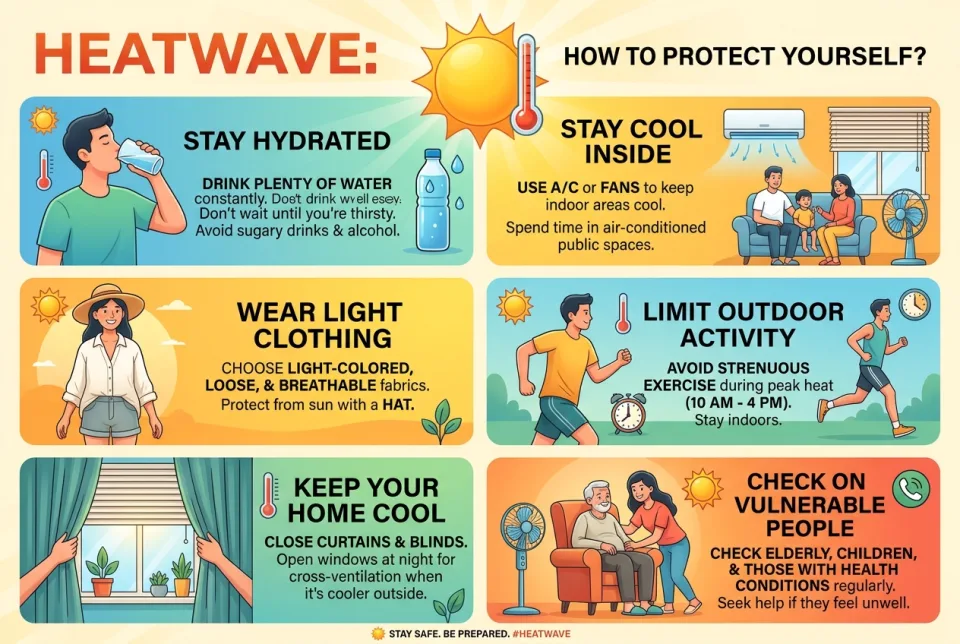
Quick answer
5 steps — read this before anything else
-
1
Stay in air conditioning or a cool place as much as possible.
-
2
Drink water regularly, even if you do not feel thirsty.
-
3
Avoid strenuous activity and direct sun during the hottest hours.
-
4
Wear lightweight, light-colored, loose clothing.
-
5
Check on older adults, young children, and those with chronic illnesses.
Warning
Heat stroke is a life-threatening emergency. Call local emergency services immediately if someone has a high body temperature with confusion, fainting, or hot dry skin.
Important — please read
This content is general educational and informational only, and is not a substitute for professional medical advice, diagnosis or treatment. Always seek the advice of a qualified health provider with any questions you may have about a medical condition. Never disregard or delay seeking professional medical care because of something you read here. In an emergency or life-threatening situation, call your local emergency services (police, fire or ambulance) immediately.
Heatwaves are periods of abnormally hot weather that can last for days or weeks. They can cause serious health problems, from heat exhaustion to life-threatening heat stroke. The following steps can help you protect yourself and others.
What to do first
- Get to a cool place. Stay in air conditioning if possible. If you do not have AC, go to a cooling center, library, mall, or other public place. Even a few hours in a cool environment can help.
- Drink water often. Do not wait until you are thirsty. Avoid alcohol, caffeine, and sugary drinks, which can worsen dehydration.
- Avoid the heat. Limit outdoor activity to early morning or evening. Rest frequently in the shade.
- Cool your body. Take cool showers or baths, use cool compresses, and wear lightweight, loose-fitting, light-colored clothing.
- Never leave anyone in a parked car. Cars can heat up to dangerous temperatures within minutes, even with windows cracked.
Who is at highest risk?
Some people are more vulnerable to heat: older adults (especially those living alone), infants and young children, people with chronic conditions (such as heart disease, diabetes, or mental illness), outdoor workers, and athletes. Check on these individuals at least twice a day.
Warning signs of heat-related illness
Know the signs of heat exhaustion and heat stroke. Heat exhaustion symptoms include heavy sweating, weakness, dizziness, nausea, and headache. Heat stroke is a medical emergency: symptoms include a high body temperature (103°F or higher), confusion, hot dry skin, rapid pulse, and loss of consciousness. If you suspect heat stroke, call local emergency services immediately. While waiting for help, move the person to a cool place and try to cool them down with cool water or ice packs.
What NOT to do
- Do not rely on electric fans as your only cooling source when temperatures are very high. Fans may not prevent heat-related illness.
- Do not drink alcohol or sugary drinks to quench thirst.
- Do not ignore symptoms of dizziness, nausea, or confusion.
- Do not leave pets or children in parked cars.
- Do not bundle up babies or young children; dress them in light clothing.
When to seek professional care
Seek immediate medical attention if someone has a high body temperature with confusion, fainting, or hot dry skin. For heat exhaustion, if symptoms do not improve after cooling and resting for an hour, contact a healthcare provider.
How to prevent heat-related illness
- Plan outdoor activities for cooler times of day.
- Drink water regularly, and eat light meals.
- Use sunscreen and wear a wide-brimmed hat if you must go outside.
- Keep your home cool by closing curtains during the day and opening windows at night if it is safe to do so.
- Stay informed: monitor local weather forecasts and heat advisories.
Stay cool, stay hydrated, and look out for others. If you experience symptoms of heat stroke, call emergency services immediately.
This is general information and not a substitute for professional medical advice. In an emergency, call your local emergency number.
Sources & references
Spotted an error? Report it — we correct factual mistakes promptly.
Read next
What to Do If You're Stuck During a Snowstorm
If you are stranded in a vehicle or outdoors during a blizzard, remaining calm and following key cold-weather safety steps can save your life.
Blizzard while driving: what to do?
A blizzard can turn a routine drive into a life-threatening situation in minutes. Know how to react if you're caught on the road.
Earthquake strikes while you are indoors: what to do?
During an earthquake indoors, drop, cover, and hold on to protect yourself from falling debris. Stay put until the shaking stops, then evacuate carefully.
Tsunami warning after a coastal earthquake: what to do?
If you feel strong or long shaking near the coast, a tsunami may follow within minutes. Move inland or to high ground immediately and stay there until officials say it is safe.
Related handy tools
Checklists, decision guides, scenarios and quizzes for the same situation.