Flea infestation at home: what to do?
Fleas in your home are a persistent nuisance, but you can eliminate them with a thorough, multi-step approach. Learn how to treat your pets, your home, and your yard to break the flea life cycle.
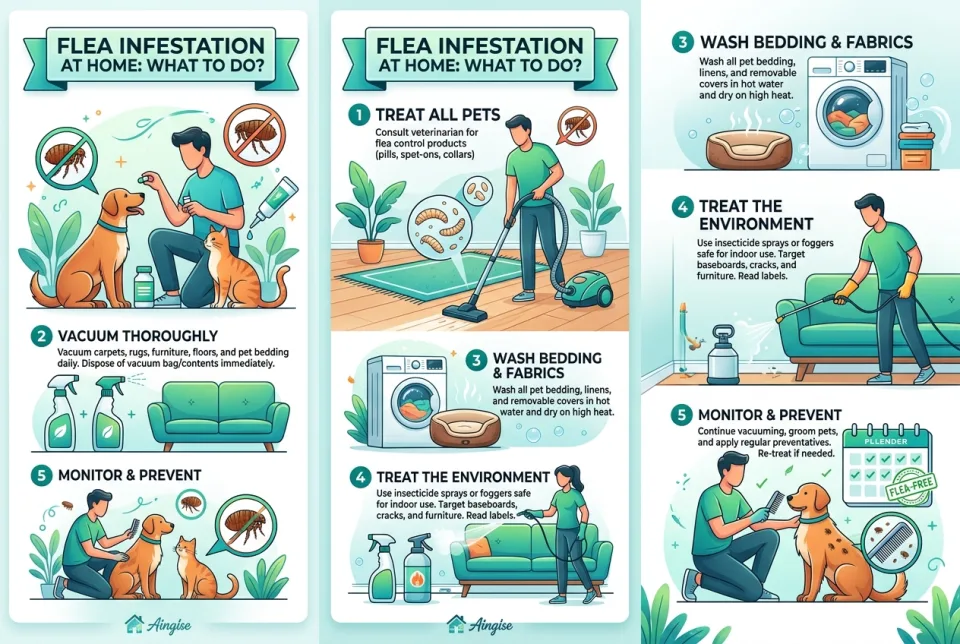
Quick answer
4 steps — read this before anything else
-
1
Treat all pets with vet-approved flea control immediately.
-
2
Vacuum carpets, furniture, and pet bedding thoroughly, then seal and discard the bag.
-
3
Wash all pet bedding and throw rugs in hot water.
-
4
Consult a pest control professional if the infestation is severe or persists.
Warning
Never use flea control products on pets without veterinary approval, as some can be toxic. Keep all chemicals out of reach of children and pets.
Fleas are small, wingless insects that feed on the blood of mammals and birds. They can infest homes, causing itchy bites and potential disease transmission. A flea infestation requires a comprehensive approach that targets all life stages: eggs, larvae, pupae, and adults.
What is happening?
Fleas thrive in warm, humid environments and can reproduce rapidly. A single female flea can lay dozens of eggs per day, which fall off the host into carpets, bedding, and cracks. The life cycle can complete in as little as two weeks, so quick action is essential.
Emergency warning
While fleas are not a medical emergency, some people and pets can develop severe allergic reactions or secondary infections from scratching. If you or your pet experience difficulty breathing, facial swelling, or widespread hives, seek medical or veterinary attention immediately.
Step-by-step action plan
- Treat your pets: Use a veterinarian-recommended flea control product. Do not use dog products on cats, as some can be toxic. Treat all pets in the household simultaneously.
- Clean the environment: Vacuum all floors, carpets, furniture, and crevices. Pay special attention to areas where pets rest. After vacuuming, seal the vacuum bag in a plastic bag and dispose of it outside.
- Wash bedding: Wash all pet bedding, throw rugs, and human bedding in hot water (at least 60°C or 140°F) and dry on high heat for at least 20 minutes.
- Consider professional help: If the infestation is severe or persists after two weeks of consistent cleaning and pet treatment, contact a licensed pest control professional.
What NOT to do
- Do not use flea bombs or foggers without professional guidance: They may not reach all areas and can be hazardous if misused.
- Do not skip treating pets: Fleas will continue to reproduce if pets are not treated.
- Do not use harsh chemicals without reading labels: Some products are toxic to pets and humans if not used correctly.
- Do not ignore the yard: Fleas can live outdoors and re-infest your home.
When to seek professional help
If you have tried the steps above for two weeks and still see fleas, or if you have a severe infestation, call a pest control professional. Also consult a veterinarian if your pet shows signs of flea allergy dermatitis (intense itching, hair loss, skin infections).
What to monitor
- Check pets for fleas and flea dirt (small black specks) daily.
- Monitor for new bites on family members.
- Watch for signs of allergic reactions in pets, such as excessive scratching or licking.
How to prevent future infestations
- Keep pets on year-round flea prevention as recommended by your vet.
- Vacuum frequently and wash pet bedding regularly.
- Maintain your yard: keep grass short and remove debris where fleas might breed.
- Treat any new pets for fleas before bringing them indoors.
By acting quickly and thoroughly, you can eliminate fleas and prevent them from returning. Remember, consistency is key: treat pets, clean the environment, and monitor for signs of re-infestation.
This information is for general guidance only and is not a substitute for professional medical or veterinary advice. If you suspect a severe allergic reaction or health issue, consult a healthcare provider or veterinarian promptly.
Sources & references
Spotted an error? Report it — we correct factual mistakes promptly.
Read next
Introducing a new pet to your home: what to do?
Bringing a new pet home is exciting but can be stressful for the animal. Follow these steps to help your pet settle in safely and comfortably.
Home security camera offline: what to do?
When your security camera goes offline, quick troubleshooting can restore it. Follow these steps to diagnose and fix common issues safely.
Pet overheat in summer: what to do?
Pets can overheat quickly in hot weather. Learn the signs of heatstroke, immediate first aid steps, and when to call a vet.
Aquarium fish dying one after another: what to do?
When multiple fish die in quick succession, act fast to protect the survivors. Learn the likely causes and the safe steps to take.
Related handy tools
Checklists, decision guides, scenarios and quizzes for the same situation.