Introducing a new pet to your home: what to do?
Bringing a new pet home is exciting but can be stressful for the animal. Follow these steps to help your pet settle in safely and comfortably.
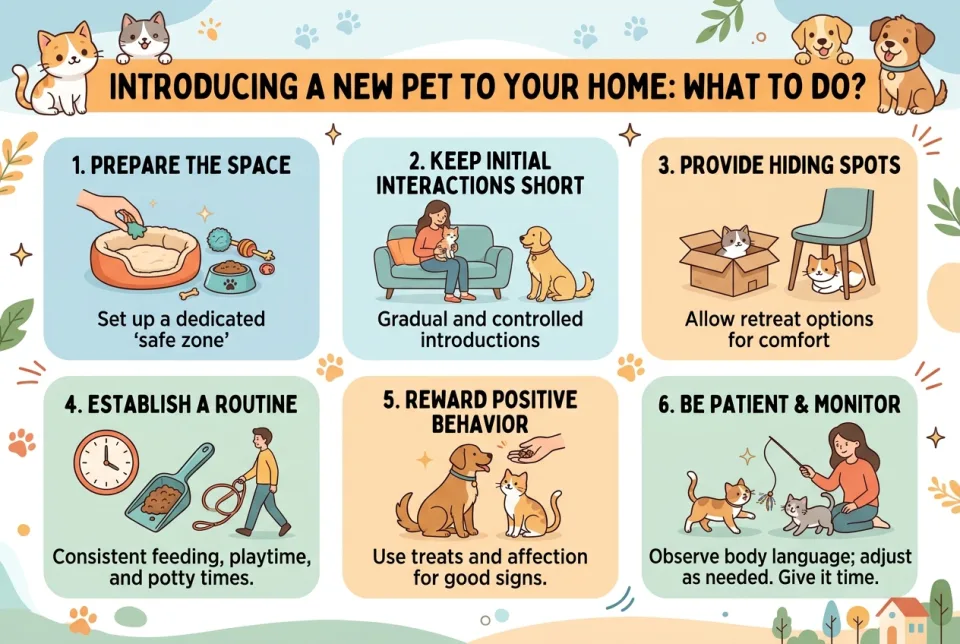
Quick answer
5 steps — read this before anything else
-
1
Prepare a quiet, safe space with food, water, and a bed before bringing your pet home.
-
2
Allow your new pet time to decompress; avoid overwhelming them with too much attention or visitors.
-
3
Introduce other pets gradually and under supervision, using separate spaces at first.
-
4
Establish a routine for feeding, walking, and play to build security.
-
5
Monitor your pet's health and behavior, and consult a veterinarian with any concerns.
Warning
Never leave a new pet unsupervised with children or other animals until you are certain they are safe together. Some pets may bite or scratch when frightened.
Bringing a new pet into your home is an exciting time, but it can also be overwhelming for the animal. Whether you are adopting a puppy, kitten, adult dog, cat, or another species, a thoughtful introduction helps your pet feel safe and reduces stress for everyone. The key is patience and a gradual approach.
Before your pet arrives
Set up a designated safe space, such as a quiet room or a crate with bedding, where your new pet can retreat. Stock up on the same food they were eating, a water bowl, a litter box if needed, and a few toys. Remove hazards like exposed wires, toxic plants, and small objects that could be chewed or swallowed. If you have other pets, plan how you will keep them separated initially.
What to do first when you get home
- Keep it calm. Limit greetings to quiet, gentle interactions. Loud noises and crowds can frighten a new pet.
- Show them their space. Lead your pet to their safe area and let them explore at their own pace. Provide fresh water and a small meal if they seem interested.
- Allow decompression time. For the first few days, avoid excessive handling, visitors, or trips outside except for necessary bathroom breaks. Let the pet initiate contact.
- Establish a routine. Feed, walk, and play at consistent times to build a sense of security.
Introducing other pets
Introduce resident pets gradually. Start with scent swapping (e.g., rub a cloth on one pet and let the other sniff it) before any face-to-face meeting. For dogs, arrange a neutral, leashed walk in a quiet area. For cats, keep them in separate rooms and allow supervised visual contact through a cracked door or baby gate. Keep initial sessions short and positive, and separate them if either shows stress. Never leave new pets unsupervised together until you are confident they are comfortable.
What NOT to do
- Do not force interaction or pick up a pet that is hiding or avoiding you.
- Do not introduce pets face-to-face immediately; this can lead to fear or aggression.
- Do not punish growling, hissing, or hiding; these are normal stress responses.
- Do not change their diet abruptly; transition foods gradually over several days.
- Do not leave a new pet alone with children or other pets without supervision.
When to seek professional help
Consult a veterinarian promptly if your new pet shows signs of illness such as vomiting, diarrhea, lethargy, not eating, or difficulty breathing. If your pet exhibits severe anxiety, aggression, or persistent hiding beyond a few days, a qualified animal behaviorist or trainer can help. For any emergency, such as suspected poisoning or injury, contact your veterinarian or an emergency animal clinic immediately.
What to monitor
Watch for eating and drinking habits, bathroom behavior, and overall demeanor. Some hiding and reduced appetite are normal for the first 24-48 hours, but prolonged changes warrant a vet visit. Keep an eye on interactions between pets and step in if play becomes one-sided or tense.
How to prevent problems
Pet-proof your home, secure trash, and store toxic substances out of reach. Provide enrichment like toys and scratching posts to reduce boredom. Gradually expand your pet's access to the rest of the house as they become more confident. Always supervise introductions and reward calm behavior with treats and praise.
With patience and a gradual approach, most pets adjust well within a few weeks. Take it slow, observe your pet's cues, and enjoy building a trusting relationship.
Spotted an error? Report it — we correct factual mistakes promptly.
Read next
What Should You Do If Your Dog Is Sprayed by a Skunk?
Skunk spray is oily and stubborn, but a simple homemade rinse works far better than plain water. Here is how to safely de-skunk your dog without irritating its skin or eyes.
What Should You Do If You Find an Injured Wild Animal in Your Yard?
An injured wild animal in your yard needs calm, safe handling and professional help. Here is how to protect yourself, the animal, and get the right rescue involved.
Senior pet quality of life: what to do?
Learn how to assess and improve your senior pet's quality of life with practical steps and when to involve your veterinarian.
Dog limping after intense play: what to do?
A limping dog after intense play may have a strain, sprain, or more serious injury. Learn safe first steps, what to avoid, and when to see a vet.
Related handy tools
Checklists, decision guides, scenarios and quizzes for the same situation.