Pet overheat in summer: what to do?
Pets can overheat quickly in hot weather. Learn the signs of heatstroke, immediate first aid steps, and when to call a vet.
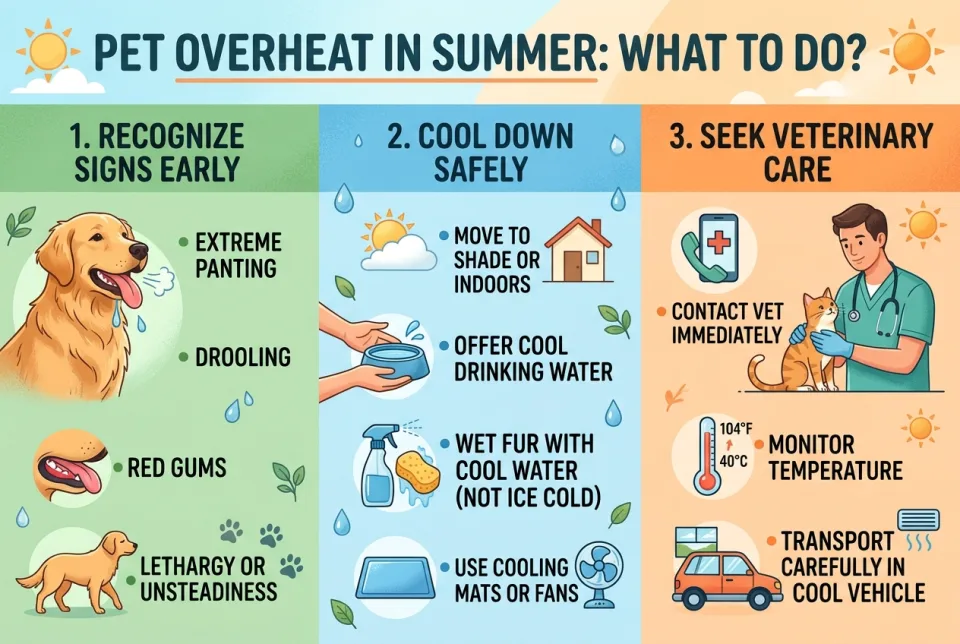
Quick answer
5 steps — read this before anything else
-
1
Move your pet to a cool, shaded area and offer small amounts of water.
-
2
Start cooling: apply cool (not cold) water to the body, especially the belly, paws, and neck, and use a fan.
-
3
Call your veterinarian or an emergency animal hospital immediately for guidance.
-
4
Do not use ice or ice-cold water, and do not force your pet to drink.
-
5
Monitor breathing and temperature, and transport to the vet as soon as possible.
Warning
Heatstroke is a life-threatening emergency. Call a veterinarian immediately and begin cooling with cool water, not ice.
Important — please read
This content is general educational and informational only, and is not a substitute for professional medical advice, diagnosis or treatment. Always seek the advice of a qualified health provider with any questions you may have about a medical condition. Never disregard or delay seeking professional medical care because of something you read here. In an emergency or life-threatening situation, call your local emergency services (police, fire or ambulance) immediately.
Summer heat can be dangerous for pets, especially dogs. Unlike humans, pets have limited ways to cool down, and heatstroke can develop rapidly. Recognizing the signs and acting quickly can save your pet's life.
What is happening?
Heatstroke occurs when a pet's body temperature rises above normal (approximately 101-102.5°F for dogs and cats) due to excessive heat and inadequate cooling. It is a medical emergency that can lead to organ failure and death if not treated promptly.
Emergency warning
If you suspect heatstroke, call your veterinarian or an emergency animal hospital immediately. Do not wait to see if your pet improves.
Signs of overheating
- Excessive panting or difficulty breathing
- Drooling, thick saliva
- Bright red or pale gums
- Weakness, staggering, or collapse
- Vomiting or diarrhea
- Confusion, seizures, or unconsciousness
What to do first
- Move your pet to a cool, shaded area or an air-conditioned room.
- Offer small amounts of cool water to drink, but do not force it.
- Begin cooling by applying cool (not cold) water to the pet's body, especially the belly, inner thighs, paws, and neck. You can use a hose, wet towels, or sponges. Place the pet in front of a fan to increase evaporation.
- Call your vet or an emergency animal hospital for further instructions and to let them know you are coming.
- Monitor breathing and temperature if you have a thermometer. Stop cooling if the temperature drops below 103°F to avoid hypothermia.
- Transport to the vet as soon as possible, even if your pet seems to improve.
What NOT to do
- Do not use ice or ice-cold water. This can constrict blood vessels and trap heat, worsening the condition.
- Do not force your pet to drink. It may cause choking or aspiration.
- Do not leave your pet unattended during cooling.
- Do not delay veterinary care hoping your pet will recover on its own.
When to call for help
Call a veterinarian immediately if you notice any signs of heatstroke. If your pet is unconscious, having seizures, or struggling to breathe, call ahead to the emergency hospital and transport immediately.
What to monitor
Watch for improvement in breathing and alertness. If your pet's condition worsens or does not improve within a few minutes of cooling, continue cooling and get to the vet right away.
How to prevent overheating
- Provide plenty of fresh water and shade at all times.
- Avoid exercising your pet during the hottest part of the day; walk early morning or late evening.
- Never leave your pet in a parked car, even with windows cracked.
- Be cautious with flat-faced breeds (e.g., Bulldogs, Pugs) and pets with thick coats, as they are more susceptible.
- Keep your pet indoors during extreme heat and use fans or air conditioning.
This is general information and not a substitute for professional veterinary advice. In an emergency, contact your veterinarian or an emergency animal hospital immediately.
Sources & references
Spotted an error? Report it — we correct factual mistakes promptly.
Read next
Introducing a new pet to your home: what to do?
Bringing a new pet home is exciting but can be stressful for the animal. Follow these steps to help your pet settle in safely and comfortably.
Senior pet quality of life: what to do?
Learn how to assess and improve your senior pet's quality of life with practical steps and when to involve your veterinarian.
Orphaned kitten found alone: what to feed it?
If you find a lone kitten, the right food and feeding method can save its life. Learn what to feed, what to avoid, and when to get veterinary help.
Dog limping after intense play: what to do?
A limping dog after intense play may have a strain, sprain, or more serious injury. Learn safe first steps, what to avoid, and when to see a vet.
Related handy tools
Checklists, decision guides, scenarios and quizzes for the same situation.