Aquarium fish dying one after another: what to do?
When multiple fish die in quick succession, act fast to protect the survivors. Learn the likely causes and the safe steps to take.
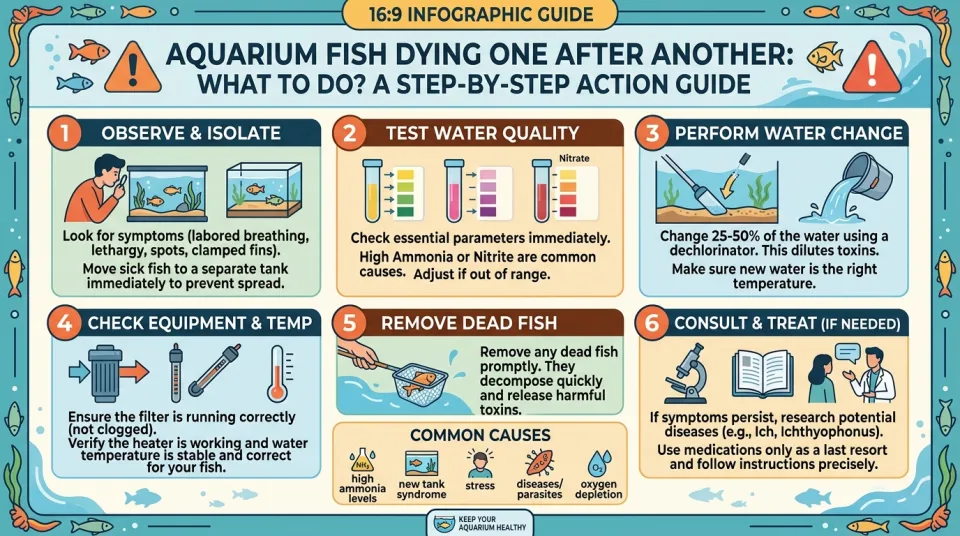
Quick answer
5 steps — read this before anything else
-
1
Test the water immediately for ammonia, nitrite, and nitrate.
-
2
Perform a partial water change (20-30%) with dechlorinated water at the same temperature.
-
3
Stop feeding for 24-48 hours to reduce waste and oxygen demand.
-
4
Check for signs of disease or contamination and isolate any sick fish.
-
5
Avoid adding new fish or medications until the cause is identified.
Warning
Multiple fish deaths often indicate a water quality crisis. Test for ammonia and nitrite immediately and perform a partial water change; do not use medications without diagnosis.
Losing several fish in a short time is alarming and usually points to a water quality crisis or an acute environmental problem. Quick, calm action can save the remaining fish. This guide covers the most common causes and the safe steps to take.
What is happening?
Fish deaths that occur one after another often stem from a sudden spike in toxic nitrogen compounds (ammonia or nitrite), a drop in oxygen, a temperature shock, or contamination (e.g., cleaning chemicals, aerosols, or copper). Infectious disease can also spread quickly, but water quality is the first suspect.
Emergency warning
If you see multiple fish gasping at the surface, lying on the bottom, or dying rapidly, treat it as an emergency for your aquarium. Do not panic, but act immediately to improve water conditions. There is no emergency service for fish, but swift intervention is critical.
What to do first
- Test the water. Use a liquid test kit for ammonia, nitrite, nitrate, and pH. If you do not have a kit, take a water sample to a local fish store for testing.
- Perform a partial water change. Replace 20-30% of the water with dechlorinated water that matches the tank temperature. Do not do a full water change, as that can shock the fish further.
- Increase aeration. Add an air stone or raise the filter outlet to agitate the surface. Low oxygen is a common killer.
- Stop feeding. Do not feed for 24-48 hours. Uneaten food and fish waste produce ammonia.
- Check equipment. Ensure the filter, heater, and thermometer are working. A heater malfunction can cook or chill fish.
- Remove dead fish immediately. Dead fish decompose and worsen water quality. Net them out and dispose of them properly.
- Look for contaminants. Did you recently clean the tank with soap, use an aerosol near the tank, or add new decorations? These can be toxic.
What NOT to do
- Do not do a 100% water change. It can shock fish and destroy beneficial bacteria.
- Do not add medications randomly. Many treatments are harsh and can harm fish if the problem is water quality, not disease.
- Do not overfeed or add new fish. Both increase the biological load.
- Do not clean the filter with tap water. Chlorine kills beneficial bacteria. Rinse filter media in tank water only.
- Do not use soap or detergents on anything that goes in the tank.
When to seek professional help
If water tests are normal and deaths continue, consult a veterinarian experienced with fish or a knowledgeable aquarium professional. They can check for parasites, bacterial infections, or other diseases that require specific treatment.
What to monitor
- Ammonia and nitrite levels daily until they read zero.
- Fish behavior: gasping, lethargy, loss of appetite, or abnormal spots.
- Temperature stability.
- Any new additions (plants, fish, decorations) that might carry disease or toxins.
How to prevent it
- Cycle the tank fully before adding fish.
- Perform regular partial water changes (e.g., 20-30% weekly) and test water regularly.
- Quarantine new fish for 2-4 weeks before adding them to the main tank.
- Avoid overstocking and overfeeding.
- Keep the tank away from drafts, direct sunlight, and chemical sprays.
Acting quickly on water quality gives your fish the best chance. Start with a test and a partial water change, and stay observant. This is general information, not a substitute for professional advice; for serious disease outbreaks, seek expert help.
Spotted an error? Report it — we correct factual mistakes promptly.
Read next
What Do I Do If I Can't Find Pet-Friendly Housing?
Finding a rental that welcomes pets can be tough, but a clear plan, solid references, and a pet resume can open more doors than you expect.
What Should I Do If an Adoption Is Not Going as Planned?
Adoption delays, changes of heart, or unexpected legal hurdles are common and rarely mean the process is over. Here is how to stabilise the situation, protect your rights, and decide your next step.
What to Do If You Are Stung by a Bee? Essential First Aid Steps
Learn the immediate first aid actions to take after a bee sting to reduce pain, minimize swelling, and recognize severe allergic reactions quickly.
What to Do If a Dog Bites You? Urgent Steps to Avoid Infection
Learn what to do if a dog bites you with this emergency response guide. Proper first aid and immediate medical care prevent dangerous infections and complications.
Related handy tools
Checklists, decision guides, scenarios and quizzes for the same situation.