Fitting a kid's bike helmet correctly
A properly fitted helmet protects your child's head in a fall. Learn the key steps to check size, position, and straps so the helmet stays secure.
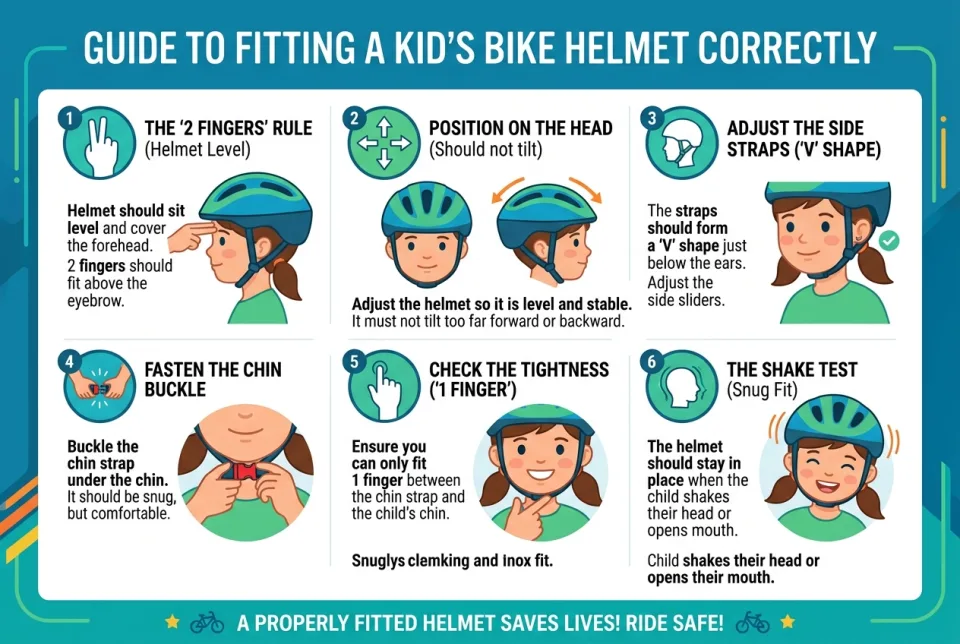
Quick answer
5 steps — read this before anything else
-
1
Measure your child's head and choose a helmet that matches the size range.
-
2
Place the helmet level on the head, covering the forehead and sitting just above the eyebrows.
-
3
Adjust the straps to form a V just below the ears and tighten the chin strap so it's snug but not tight.
-
4
Check that the helmet doesn't move more than an inch when your child shakes their head.
-
5
Have your child wear the helmet on every ride, every time.
Warning
A poorly fitted helmet can come off in a crash, leaving the head unprotected. Always ensure the helmet is level, snug, and the chin strap is securely fastened.
A helmet only protects your child if it fits correctly. A loose or tilted helmet can slip off in a fall, leaving the head unprotected. Follow these steps to get a safe, comfortable fit.
What is happening
You are fitting a bicycle helmet for a child. The goal is to position the helmet so it covers the forehead and sits level, then adjust the straps so it stays in place during movement.
Step by step
- Measure the head. Use a soft tape measure around the widest part of the head, just above the eyebrows. Compare with the helmet's size range. If between sizes, choose the smaller size if the child's head is still growing, or follow the manufacturer's guidance.
- Position the helmet. Place it level on the head, not tilted back. The front edge should sit about two finger-widths above the eyebrows, covering the forehead. A helmet pushed back leaves the front of the head exposed.
- Adjust the fit system. Many helmets have a dial or pads to adjust the fit. Turn the dial or swap pads so the helmet feels snug but not tight. It should not press painfully anywhere.
- Adjust the side straps. Slide the strap adjusters so the straps form a V shape just below each ear. The front strap should go in front of the ear, the back strap behind it.
- Tighten the chin strap. Buckle the strap and tighten until it is snug under the chin. You should be able to fit one finger under the strap. The strap should not be so loose that the helmet can be pushed back easily.
- Check the fit. Have your child open their mouth wide. The helmet should press down slightly on the top of the head. Then have them shake their head gently; the helmet should not move more than about an inch in any direction.
What NOT to do
- Do not buy a helmet for your child to "grow into." An oversized helmet will not protect properly.
- Do not wear a helmet tilted back or forward; it must sit level.
- Do not leave the chin strap loose or unbuckled, even for short rides.
- Do not use a helmet that has been in a crash or is damaged; replace it.
- Do not add stickers or cover the helmet in ways that might affect the shell or padding.
When to seek professional advice
If your child has a head shape or medical condition that makes helmet fitting difficult, ask a pediatrician or a helmet fitting specialist for guidance. If your child has suffered a head injury, seek medical care immediately.
What to monitor
Check the fit regularly, especially as children grow. Recheck the strap tightness and helmet position every few weeks. Replace the helmet if it becomes damaged or if the manufacturer's recommended replacement age is reached.
How to prevent problems
- Make helmet wearing a habit from the first ride.
- Set a good example by wearing your own helmet.
- Store the helmet safely so it does not get crushed or damaged.
Take a few minutes now to check your child's helmet fit. A proper fit is a simple step that significantly reduces the risk of head injury.
This is general information and not a substitute for professional medical advice. In an emergency, call your local emergency services.
Sources & references
Spotted an error? Report it — we correct factual mistakes promptly.
Read next
Car seat safety check: what to do?
A proper car seat check takes minutes and prevents serious injury. Learn the key checks for installation, harness fit, and when to replace a seat.
Toddler swallowed a button battery: what to do?
A swallowed button battery is a medical emergency that can cause severe internal burns within about two hours. Act immediately: do not wait for symptoms and do not try to make your child vomit.
Baby choking under one year old: the correct technique
A choking baby needs immediate back blows and chest thrusts, not abdominal thrusts. Learn the correct technique for infants under one year.
Child gets a fever at night: what to do?
A step-by-step guide for parents on how to safely manage a child's fever at night, including when to call for help and what to avoid.
Related handy tools
Checklists, decision guides, scenarios and quizzes for the same situation.