Dog ate something toxic: what to do?
If your dog has eaten something poisonous, quick action can save its life. Learn the safe steps to take and what to avoid.
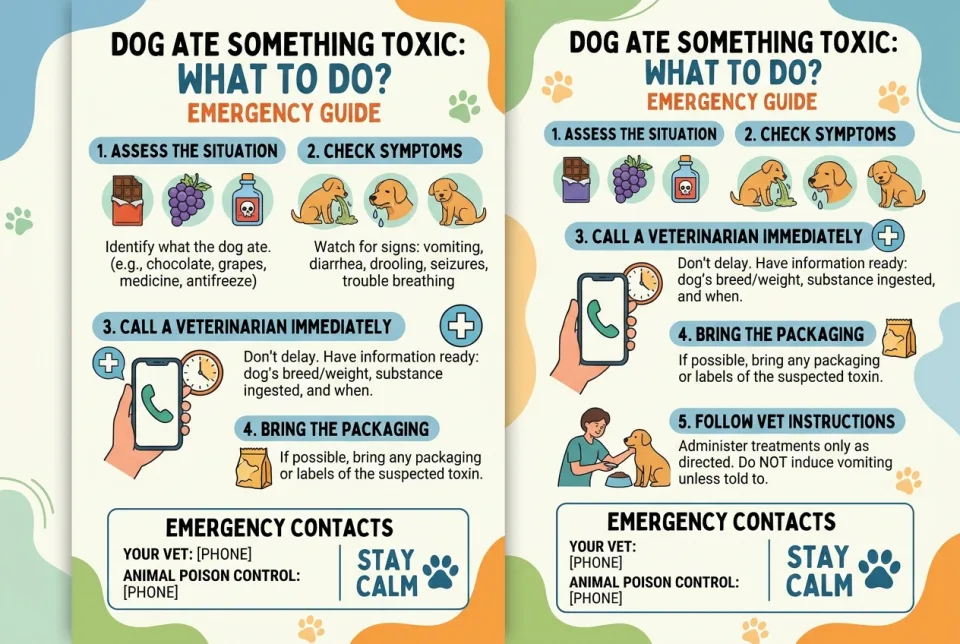
Quick answer
5 steps — read this before anything else
-
1
Remove your dog from the source of poison and prevent further access.
-
2
Call your veterinarian or an animal poison control service immediately for guidance.
-
3
Do not induce vomiting unless specifically instructed by a vet.
-
4
Collect the packaging or a sample of the substance to show the vet.
-
5
Watch for signs like vomiting, tremors, or difficulty breathing and seek emergency care if they occur.
Warning
Never induce vomiting unless a veterinarian instructs you to. Some poisons can cause severe damage if vomited.
Important — please read
This content is general educational and informational only, and is not a substitute for professional medical advice, diagnosis or treatment. Always seek the advice of a qualified health provider with any questions you may have about a medical condition. Never disregard or delay seeking professional medical care because of something you read here. In an emergency or life-threatening situation, call your local emergency services (police, fire or ambulance) immediately.
Dogs are naturally curious and may eat things that are harmful to them. If you suspect your dog has ingested something toxic, acting quickly and correctly is crucial. This guide provides general steps to take, but always remember that professional veterinary advice is essential.
What is happening?
Your dog may have eaten a toxic substance such as certain human foods (e.g., chocolate, grapes, onions), household plants, medications, cleaning products, or pesticides. The severity depends on the substance, amount, and your dog's size and health. Some toxins cause mild stomach upset, while others can be life-threatening.
Emergency warning
If your dog is showing severe signs such as seizures, difficulty breathing, collapse, or excessive bleeding, call your local emergency veterinary service immediately. Do not wait for symptoms to worsen.
What to do first
- Remove your dog from the source. Safely take away the toxic substance and move your dog to a safe area.
- Call for help. Contact your veterinarian or a pet poison control helpline right away. Have the following information ready: your dog's weight, the substance ingested, the estimated amount, and the time of ingestion.
- Do not induce vomiting unless instructed. Some substances can cause more harm if vomited. Only induce vomiting if a vet tells you to.
- Collect evidence. Keep the packaging, label, or a sample of the substance (e.g., vomit) to show the vet.
- Monitor your dog. Watch for signs of poisoning and note any changes to report to the vet.
What NOT to do
- Do not give home remedies like milk, salt water, or hydrogen peroxide without veterinary guidance. These can be dangerous.
- Do not wait for symptoms to appear. Some poisons act quickly, and early treatment is more effective.
- Do not scold or punish your dog. This can cause stress and make handling more difficult.
- Do not attempt to treat your dog yourself. Always consult a professional.
When to call for help
Call a veterinarian or animal poison control immediately if you know or suspect your dog ate something toxic, even if no symptoms are present. If you are unsure whether a substance is toxic, err on the side of caution and call.
What to monitor
After exposure, monitor your dog for signs such as vomiting, diarrhea, lethargy, loss of appetite, tremors, seizures, difficulty breathing, or changes in behavior. Report any symptoms to your vet promptly.
How to prevent it
- Keep toxic foods, medications, and household chemicals out of reach.
- Secure trash cans and compost bins.
- Research which plants are toxic to dogs and avoid them in your home and garden.
- Store pesticides and antifreeze safely.
In summary, if your dog eats something toxic, stay calm, remove access, and call your vet or a poison control service immediately. Follow their instructions carefully. This information is general and not a substitute for professional veterinary advice. In an emergency, contact your local emergency veterinary service.
Sources & references
Spotted an error? Report it — we correct factual mistakes promptly.
Read next
Introducing a new pet to your home: what to do?
Bringing a new pet home is exciting but can be stressful for the animal. Follow these steps to help your pet settle in safely and comfortably.
Orphaned kitten found alone: what to feed it?
If you find a lone kitten, the right food and feeding method can save its life. Learn what to feed, what to avoid, and when to get veterinary help.
Pet overheat in summer: what to do?
Pets can overheat quickly in hot weather. Learn the signs of heatstroke, immediate first aid steps, and when to call a vet.
Aquarium fish dying one after another: what to do?
When multiple fish die in quick succession, act fast to protect the survivors. Learn the likely causes and the safe steps to take.
Related handy tools
Checklists, decision guides, scenarios and quizzes for the same situation.