Orphaned kitten found alone: what to feed it?
If you find a lone kitten, the right food and feeding method can save its life. Learn what to feed, what to avoid, and when to get veterinary help.
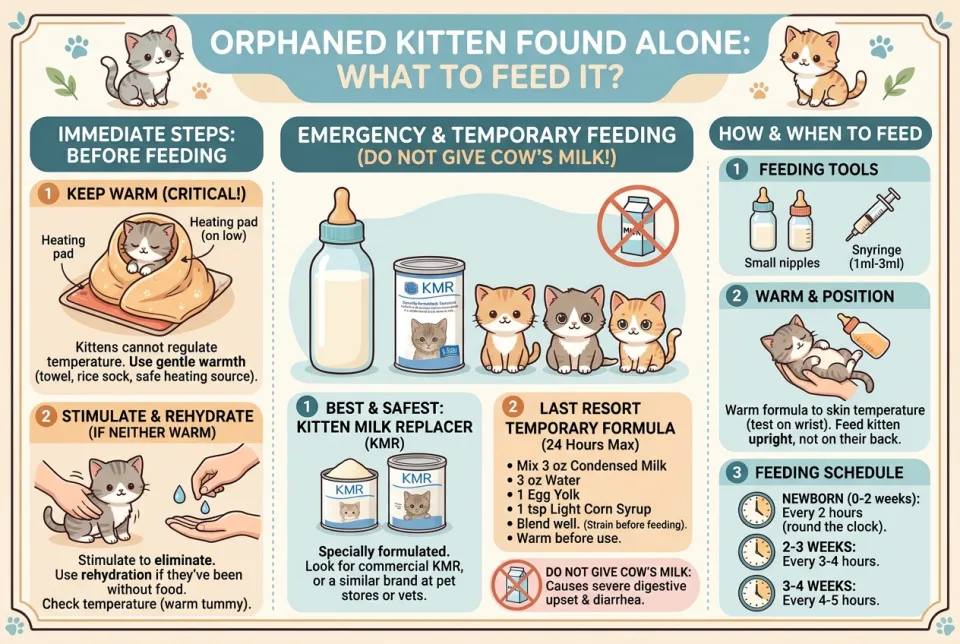
Quick answer
5 steps — read this before anything else
-
1
Warm the kitten first: never feed a cold kitten.
-
2
Use only commercial kitten milk replacer (KMR); never cow's milk.
-
3
Feed with a kitten bottle or syringe, following package directions for age and weight.
-
4
Stimulate urination and defecation after each feeding.
-
5
Contact a veterinarian or rescue group for guidance and a health check.
Warning
Never feed a cold kitten. Never give cow's milk or human baby formula. If the kitten is limp, cold, or unresponsive, seek emergency veterinary care immediately.
Important — please read
This content is general educational and informational only, and is not a substitute for professional medical advice, diagnosis or treatment. Always seek the advice of a qualified health provider with any questions you may have about a medical condition. Never disregard or delay seeking professional medical care because of something you read here. In an emergency or life-threatening situation, call your local emergency services (police, fire or ambulance) immediately.
Finding an orphaned kitten can be overwhelming. Knowing what to feed and how to feed it safely is critical, because the wrong food or technique can cause serious harm. This guide covers the essentials, but always consult a veterinarian or experienced rescue group for personalized advice.
What is happening
An orphaned kitten is likely under 4 weeks old and cannot eat solid food. It needs a warm environment, proper hydration, and a species-specific milk replacer. Its digestive system is immature, and it cannot regulate body temperature well.
Emergency warning
If the kitten is cold, limp, or unresponsive, call a veterinarian or emergency animal hospital immediately. Do not attempt to feed a cold kitten: warming is the first priority.
What to do first
- Warm the kitten. Use a heating pad on low under a blanket, or hold the kitten against your skin. Never feed a cold kitten; its body cannot digest food.
- Assess the situation. Check for signs of the mother nearby. If the kitten is clean, warm, and quiet, the mother may be nearby. Observe from a distance for a while before intervening.
- Get kitten milk replacer. Purchase a commercial product specifically for kittens (e.g., KMR or similar). Do not use cow's milk or homemade recipes unless directed by a vet.
- Feed properly. Use a kitten bottle or syringe (without needle). Follow the package directions for the correct amount based on the kitten's age and weight. Warm the formula to body temperature (test on your wrist).
- Stimulate elimination. After each feeding, gently rub the kitten's genital area with a warm, damp cloth to stimulate urination and defecation.
What NOT to do
- Never feed cow's milk, goat's milk, or human baby formula: these can cause diarrhea and malnutrition.
- Do not feed a cold kitten.
- Do not feed too quickly or force-feed; this can cause choking or aspiration pneumonia.
- Do not give water alone; kittens need the balance of nutrients in milk replacer.
- Do not delay seeking veterinary advice if the kitten is weak or not eating.
When to call for help
Call a veterinarian or emergency animal hospital if the kitten:
- Is cold, limp, or unresponsive
- Refuses to eat or has a weak suckle
- Has diarrhea, vomiting, or bloated abdomen
- Has difficulty breathing or cries constantly
- Shows signs of dehydration (tacky gums, skin tenting)
Also contact a local rescue group or shelter for guidance on kitten care and possible placement.
What to monitor
- Weight: Kittens should gain weight daily. Weigh on a kitchen scale and track.
- Elimination: Should urinate and defecate after each feeding. Note color and consistency.
- Temperature: Keep the kitten warm; a chilled kitten cannot digest food.
- Appetite: Should eat eagerly. Reluctance to eat is a warning sign.
How to prevent problems
- Follow the milk replacer instructions exactly for mixing and amounts.
- Sterilize bottles and syringes before each use.
- Feed on a regular schedule (every 2-4 hours for very young kittens, less frequent as they age).
- Keep the kitten in a quiet, warm, draft-free area.
With proper care, orphaned kittens can thrive. Start by warming the kitten and getting the right milk replacer, then seek veterinary guidance for a health check and feeding plan. This is general information and not a substitute for professional veterinary advice. In an emergency, contact a veterinarian or emergency animal hospital immediately.
Sources & references
Spotted an error? Report it — we correct factual mistakes promptly.
Read next
Introducing a new pet to your home: what to do?
Bringing a new pet home is exciting but can be stressful for the animal. Follow these steps to help your pet settle in safely and comfortably.
Senior pet quality of life: what to do?
Learn how to assess and improve your senior pet's quality of life with practical steps and when to involve your veterinarian.
Aquarium fish dying one after another: what to do?
When multiple fish die in quick succession, act fast to protect the survivors. Learn the likely causes and the safe steps to take.
Dog limping after intense play: what to do?
A limping dog after intense play may have a strain, sprain, or more serious injury. Learn safe first steps, what to avoid, and when to see a vet.
Related handy tools
Checklists, decision guides, scenarios and quizzes for the same situation.