Child having an asthma attack at school: what to do?
Learn how to recognize an asthma attack in a child at school and respond quickly with the right steps, including when to call emergency services.
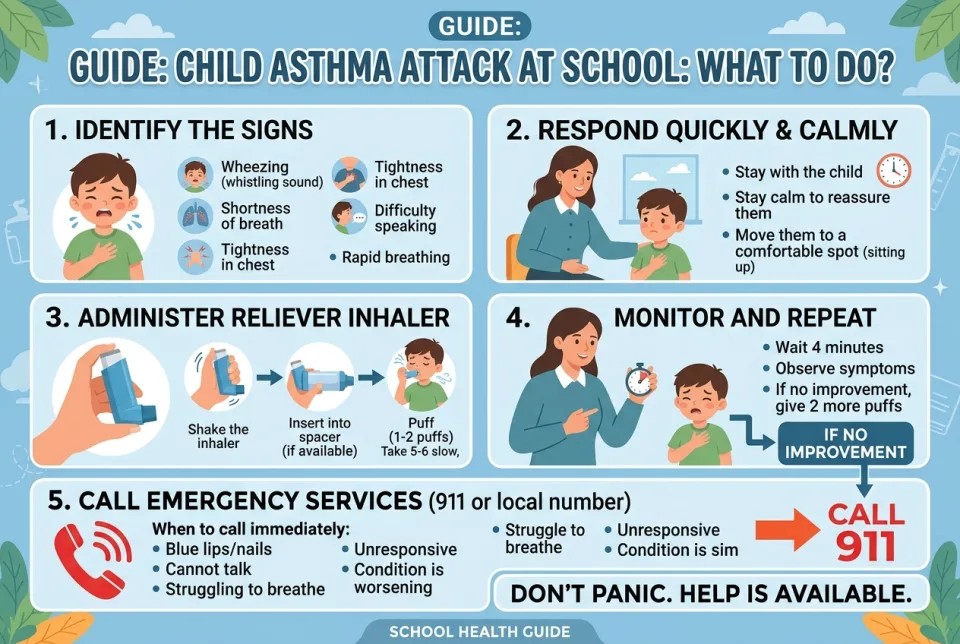
Quick answer
4 steps — read this before anything else
-
1
Help the child sit upright and stay calm.
-
2
Give 2 puffs of their reliever inhaler (usually blue) with a spacer, one puff at a time.
-
3
If no improvement after 2 puffs, give 2 more puffs and call emergency services.
-
4
Call emergency services immediately if the child is struggling to breathe, lips turn blue, or they cannot speak.
Warning
Call emergency services immediately if the child is struggling to breathe, cannot speak, or has blue lips.
Important — please read
This content is general educational and informational only, and is not a substitute for professional medical advice, diagnosis or treatment. Always seek the advice of a qualified health provider with any questions you may have about a medical condition. Never disregard or delay seeking professional medical care because of something you read here. In an emergency or life-threatening situation, call your local emergency services (police, fire or ambulance) immediately.
Asthma attacks can happen suddenly and be frightening for a child and everyone around them. Knowing the right steps can save a life. This guide explains what to do if a child has an asthma attack at school.
What is happening
During an asthma attack, the airways narrow and become inflamed, making it hard to breathe. Common triggers include exercise, cold air, allergens, or respiratory infections. Quick action with a reliever inhaler can reverse the attack.
Emergency warning
Call local emergency services immediately if the child is struggling to breathe, cannot speak in full sentences, has blue or grey lips, is exhausted, or is not improving after using their inhaler.
What to do first
- Stay calm and reassure the child. Help them sit upright and slightly forward. Do not make them lie down.
- Help them use their reliever inhaler (usually blue). Shake the inhaler and use a spacer if available. Give 2 puffs, one at a time, with 30-60 seconds between puffs. Have the child breathe slowly and deeply.
- If there is no improvement after 2 puffs, give 2 more puffs and call emergency services.
- Keep the child calm and monitor their breathing until help arrives. Loosen tight clothing.
- If the child has an asthma action plan, follow it. It may specify different steps or medications.
What NOT to do
- Do not leave the child alone.
- Do not make them lie down.
- Do not give any medication other than their prescribed reliever inhaler.
- Do not delay calling for help if symptoms are severe.
When to call for help
Call emergency services if:
- The child is gasping for air or cannot speak.
- Their lips or fingernails turn blue or grey.
- They are very drowsy or confused.
- They do not improve after using their inhaler.
- You are unsure how severe the attack is.
What to monitor
Watch for signs of improvement: easier breathing, less coughing, and ability to speak. If symptoms worsen or do not improve, seek emergency help immediately.
How to prevent future attacks
- Ensure the child has a written asthma action plan at school.
- Keep a reliever inhaler and spacer accessible at all times.
- Inform teachers and staff about the child's asthma and triggers.
- Encourage the child to take preventer medication as prescribed.
After an attack, the child should see their doctor to review their asthma control. This information is general and not a substitute for professional medical advice. In an emergency, call local emergency services.
Sources & references
Spotted an error? Report it — we correct factual mistakes promptly.
Read next
What Should You Do If Your Child Is Refused Entry to School Because of Missing Documents?
If your child is turned away from school because of missing paperwork, stay calm and act quickly. This guide explains how to resolve the issue and get your child enrolled.
Child terrified of the doctor: what to do?
A child's fear of the doctor is common and manageable. Learn practical, evidence-based ways to reduce anxiety before, during, and after a visit.
Child sleepwalking at night: what to do?
Sleepwalking in children is common and usually harmless. Learn how to keep your child safe during an episode and when to talk to a doctor.
Signs of a broken arm in a child: what to do?
Learn how to recognize a possible broken arm in a child, provide safe first aid, and know when to seek emergency care.
Related handy tools
Checklists, decision guides, scenarios and quizzes for the same situation.