Child sleepwalking at night: what to do?
Sleepwalking in children is common and usually harmless. Learn how to keep your child safe during an episode and when to talk to a doctor.
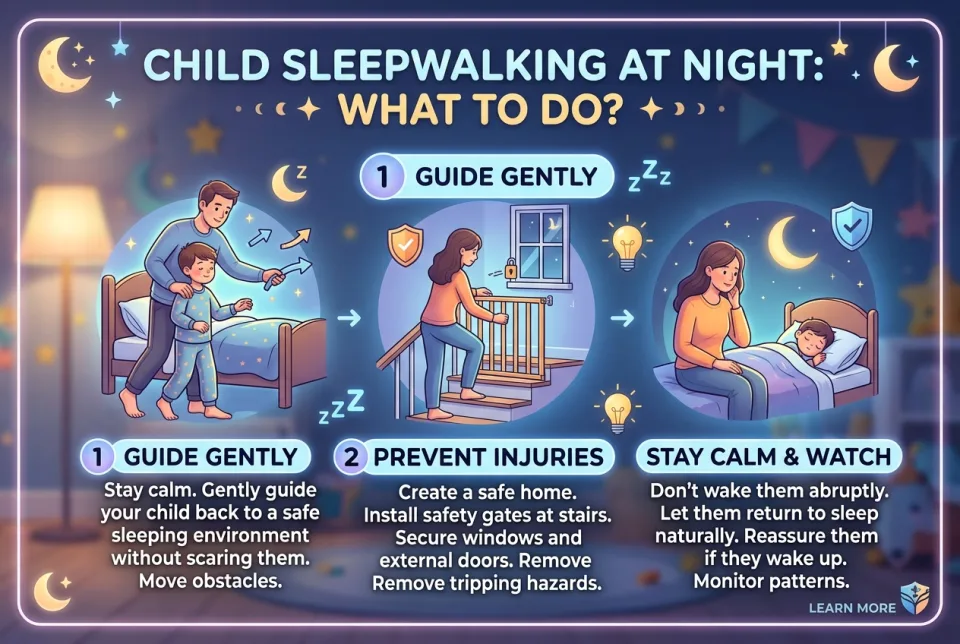
Quick answer
5 steps — read this before anything else
-
1
Stay calm and gently guide your child back to bed without waking them.
-
2
Clear the area of hazards like sharp objects, stairs, and loose rugs.
-
3
Do not shake or shout at your child to wake them.
-
4
Note what happened and how long it lasted.
-
5
Talk to a doctor if episodes are frequent, risky, or include other symptoms.
Warning
Never shake or shout at a sleepwalking child to wake them. Gently guide them back to bed and ensure stairs, windows, and sharp objects are secured.
Important — please read
This content is general educational and informational only, and is not a substitute for professional medical advice, diagnosis or treatment. Always seek the advice of a qualified health provider with any questions you may have about a medical condition. Never disregard or delay seeking professional medical care because of something you read here. In an emergency or life-threatening situation, call your local emergency services (police, fire or ambulance) immediately.
Sleepwalking (somnambulism) is a common childhood sleep behavior. It happens when a child is partially awake but not fully conscious, usually during deep sleep. Most children outgrow it by adolescence. While it can be alarming to watch, it is generally not a sign of a serious problem. Your main job is to keep your child safe and help them return to sleep.
What is happening
During a sleepwalking episode, your child may sit up, walk around, or perform routine actions like opening doors. Their eyes may be open, but they are not truly awake and will not remember the event. Episodes typically last a few minutes and often occur early in the night.
What to do first
- Stay calm and do not panic. Your child is not in distress.
- Gently guide them back to bed. Use a soft voice and light touch on the elbow or shoulder. Avoid shaking or shouting.
- Do not try to wake them forcefully. Waking a sleepwalker can cause confusion or agitation. If they wake on their own, speak calmly and help them settle.
- Keep the area safe. If they are moving toward stairs or a dangerous area, gently steer them away.
- Note the time and duration. This helps you and a doctor understand the pattern.
What NOT to do
- Do not shake, slap, or shout at your child to wake them.
- Do not block their path abruptly or grab them roughly, which can cause a startle response.
- Do not give sleep medications without medical advice.
- Do not ignore safety hazards like open windows, stairs, or sharp objects.
When to call for help
Call your local emergency services if your child is injured, has a seizure, is difficult to wake and confused for a long time, or if the sleepwalking leads to a dangerous situation (such as leaving the house).
Contact your child's doctor if:
- Episodes happen often (several times a week) or are increasing.
- Your child is very young (under 5) and episodes are frequent.
- Sleepwalking includes violent or risky behavior.
- There are other symptoms like daytime sleepiness, snoring, or breathing pauses during sleep.
- Episodes start after age 12 or continue into adolescence.
What to monitor
Keep a simple log of when episodes occur, how long they last, and what your child does. Also note any triggers such as late bedtimes, tiredness, fever, or stress. This information can help your doctor if needed.
How to prevent it
- Keep a regular sleep schedule. Ensure your child gets enough sleep and goes to bed at a consistent time.
- Create a calm bedtime routine. Limit screen time before bed and avoid stimulating activities.
- Make the bedroom and home safe. Use gates on stairs, lock windows, and clear clutter from floors. Consider a bell on the bedroom door if your child tends to wander.
- Address stress or anxiety. Talk to your child about any worries and help them relax before bed.
Most children outgrow sleepwalking without treatment. Stay calm, focus on safety, and keep a log to share with your doctor if you have concerns.
This is general information and not a substitute for professional medical advice. In an emergency, call your local emergency services.
Sources & references
Spotted an error? Report it — we correct factual mistakes promptly.
Read next
What Should You Do If Your Child Is Refused Entry to School Because of Missing Documents?
If your child is turned away from school because of missing paperwork, stay calm and act quickly. This guide explains how to resolve the issue and get your child enrolled.
What Should I Do When My Family's Expectations Feel Overly High?
When family expectations feel excessive, it can strain your mental health and relationships. Learn practical steps to set boundaries, communicate effectively, and protect your well-being.
What Should I Consider When Comparing an Only Child vs. a Large Family?
There is no single best family size. Research shows that family dynamics, resources, and parenting quality matter far more than the number of siblings.
What to Do If Your Water Breaks Early
If your water breaks before 37 weeks or before labor begins, immediately contact your midwife or emergency services and follow essential safety steps.
Related handy tools
Checklists, decision guides, scenarios and quizzes for the same situation.