Signs of a broken arm in a child: what to do?
Learn how to recognize a possible broken arm in a child, provide safe first aid, and know when to seek emergency care.
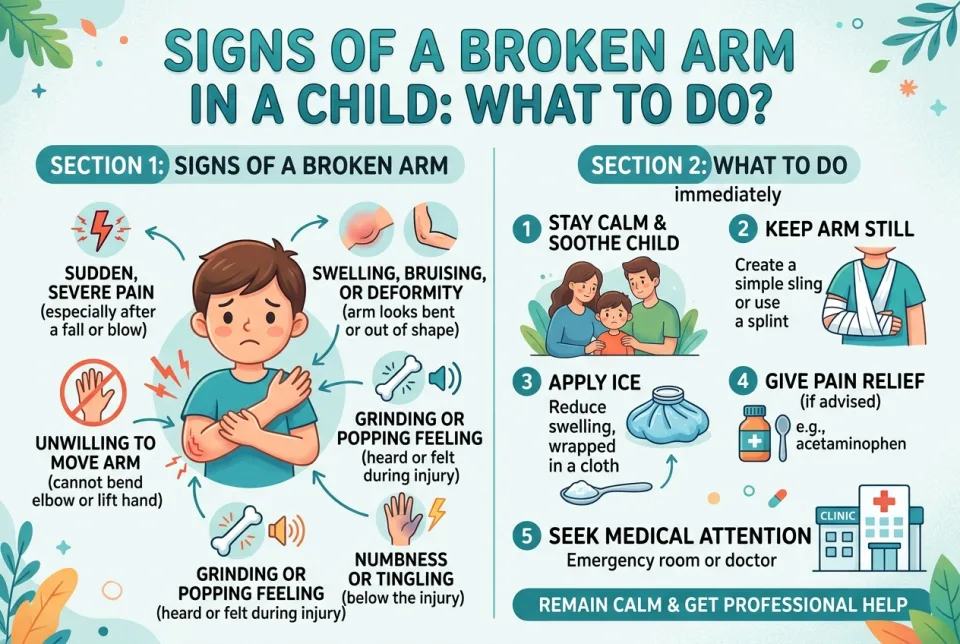
Quick answer
5 steps — read this before anything else
-
1
Call emergency services or go to an emergency department if the arm is deformed, there is severe pain, or the child is unresponsive.
-
2
Keep the arm still and support it with a sling or padding; do not try to straighten it.
-
3
Apply a cold pack wrapped in cloth for 15-20 minutes to reduce swelling.
-
4
Do not give food or drink in case surgery is needed.
-
5
Seek medical evaluation for any suspected fracture.
Warning
If the arm is deformed, bone is visible, or the child has severe pain or poor circulation, call emergency services immediately. Do not attempt to straighten the arm.
Important — please read
This content is general educational and informational only, and is not a substitute for professional medical advice, diagnosis or treatment. Always seek the advice of a qualified health provider with any questions you may have about a medical condition. Never disregard or delay seeking professional medical care because of something you read here. In an emergency or life-threatening situation, call your local emergency services (police, fire or ambulance) immediately.
A broken arm (fracture) is a common childhood injury, often from a fall or direct blow. Recognizing the signs and knowing what to do can help prevent further damage and reduce pain.
What is happening?
A fracture is a crack or break in one of the bones of the arm: the humerus (upper arm), radius or ulna (forearm). In children, bones are softer and may break in patterns different from adults. The goal is to keep the arm still and get medical help.
Emergency warning
Call your local emergency number immediately if:
- The arm is visibly deformed or bent at an odd angle.
- Bone is sticking out through the skin (open fracture).
- There is severe bleeding that does not stop with pressure.
- The child is unresponsive, confused, or has trouble breathing.
- The hand or fingers are pale, blue, cold, or numb (signs of poor circulation).
Signs of a broken arm
- Severe pain that worsens with movement.
- Swelling, bruising, or tenderness over the bone.
- Inability to move the arm normally or reluctance to use it.
- Visible deformity or shortening of the arm.
- A snapping or grinding sensation at the time of injury.
- In young children, crying when the arm is touched or refusal to use the arm.
What to do first
- Keep the child calm and still. Do not move the arm unnecessarily.
- Support the arm. Use a sling made from a triangular bandage or a piece of cloth, or gently place padding around the arm. Do not try to straighten or realign the bone.
- Apply a cold pack. Wrap ice or a cold pack in a cloth and apply for 15-20 minutes to reduce swelling. Do not put ice directly on the skin.
- Control bleeding if present. For an open fracture, cover the wound with a clean cloth and apply gentle pressure around the wound, not directly on the bone.
- Do not give food or drink. Surgery may be needed, and an empty stomach is safer for anesthesia.
- Seek medical care. Take the child to an emergency department or urgent care for evaluation. If you are unsure, call your doctor or emergency services for advice.
What NOT to do
- Do not try to push the bone back into place.
- Do not give the child anything to eat or drink.
- Do not apply heat to the injury.
- Do not ignore the injury even if the child seems to calm down; fractures can still be present.
- Do not remove any object that is stuck in the wound.
When to seek professional care
Any suspected broken arm should be evaluated by a healthcare professional. Seek emergency care immediately for the warning signs above. Otherwise, contact your pediatrician or go to an urgent care center promptly.
What to monitor
Watch for increased swelling, changes in skin color (pale, blue, or mottled), numbness or tingling in the fingers, and increased pain. These may indicate problems with circulation or nerves and require immediate medical attention.
How to prevent broken arms
- Ensure children wear appropriate protective gear for sports and activities.
- Supervise play on playgrounds and use safety equipment.
- Childproof homes to reduce fall hazards.
This is general information and not a substitute for professional medical advice. In an emergency, call your local emergency services immediately.
Sources & references
Spotted an error? Report it — we correct factual mistakes promptly.
Read next
What Should You Do If Your Child Is Refused Entry to School Because of Missing Documents?
If your child is turned away from school because of missing paperwork, stay calm and act quickly. This guide explains how to resolve the issue and get your child enrolled.
What Should I Consider When Comparing an Only Child vs. a Large Family?
There is no single best family size. Research shows that family dynamics, resources, and parenting quality matter far more than the number of siblings.
What to Do If You Suspect a Miscarriage
A miscarriage requires prompt medical evaluation and gentle physical and emotional care. Learn the immediate steps to take and when to seek urgent emergency assistance.
What age can kids stay home alone legally?
There is no single legal age for leaving a child home alone in most places. The law focuses on whether the child is mature enough and the situation is safe.
Related handy tools
Checklists, decision guides, scenarios and quizzes for the same situation.